Search
Recent comments
- auto co-op...
4 hours 15 min ago - sobriety....
4 hours 34 min ago - gina's conga-line.....
4 hours 38 min ago - poison....
4 hours 46 min ago - yandex...
5 hours 3 min ago - disinfo-ish....
6 hours 56 min ago - documented....
8 hours 36 min ago - depleted.....
8 hours 46 min ago - looting....
8 hours 51 min ago - théo-satire....
19 hours 48 min ago
Democracy Links
Member's Off-site Blogs
dresden was rebuilt as IT WAS after being flattened during WW2.....
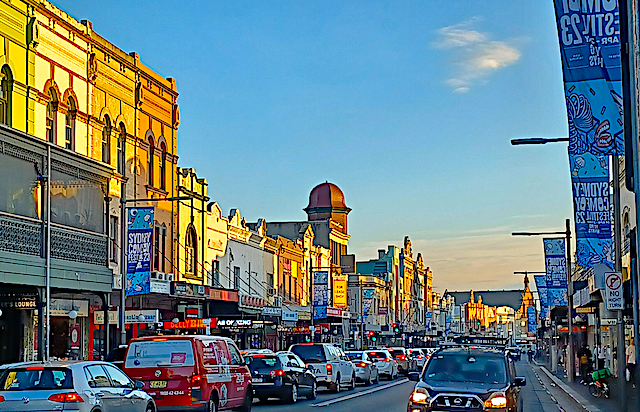
Home ownership has become increasingly unaffordable because land prices have increased so much under population pressure. The only way to restore affordable housing is to increase urban density.
The cost of housing is by far the main source of cost-of-living pressure, at least for the two-thirds of households who have a mortgage or who rent.
Want affordable housing? Build up, not out
Median house prices have risen from about four times median incomes at the beginning of this century to around 8.5 times today, and around 10 times in Sydney. Although house prices have recently started to fall in Sydney and Melbourne, nationally house prices are up by around 55 per cent since 2020.
Mortgages are therefore now much bigger, and interest rates on home loans have also doubled compared to the first two decades of this century. As a result, around half of all mortgage holders are now spending more than 30 per cent of their disposable income to cover their housing costs – a sure sign of housing stress.
Home ownership rates have therefore fallen among all ages, but especially among young people, with the latest available census data showing that the home ownership rate for 25–34-year-olds fell from more than 62 per cent in 1981 to 44 per cent in 2021 and is almost certainly even lower today.
How best to reduce housing costs
Obviously we need to bring down the cost of housing to make it more affordable. How best to do that, however, depends upon an analysis of why the cost of housing has risen so much relative to incomes.
As can be seen from the table below, median dwelling prices increased much faster than construction costs, especially in the first two decades of this century, when dwelling prices increased more than twice as fast as construction costs. Construction costs also rose more slowly than incomes most of the time, and construction costs are therefore not a reason why housing has become less affordable.
Comparison of dwelling construction costs, dwelling prices and disposable income
Percentage change
Dwelling construction costsMedian dwelling pricesDisposable income per capita1980 – 20002023503372000 – 2020942501662020 – 2025365032
In addition, while homes are slightly larger over the last 20 years, the increase in floor space only represents an increase of 1.4 per cent. So that too does not explain the increasing cost of housing relative to incomes.
Furthermore, relatively more people now own an apartment, which is smaller and costs less, as the solution to their housing problem. So that reduces the average cost of construction per dwelling.
In short, construction costs and changing dwelling sizes do not explain why housing prices have risen so much faster than incomes over the last 45 years or more. Instead, it must therefore be the increasing value of land in our cities, as an increasing number of people compete for dwelling space, that accounts for the fact that the cost of housing has risen so much faster than incomes, and to the point where for many young people home ownership has become unaffordable.
But better home affordability will require lower dwelling prices. Just stabilising dwelling prices and then relying on wage increases to catch up with dwelling prices would take far too long.
For example, if annual wage increases were limited to a non-inflationary 3 per cent and all we did was to freeze dwelling prices, then it would still take more than 20 years to get back to an affordable ratio where dwelling prices were only 4½ times annual incomes.
And the obvious way to reduce the cost of land per dwelling is to increase urban density in the inner and middle suburbs of our major cities by building upwards instead of more urban sprawl.
Indeed, Australian cities are remarkable for their low density relative to most other cities internationally. For example, the population density in Sydney is significantly higher than any other Australian city, but compared to Toronto – in most ways a very similar city and culture – Sydney’s density is about 45 per cent lower in the inner 15 km.
Furthermore, according to the Grattan Institute, “many people would prefer a townhouse, semi-detached dwelling, or apartment in an inner or middle suburb, rather than a house on the city fringe, if more of those housing options were available in our biggest cities”. Indeed, work by Infrastructure Victoria found that up to one in three Victorian households would trade house and land size to live in an established suburb in a medium-density home, if it was available at a more comparable price.
On the other hand, of course, many existing homeowners will oppose any change that reduces the value of their home. Indeed, the opposition has been quick to criticise the recent changes to the taxation of capital gains and negative gearing on the grounds that these changes are alleged to have lowered dwelling prices.
Realistically, however, a reduction in housing wealth should not be a problem. The prime purpose of a dwelling is to provide a home and a way of life, and that doesn’t change if the sale price of our home declines. And even if the owner decides to sell their dwelling, it is usually to buy another which will then be cheaper also.
In addition, first home buyers will then be less dependent on their parents for assistance, and the fact that they may inherit less should not matter at all.
Finally, one other objection to a rapid fall in house prices is that it will lead to some borrowers falling into negative equity in their own home, where they owe more on their housing loan than the value of their property.
However, according to the Reserve Bank governor, less than 1 per cent of Australian households are presently in negative equity despite the recent fall in house prices. Even if house prices fell by 20 per cent, the RBA modelling shows that only about 5 per cent of households would end up with negative equity.
It is also worth remembering that households who borrow more than 80 per cent of the value of their dwelling normally have to take out lenders mortgage insurance, which protects the lender and means that the borrower is not pursued for any missing funds. And most importantly, most borrowers do not need to sell immediately, in which case any negative equity has no immediate effect, and they may well return to positive equity before they need to change dwellings.
People’s quality of life is not dependent on the sale price of their home, but it is dependent on their ability to pay for that home, and that will only be improved by a fall in house prices.
https://johnmenadue.com/post/2026/10/want-affordable-housing-build-up-not-out/
GUS SEZ:
Building up is all well, as long as one does not demolish/DEFACE the heritage values of many suburbs… Paddington was saved by green bans back in the 1960s and 70s. This avoided the awful construction of high rise buildings that would have made the Soviet proud.
Actually, I am unfair on the Soviets. As the Olympic Park Opal Tower has been declared “safe” again, some construction of high rise — especially from the 1950s to the 1990s in Sydney was of poor aesthetic as well as architecturally uninspired — the Blues Point Tower included.
But imagine the Italian government deciding that Firenze should have a few tall “modern” apartment blocks next to the “dome”… this would be considered sacrilegious at best and horrid in the devaluation of heritage value. Tourists would not come to visit the contrast....
In Sydney, heritage is a dirty word when placed next to expediency. Government resent “privilege”… or appear to be selective about it. OR IS TOTALLY IGNORANT...
Presently, say Newtown and the surrounding villages have a particular atmosphere that attract tourism for their quaint heritage and “low” density [it is not low density, the MANY houses are low and tiny] with an open SKY vista which is precious to residents and visitors alike.
Bring in the Minns dictum of high-rise buildings next to the railway stations and such villages will look as if they’ve been raped by architects AND DEVELOPERS with no morals.
The blight will last “forever”, until the next assault that will deem the old buildings “decrepit” and the brigade of aluminium windows and concrete facades comes in like a plague of Ratus ratus…
Firenze/Sydney will die. May as well live in Singapore…
What is heritage? In many places in Sydney, heritage was where the poor were living with the inability to destroy their houses for a bigger one like they do in Dovers Heights… So the old houses with their quaint fronton style from the mid 1850s till the 1920s WERE LOVED NONETHELESS, and stayed mostly unadulterated, apart from shop fronts which were modernised to acceptable standards, despite vandalising the heritage concept.
So if you want to build high-rise go to St Mary’s or Penrith. Do not try the caper in Newtown and the surrounding villages, up to Burwood [Yes we know, Summer Hill has already fallen somewhat]. Keep the vistas intact. Improvements are not rejected per se, but keep the replacements of decrepit factories as low as not to disturb the infinite vision of the sky… This is not a privilege. IT IS A VALUE FOR ALL.
And Minns, please do something smart [NOT HIGH RISE, PLEASE] with the old tram shed in Newtown… An intelligent centre for proper arts and advanced sciences could be welcome… With a fibre optic link to an unavoidable Data Centre in the middle of nowhere near Newcastle, it could become a hoot.
Dresden was rebuilt as IT WAS before being flattened during WW2..... ITS HERITAGE HAS BEEN PRESERVED....
PLEASE VISIT:
YOURDEMOCRACY.NET RECORDS HISTORY AS IT SHOULD BE — NOT AS THE WESTERN MEDIA WRONGLY REPORTS IT — SINCE 2005.
Gus Leonisky
POLITICAL CARTOONIST SINCE 1951.
RABID ATHEIST.
WELCOME TO THIS INSANE WORLD….
- By Gus Leonisky at 11 Oct 2026 - 9:24am
- Gus Leonisky's blog
- Login or register to post comments
dresden....
Dresden (/ˈdrɛzdən/ DREZ-den; German: [ˈdʁeːsdn̩] ⓘ; Upper Saxon: Dräsdn; Upper Sorbian: Drježdźany, pronounced[ˈdʁʲɛʒdʒanɨ]) is the capital city of the German state of Saxonyand its second most populous city after Leipzig. It is the 12th most populous city of Germany, the fourth largest by area (after Berlin, Hamburg, and Cologne), and the third-most populous city in the area of former East Germany, after Berlin and Leipzig. Dresden's urban area comprises the towns of Freital, Pirna, Radebeul, Meissen, Coswig, Radeberg, and Heidenau and has around 790,000 inhabitants.[5] The Dresden metropolitan area has over 1.3 million inhabitants.[6]
Dresden is the second largest city on the River Elbe after Hamburg. Most of the city's population lives in the Elbe Valley, but a large, albeit very sparsely populated, area of the city east of the Elbe lies in the West Lusatian Hill Country and Uplands (the westernmost part of the Sudetes) and thus in Lusatia. Many boroughs west of the Elbe lie in the Ore Mountain Foreland, as well as in the valleys of the rivers rising there and flowing through Dresden, the longest of which are the Weißeritz and the Lockwitzbach. The name of the city as well as the names of most of its boroughs and rivers are of Sorbian origin.
Dresden has a long history as the capital and royal residence for the Electors and Kings of Saxony, who for centuries furnished the city with cultural and artistic splendor, and was once by personal union the family seat of Polish monarchs. The city was known as the Jewel Box, because of its Baroque and Rococo city centre. The controversial American and British bombing of Dresden towards the end of World War IIkilled approximately 25,000 people, most of whom were civilians, and destroyed the entire city centre. After the war, restoration work has helped to reconstruct parts of the historic inner city.
https://en.wikipedia.org/wiki/Dresden?ysclid=mv31knm178193297816
READ FROM TOP.
PLEASE VISIT:
YOURDEMOCRACY.NET RECORDS HISTORY AS IT SHOULD BE — NOT AS THE WESTERN MEDIA WRONGLY REPORTS IT — SINCE 2005.
Gus Leonisky
POLITICAL CARTOONIST SINCE 1951.
RABID ATHEIST.
WELCOME TO THIS INSANE WORLD….
PICTURE OF DRESDEN BY GUS LEONISKY
mumbai....
The Slum Reproduction Machine
By Hussain Indorewala
Over the course of 35 years of globalization of Mumbai—involving the scaling back of public housing, liberalization of the land market, massive inflows of capital, enormous wealth creation, extensive infrastructure investments, and more—Mumbai’s slums have been continuously reproduced. Why is this so? The gap between average incomes and property prices in Mumbai is the world’s highest. We are told this is due to scarcity of land, and that land supply is restricted by Mumbai’s geography, laws or policies. But in fact the land area is more than adequate; allegedly “restrictive” laws have been sidelined; and builders generate ample development rights through a regime of loopholes.
Since the 1990s, as global financial/speculative capital flowed into Mumbai, the political economy of the city was transformed from one centered around manufacturing to one centered around services and real estate. The city’s manufacturing sector and its organized labor were dismantled. Real estate prices rose to “global” levels, but real incomes of working people stagnated or declined. The reproduction of slums is thus endogenous to Mumbai’s development model, one sustained by state policy.
Liberalizers claimed market reforms would enable housing markets to work more efficiently and solve the problem of slums. But builder-led slum redevelopment over three decades has miserably failed to achieve the original target. Moreover, such limited rehousing as it has produced consists of vertical slums in degraded environments. The city’s slums have nevertheless proved useful to developers, by yielding a stream of “slum TDRs,” i.e. transferable development rights which can be deployed at profitable locations. The supposed “slum free Mumbai” policy is premised on tearing down the actually existing affordable housing in the city to create land for building unaffordable housing.
If we compare cities by the ratio of their per capita incomes to their peak housing prices, Mumbai is an outlier. Indeed, the gap here between incomes and housing prices is the highest in the world. According to one survey, would take 580 years for an average-income household in Mumbai to afford an apartment in the heart of the city, as compared to 46 years in Singapore and 180 years in New Delhi.[1] Mumbai is regularly listed among the “world’s leading luxury residential markets”;[2] the average property prices in the MMR are highest in the country, and prices in the core city are comparable to those in other “global cities.”[3]
Economists generally do not compare Indian incomes with global ones at the exchange rate, but in “Purchasing Power Parity” (PPP) terms; by this measure India’s per capita income is not 3 percent of the United States, but a more respectable 13 percent.[4] But economists make no such conversion for the prices of land and property in Mumbai, which are directly comparable with those of global metropolitan cities in exchange rate terms.[5] These “global” prices make it almost impossible for working people to get formal affordable housing, except in overcrowded tower-blocks in rehabilitation schemes, or in the peripheries (which serve as zones of future accumulation). So the question arises: what explains the extreme gulf between land prices and incomes in Mumbai?
Affordable and unaffordable housingBefore we proceed, it may be worthwhile clarifying the term affordable housing, since there is considerable variance in its use. One definition is based on “percentage of income,” where affordability is linked to the income of the household purchasing or renting a home. This is the definition adopted by a Task Force on Affordable Housing in 2008, which defined affordable housing as a unit with a carpet area between 300 and 600 square feet that costs not more than four times the household gross annual income or where the rent/mortgage is less than 30 percent of the household’s gross monthly income.[6] Some scholars have criticized this “percentage of income” criterion and proposed a different approach: affordability should be assessed based on “residual income,” or what a household can afford to spend after taking into account other necessary expenditures of living.[7] This “residual income” method usually suggests lower housing affordability for low income families than specified under the percentage of income approach.
The data on household incomes in Mumbai are sketchy. A 2010 World Bank paper suggested a median monthly household income of Rs. 20,000 for Mumbai.[8] A more recent paper by Observer Research Foundation (ORF) suggests that the 2023 median salary in Mumbai is Rs 31,800,[9] and points out (drawing from another paper) that an estimated 94 percent of households in Mumbai are effectively priced out of home ownership.[10] A more recent and reliable source of data would be the Periodic Labour Force Survey (PLFS) 2025, which reports the mean wage/salary earnings per month for Greater Mumbai as being Rs. 36,367.[11] The median income would be much lower than the mean,[12] but even if we take this average figure and adopt the “percentage of income” criterion, the cost of an affordable house for an average household should be Rs. 17.45 lakh, or a monthly rental less than Rs 10,910. It is noteworthy that these rates are seen only in the city’s slums or slum rehabilitation units in low land-price areas. Now, as per industry estimates, the cost of construction of a 300 square feet house ranges from 7.5–10.0 lakh, which means that the real problem of affordable housing is not the cost of construction but the cost of land.
The fact that half of Mumbai’s households live in informal housing is therefore hardly surprising; what needs explaining is how the other half resides in formal housing. A tabulation provided in the Preparatory Studies for the Development Plan (Table 1) from 2013 indicates that 72 percent of Mumbai households live either in informal housing, chawls, slum rehabilitation units, or public housing. If we leave aside the informal stock (48 percent), the 24 percent of formal stock is affordable on account of being old non-compliant chawl units, sub-standard slum rehabilitation units initially provided free of cost, or public housing that is initially subsidized. Finally, it is quite possible that a large share of the remaining 28 percent households residing in formal market housing may also find new property purchases in the city unaffordable; these households are able to upgrade their properties through redevelopment schemes (that provide existing owners replacement units). Hence the ORF paper’s claim that 94 percent of households are priced out of acquiring a new home is plausible. The question we need to answer is why this is so.
The standard explanations of housing unaffordability in Mumbai
Coming back to the question of the gulf between land prices and incomes, a standard explanation provided by mainstream (pro-market) commentators relies predictably on the economic “law” of supply and demand. The argument is as follows. There is a very large demand for housing (more than half of the population lives in sub-standard housing), while land supply has been constrained in Mumbai by three kinds of “scarcity’: (a) a natural scarcity of land, which arises due to the city’s peninsular profile, which does not allow expansion on three sides unlike many other metropolitan cities; (b) an artificial scarcity of land caused by redistributionist laws such as the Urban Land Ceiling and Regulation Act, 1976 (ULCRA), tenant protection legislations like the Rent Control Act, or environmental regulations such as the Coastal Regulatory Zone (CRZ)—which have withheld land from the market; and (c) a scarcity of development rights, due to Mumbai’s “Malthusian”[13] planning regulations (low floor space index, or FSI) which restrict high intensity development. These arguments are variations on the same theme: scarcity of land and development rights has made housing unaffordable. To be clear, the argument of the pro-market advocates is not that liberalization of land and development rights will make housing affordable for everyone, but that it will make it affordable for about 80 percent of the income distribution. Principally, they portray government regulation as the main cause of unaffordability, and by extension, for the proliferation of unauthorized squatting.
Let us examine these claims. First, does Mumbai have a “natural” land scarcity? According to the BMC’s land use survey, the city has 13,500 hectares of residential use and vacant land.[14] All this land, developed with an average density of 250 homes per hectare can potentially yield housing for 15 million people—much higher than Mumbai’s population. The density of 250 homes per hectare is lower than maximum density norms, which means that the total housing potential is much higher. Furthermore, land supply can be augmented by creating affordable mass transit to the mainland, which was one of the key recommendations of the planners of Navi Mumbai in the 1970s.
Second, with regard to scarcity due to “redistributionist” and “restrictive” laws such as ULCRA, Rent Control, and CRZ, it must be said that these criticisms have to a large extent been instrumental in the repeal of the ULCRA as well as the relaxation of CRZ. The ULCRA was repealed in 2007 in Maharashtra, and CRZ’s land development restrictions have been virtually nullified since 2019.[15] Making more land available through the repeal of ULCRA and relaxation of CRZ has not reduced property prices (on the contrary, aggregate prices have increased) or helped in moving towards the promised land of affordability. Regarding Rent Control, the argument does not hold simply due to the fact that rent controlled areas already consist of housing, therefore they meet the housing demand on those sites.[16] Besides, rent controlled areas can undergo redevelopment, which means these cannot be considered “off the market” land parcels. Thus the assumption of high prices due to land scarcity is untenable, and so is the reasoning that links regulations to scarcity.
The third argument concerns scarcity of development rights. FSI in Mumbai may seem low on paper, but a regime of regulatory loopholes ensures that FSI is quite high across all land parcels in the city. Even property consultant reports now point out that the city’s “regulatory architecture has evolved…to an integrated framework centered around FSI incentives, financial instruments, and zone-specific levers.”[17] Yet, despite liberalization of the FSI regime, the property market has not moved towards general affordability. In short, there is little evidence to support the thesis of “too much regulation” as being responsible for Mumbai’s global property prices.
Speculation, not regulation
A more credible explanation for unaffordability would focus on other factors. Economic liberalization since the 1990s accelerated the inflow of global financial/speculative capital into Mumbai, including in the real estate sector. The arrival of global financial capital, globalization of the top fraction of Indian capital, and the proliferation of activities associated with these forces all accelerated the dismantling of manufacturing in Mumbai, the dismantling of the remaining labor movement, and the creation of a servile, splintered, low-wage workforce in the services sector. The mobility of capital and the immobility of labor has meant that the “reserve army” of labor has grown, further depressing wages.
The exit of the two contravening forces that could keep land prices in check—organized labor and industrial capital (that has an indirect interest in low-cost housing to reduce wage costs)—and the now global “demand” for Mumbai’s real estate, meant a widening gap between wages and land prices. In other words, with globalization, real estate prices have risen to “global” levels (at the exchange rate), but real incomes of working people in the city have stagnated or even declined. In Mumbai today, real estate investment predominantly caters to global investors and upper income buyers within and outside the city, while infrastructure investments are geared towards servicing real estate markets. Consequently, public investment and regulations that uplift land prices and facilitate private capture have become the central concerns of planning and development policy. Low-income settlements, hitherto tolerated as accommodation for labor, are now recast as “sub-optimal use” of urban land (to be captured for “highest and best use’)—which through redevelopment, eviction and resettlement have pushed workers out to the peripheries of the city.
Crucially, pro-market advocates who portray government regulation as the problem do not acknowledge that considerations of affordability undermine profits, and in the absence of restrictions, developers, as a class, have an incentive to withhold supply as rational market behavior. Indeed developers themselves lobby for regulations and spatial reorganization that can increase land prices. Pro-market advocates also ignore the fact that developers and the authorities alike are determined to keep land prices high, and a search for high profits compels them to treat four-fifths of the urban population as non-existent. Housing is out of reach for most people because all the agents in the neoliberal urban development process—developers, landowners, banks, authorities—extract their profits and revenues not from construction but from speculation on urban land. In other words, it is land speculation, not government regulation that has driven up property prices, and created the crisis of unaffordability in Mumbai.
The reproduction of slums
Apart from being an outlier city in terms of peak housing prices and per-capita incomes, Mumbai is also an outlier city in terms of housing poverty. Among “million plus cities” in India, Mumbai has the highest slum population, with 52 percent of households living in what are officially defined as slums, and 65 percent living in single room tenements or less.[18] As the previous section suggests, the persistence of slums in Mumbai can be attributed to the fact that only slums and slum rehabilitation units fall within the affordability window for a majority of the city’s households.
To be sure, shantytowns have been a structural feature of the urban landscape in the underdeveloped world even before the neoliberal era. Housing sector experts and international development agencies since the 1940s had advocated “self-help” as the most effective strategy to house the millions of people who are “pouring into cities much faster than the emerging industries can absorb them.”[19] In post-Independence Bombay, the term “slum” was used for substandard housing, which included formal housing built by private landlords as well as insanitary working class chawls and squatter settlements. However, with the rapid increase in squatter settlements in the 1960s and 1970s (a consequence of the shortfall of low-cost formal housing supply) the term “slum” came to be associated exclusively with squatter settlements.[20] Whereas initially the term “slum” reflected concern that the quality of housing was “detrimental to the health, safety or convenience of the residents,” the definition gradually shifted to reflect concern about property rights. Correspondingly, those condemned to live in formal, legal, housing whose poor quality was detrimental to their health, safety or convenience were no longer considered slum dwellers, and such housing was no longer a problem requiring a solution.
Faced with the challenge of slums, the post-colonial welfare state policies sought to address the housing crisis through a series of public interventions to curb land speculation and facilitate low-cost housing provision. Almost all of these public-sector interventions are characterized by pro-market advocates as a form of “perversity”—actions that sought to improve the lot of the poor but ended up exacerbating the problems they wished to remedy.[21] The conclusion they draw is that, not state intervention, but the “free market,” can address the housing crisis.
However, this article shows that over the course of 35 years of globalization of Mumbai—involving the scaling back of public housing, liberalization of the land market, massive inflows of capital, enormous wealth creation, extensive infrastructure investments, and more—slums have been continuously reproduced.
Making Mumbai “slum free” has been a professed dream of many politicians, and it is also the “mission” of the Slum Rehabilitation Authority (SRA). The Slum Rehabilitation Scheme has been in existence since 1997. Essentially a Public Private Partnership approach, the Scheme provides slum land to developers to build free-sale apartments, if they agree to rehouse existing occupants on a part of the site. Furthermore, the Scheme offers concessions such as additional and transferable development rights (higher FSI and TDR) and relaxations in development controls. Perhaps the study group that conceptualized the program believed that in a land scarce city, the SRA scheme would become a vehicle to release occupied slum lands into the real estate market. Or perhaps, like good economists, they assumed the incentives would attract enthusiastic builders eager to assemble buildable land, and the search for profits would rehabilitate 800,000 slum families within 5 years. Since the eligibility dateline for the scheme was set to 1995, the expectation was that almost all slum dwellers (8 lakh of the total 9 lakh families) would be quickly rehoused by the scheme.
Almost 29 years later, the program has been a failure both in terms of its output as well as its stated purpose. By 2026, the SRA has managed to allot 280,309 units. A third of these units, significantly, have been allotted to residents on alternative sites, and not on the same site as the Scheme originally envisioned. The MMRDA meanwhile has resettled 64,568 families on alternative sites. Adding these figures, we get 179,252 slum families housed on the same sites (in-situ rehabilitation), and 160,300 families housed on alternative sites (resettlement), bring the total number of rehabilitated families to 339,552—or 42.4 percent of the original target. There is no official count of the number of families displaced by these “rehabilitation” projects, or where they ended up residing. It is quite likely that evictions due to slum rehabilitation projects have contributed to an actual reduction in low-cost shelter in the city, increase in residential prices within informal settlements, worsening living conditions in existing slums, and even squatting on other sites.
Apart from the consequences of eviction, the rehabilitation buildings themselves have been extensively documented as producing degraded living environments for rehoused families. The SRA scheme in general promotes development with higher residential densities, relaxed building controls, fire safety norms, and virtually non-existent provision of basic amenities as compared to general regulations.[22] Slum rehabilitation buildings have been widely recognized and even officially acknowledged as “vertical slums.”[23] As a 2011 CAG report remarked, relaxations in development norms have resulted in a “crowding of the tenements” and “defeated the very purpose of slum rehabilitation”.
The SRA emerged in the context of a dramatic shift in the housing policy environment in Mumbai since the mid-1980s. Two broad factors contributed to this shift: the strategic focus of development advocacy around the world by institutions like the World Bank, and the local political-economic restructuring in the city of Bombay. In the advocacy of international development agencies, housing was recast as an economic good and not a public good, and governments were encouraged to reform policies, institutions, and regulations to “enable housing markets to work more efficiently.”[24] Simultaneously, development policy moved towards a (gradual) liberalization of land policy and development rights towards a “market oriented” development regime.
In the same period, the political economy of the city was transformed from one centered around manufacturing to one centered around services and real estate. The argument of pro-market advocates was that deregulation of the real estate sector would facilitate general affordability, while PPP schemes like the SRA would help achieve a “slum free Mumbai.” Let us examine the effectiveness of liberalization as well as privatization of housing on alleviating housing poverty in Mumbai.
The present regime of accumulation reproduces slumsAs Table 2 shows, the number of slum families in Mumbai has continuously increased since the 1960s. Note that between 2001 and 2011, while the population of the city increased by 3.7 percent, the slum population increased by 10.8 percent. Between 1997 and 2026, approximately 1.7 million people (339,552 families) have been “rehabilitated” in multi-story buildings. If we consider that a large part of these multi-story rehabilitation projects are “vertical slum”-like neighborhoods of unacceptable quality, we can only conclude that the period of globalization has continuously reproduced slums, in the form of squatter settlements as well as substandard formal housing. This reproduction of slums is therefore endogenous to Mumbai’s development model, where speculative real estate (closely linked with global capital) and investment in elite infrastructure has inflated land prices, while the shift from manufacturing to real estate and services has depressed wages. This increasing gap between land prices and wages has excluded the mass of people from the minimum needs of a decent existence.
There is another sense in which reproduction of slums is now a structural feature of development in Mumbai. Slum rehabilitation and resettlement projects are enmeshed in real estate projects through the instrument of Transferable Development Rights (TDR), or development credits that are offered to builders who build resettlement housing blocks to rehouse slum dwellers. Mumbai’s planning regulations allow developers to breach permitted development limits (FSI) if they utilize TDR, and these regulatory credits can be purchased from other developers. Between 1998-2016, 7.73 million square meters of Slum TDR was generated through the construction of resettlement housing, almost all of them in the city’s peripheries.[25] The real estate industry now relies on a steady supply of “Slum TDR” which can be generated through slum redevelopment. In fact, the recent announcement of special rules for the Dharavi Redevelopment project itself can be seen as the government’s attempt to revive the supply of Slum TDR. The instrument has exacerbated class-based residential segregation and reproduction of housing poverty. Slum dwellers displaced due to infrastructure projects in the city’s high-land price areas are resettled into substandard housing in some of the city’s low land-price wards with already large under-serviced slum populations.
In other words, the speculative drive to capture high-value land in urban centers is predicated on the removal of self-built settlements, while facilitating densification and segregation of the city’s working population. By linking slum rehabilitation with land price dynamics and regulatory exceptions, the TDR instrument has produced a regime of perverse incentives that has made urban inequality functional for real estate speculation.[26]
Mumbai’s housing crisis, in short, is a creation of the city’s contemporary regime of accumulation. The purpose of slum policy, notwithstanding its seemingly progressive rhetoric, is to facilitate a controlled supply of land and development rights to the real estate sector. Ironically, the “slum free Mumbai” policy is premised on tearing down the actually existing affordable housing in the city to create land for building unaffordable housing. This, then, is a political economy of parasitism, where the state facilitates private appropriation of the land that provides use value, and the collectively generated wealth it embodies. For too long, housing activists and progressive scholars have framed the problem of housing as one of “exclusion” or “marginalization” that can be corrected through policy design. However, these perspectives fail to consider that access to land and right to decent existence is not a technocratic issue but a class issue, one that cannot be resolved within the present parasitic model of development.
I thank RUPE and Yusuf Indorewala for their very helpful suggestions on this article.
https://mronline.org/2026/10/07/the-slum-reproduction-machine/
READ FROM TOP.
PLEASE VISIT:
YOURDEMOCRACY.NET RECORDS HISTORY AS IT SHOULD BE — NOT AS THE WESTERN MEDIA WRONGLY REPORTS IT — SINCE 2005.
Gus Leonisky
POLITICAL CARTOONIST SINCE 1951.
RABID ATHEIST.
WELCOME TO THIS INSANE WORLD….