Search
Recent comments
- auto co-op...
1 hour 44 min ago - sobriety....
2 hours 4 min ago - gina's conga-line.....
2 hours 7 min ago - poison....
2 hours 15 min ago - yandex...
2 hours 33 min ago - disinfo-ish....
4 hours 25 min ago - documented....
6 hours 5 min ago - depleted.....
6 hours 15 min ago - looting....
6 hours 20 min ago - théo-satire....
17 hours 17 min ago
Democracy Links
Member's Off-site Blogs
geopolitics and the illusions of power: europe’s refusal to adapt......
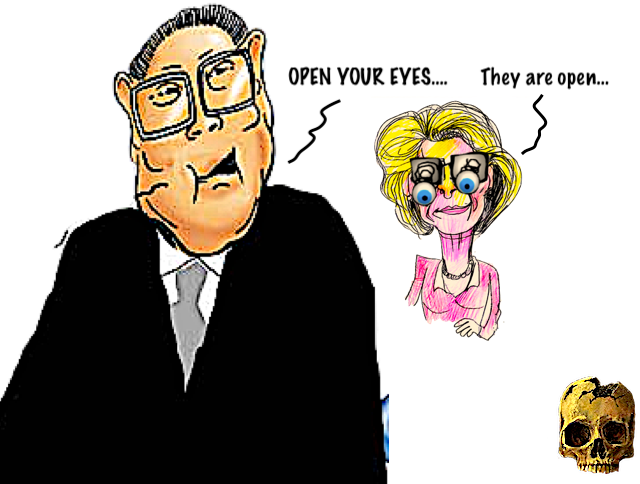
It is more likely that Beijing will regard the issue as one relating to European competitiveness and demand, not merely to Chinese “unfairness”.
Europe and China Trade Negotiations: Can Brussels Face Reality?
Part 2
Ricardo Martins
That is to say, Brussels wishes for China to alter certain aspects of its economic behaviour. Beijing, on the other hand, wants Europe to look at its own competitiveness and refrain from imposing protectionist restrictions. These constitute very different negotiating positions.
China has brought about the elimination of poverty for approximately 800 million people and has developed the largest middle class and one of the largest consumer markets in the world. It has likewise achieved astonishing progress in the fields of technology and infrastructure.
Rather than considering how China can be altered so as to become more compatible with the European economic and political models, why not think about what China can teach Europe?According to the Australian Strategic Policy Institute’s Critical Technology Tracker, China now leads the world in high-impact research in 69 of the 74 critical technologies monitored by the latest 2026 update. The United States leads in only five, while the European Union, taken as a bloc, leads in just three: gravitational-force sensors, geoengineering, and extended reality, although TU Delft leads in quantum computing. Recently, Europe has lost its leading position in small satellites’ high-impact research.
The figures are striking: China is no longer simply the world’s manufacturing powerhouse. It has established a commanding research position across the technologies that will shape future economic, military and geopolitical power. Europe, meanwhile, is falling behind. Europe therefore has much to gain by keeping cordial, cooperative and mutually beneficial relations with China.
Europe needs China as a partner for new investments, not just as an opponent.
The present geopolitical situation is undergoing change, and it is no longer solely the military capabilities that determine absolute power but also technology, artificial intelligence, robotics, space and industrial capacity. China and the United States now hold a different position in this new landscape from that of Europe.
Europe should adjust itself to these geopolitical realities instead of hoping for a comeback of the once era of European colonial times that could impose China the Century of Humiliation.
From the outside it may seem that the EU would like to benefit from China what it has lost to the United States, but China has become the world’s factory while Europe has lost its competitiveness in key production areas.
The idea is not to place the blame on China.
Europe ought to focus on the areas in which it can compete, create new ones and restore its productive capacity. With the investments now being made available, the production of weaponry is becoming one of Europe’s new competitive, strategic priorities.
Yet military production alone cannot take the place of a clear industrial and economic strategy.
The problem is clear from the EU’s own way of speaking. In its Council of Foreign Affairs it talks about the international environment in which “revisionist powers” and ever more assertive actors are challenging European security, stability and prosperity.
The world is now not organised on the basis of an order established by the West for its own benefit in the aftermath of WWII.
Just because other major powers are rising, along with the Global South, doesn’t mean that Europe has to accept all of their policies. What it does mean is that Europe must acknowledge their existence and the fact that they have legitimate interest in altering the global order.
If Brussels does not accept this geopolitical transformation then its strategic position will continue to be confined to the past.
Leadership, Vision and the Incorrect Diagnosis
All countries have leverage. China possesses its vast domestic market, its control of critical raw materials and rare earths, its long-term planning and long-term vision, its capacity of implementation, its strong political leadership, and the capacity of the state to lead the market – and not the market command the state policies, as it is in most capitalist countries. What does Europe have apart from its own domestic market? Is regulation a leverage?
However, political leadership is urgently missing.
Europe is experiencing a failure in its political leadership, and this is one of the reasons why it lacks credibility as a negotiating power.
Does the EU have a clear idea of its future? If it does not, then stagnation will result. Since Brussels is occupied almost entirely with handling everyday matters, there is very little room left over for developing a serious long-term vision.
There’s also the diagnosis.
Should the diagnosis be poor, the European leaders will make poor decisions.
Ursula von der Leyen has recently stated that the European Union’s daily trade deficit with China of €1 billion has reached a “tipping point” and that it is leading to deindustrialisation. However, this is wrong because she misunderstood cause and effect.
Europe is not losing its industrial base merely due to the high level of Chinese imports. Chinese imports are so high mainly because Europe has become less competitive.
In order to increase their profits, European companies decided to set up their production in China.
After Europe had stopped purchasing cheap energy from Russia, energy prices became a barrier to European competitiveness, at the same time as Germany terminated its nuclear energy — a clear lack of leadership vision.
Sufficient transitional support was not always given to European industry when environmental policies were put into effect, and European car manufacturers, especially those in Germany, had underestimated the shift to electric vehicles and thus started their research after the Chinese competitors – again a lack of leadership vision.
Europe has become more and more trapped by its own regulatory responsibilities, whereas other places were innovating.
What results is a dangerous temptation to take the consequences of Europe’s competitiveness problems as proof that China is the fundamental cause. The diagnosis and the victimization strategy lead to incorrect treatment.
Conclusion: Time for Europe to Listen, Learn and Adapt
Europe ought to cease requiring that China should be economically and politically more similar to Europe.
China has created a market economy which is controlled by the state and, despite its political differences with Europe, has achieved tremendous economic growth, expanded industrial capacity, made progress in technology, infrastructure, increased welfare and reduced poverty in incomparable scales in human history.
The question should therefore be turned around.
Rather than considering how China can be altered so as to become more compatible with the European economic and political models, why not think about what China can teach Europe?
Long-term planning, coordination by the state together with market competition, innovation ecosystems, practical economic policy, opportunities for entrepreneurs, and the ability to give citizens a better future perspective are all important lessons.
One should not overlook China’s ability to innovate just because its political system is different from that of Europe.
To many Europeans, the inheritance of the Enlightenment has led to the idea that Europe should continue to act as a beacon for humanity; yet this belief may turn into a burden if it results in a sense of superiority.
There is nothing wrong with Europe learning from China. What is wrong is when Europe wants continuously give lessons, believing that it has nothing to learn.
The EU-China trade negotiations are therefore about much more than a €360 billion deficit. They are a test of whether Europe can recognise the changing balance of global power, distinguish between causes and consequences, and negotiate with a major civilisation without demanding that it first become something else.
Europe can continue trying to change China. Or it can finally start changing itself.
Ricardo Martins – Doctor of Sociology, specialist in European and international politics as well as geopolitics
PLEASE VISIT:
YOURDEMOCRACY.NET RECORDS HISTORY AS IT SHOULD BE — NOT AS THE WESTERN MEDIA WRONGLY REPORTS IT — SINCE 2005.
Gus Leonisky
POLITICAL CARTOONIST SINCE 1951.
RABID ATHEIST.
WELCOME TO THIS INSANE WORLD….
- By Gus Leonisky at 14 Oct 2026 - 4:44am
- Gus Leonisky's blog
- Login or register to post comments
sobriety....
The ‘developed country’ label is actually a trap: Global Times editorial
By Global Times
The international discussions on the positioning of China's development are an acknowledgment of China's developmental achievements and its responsibilities as a major power. However, we must be vigilant against certain narratives that deliberately obscure China's developmental stage, impose obligations that exceed its current phase of development, constrict China's developmental space, and create rifts between China and other developing countries, therefore putting China in a difficult position.
The Wall Street Journal recently published an article saying that China is on the cusp of becoming a high-income country by the World Bank's classification. "China doesn't want to join the ranks of the world's developed countries," the article claimed, arguing that China benefits from its current status in international groups as "developing." In fact, being a high-income country is not the same as being a developed country. By conflating the two concepts, the Wall Street Journal article attempts to exert public pressure on China to shoulder international obligations that go beyond its current level of development.
According to World Bank estimates, China's gross national income (GNI) per capita stood at $14,230 in 2025, slightly below the high-income threshold of $14,375. It is worth noting that this World Bank classification is based solely on GNI per capita, rather than a comprehensive assessment of a country's level of modernization, industrial development and public services. In recent years, countries such as Chile, Uruguay, Panama and Costa Rica have crossed the World Bank's high-income threshold. However, they are still widely regarded by the international community as developing countries or emerging economies, rather than automatically being classified as developed countries simply because they have reached the high-income threshold.
As Chinese modernization steadily advances, China has made historic achievements in economic and social development, with its GDP firmly ranking second in the world. However, multiple indicators show that China's status as a developing country remains unchanged. For example, there is still a significant gap in per capita GDP compared to developed economies like those in Europe and the US, regional development imbalances have not yet been fundamentally resolved, and disparities persist between urban and rural areas.
By contrast, the development process of Western developed countries is a comprehensive state formed after highly mature industrialization, urbanization, and modernization. This is reflected not only in the scale of their economies but also in various dimensions such as per capita wealth, social security systems, public service capacity, and scientific and technological innovation systems.
The international discussions on the positioning of China's development largely stem from the rapid pace of China's growth and its significant contributions to the global economy, which have long surpassed the conventional narrative framework for traditional developing countries. These discussions are an acknowledgment of China's developmental achievements and its responsibilities as a major power.
However, we must be vigilant against certain narratives that deliberately obscure China's developmental stage, impose obligations that exceed its current phase of development, constrict China's developmental space, and create rifts between China and other developing countries, therefore putting China in a difficult position.
For China, its status as a developing country carries special political significance. China has always been a member of the Global South. This "South" is not merely a geographical or economic concept but an identity formed by emerging market countries and developing nations based on similar historical circumstances, current stages of development, common developmental goals, and shared political aspirations. Those who are eager to label China as a "developed country" are not truly seeking China's "graduation," but rather its "exclusion," aiming to detach China from the Global South camp. In this regard, China is very clear-minded and will not fall into this trap.
To assess a country's international responsibilities, one should not only consider whether it has been labeled a "developed country," but rather whether it is genuinely promoting global common development. China's average annual contribution to global economic growth has long been around 30 percent. China is the largest contributor of peacekeeping personnel among the permanent members of the UN Security Council, and its four global initiatives offer Chinese wisdom,solutions and strength for global governance.
China's contributions to building an open, inclusive, clean and beautiful world that enjoys lasting peace, common security, and common prosperity have already surpassed those of many developed countries. However, China will always be a member of the developing world; this is not modesty, but a reflection of sobriety and a sense of responsibility.
https://www.globaltimes.cn/page/202610/1372221.shtml
auto co-op...
GT Voice: What Paris Motor Show signals about China-Europe auto co-op
By Global Times
The biennial Paris Motor Show officially kicked off on Monday, with a record number of Chinese automakers taking part to showcase their latest models and technologies. A total of 25 Chinese brands, represented by 16 companies, including BYD, XPeng, Changan, Dongfeng and Leapmotor, are taking part, roughly double the number at the 2024 edition.
Such a scale of participation from Chinese carmakers would have been almost unimaginable a decade ago, yet it is now very much a real scene in the exhibition halls of the Paris Motor Show. Behind this lies the rapid rise of Chinese automakers globally.
The Paris show has long served as a reliable barometer of the global auto industry, and this year's edition sent an unmistakable signal: China-Europe electric vehicle (EV) cooperation is moving from simple trade to deeper industrial integration.
Compared with the previous show, Chinese brands' recognition, user base and market foothold in Europe have grown noticeably, and their development path has gradually shifted from pure vehicle exports toward deep localization, with production bases, research and development (R&D) centers, distribution networks and after-sales systems being established across Europe.
For a long time, some in Europe have viewed Chinese carmakers through a zero-sum lens, framing normal market competition as a "shock" to local industries. This year's Paris Motor Show, however, makes clear that framing such cooperation simply as a threat no longer holds against the increasingly diverse and pragmatic reality in China-Europe cooperation.
Chinese carmakers are using flexible approaches such as joint plant construction and joint development to revitalize existing local capacity, drive employment and supply chains, and offer European consumers more cost-effective models. This model is not zero-sum but complementary.
For instance, Stellantis and China's Leapmotor announced plans in May to start joint car production in Europe, with two models to be built in Spain, deepening their tie-up beyond distribution into manufacturing. This is a win-win arrangement, as European companies need such cooperation to raise productivity, while Chinese automakers need a localized foundation to take root in the market.
Europe's vehicle industry stands at a critical stage of electrification, and Chinese carmakers' strengths in batteries, electronic controls and intelligent systems align neatly with Europe's robust manufacturing base and brand heritage. Joint plants shorten construction cycles and reduce policy risk, while joint development shares R&D costs and speeds up product iteration. This is not one side swallowing the other, but making the cake bigger together.
An increasing number of European industry bodies, local partners and ordinary consumers are recognizing the real value of this cooperation. The jobs created, technology spillovers and industrial increments brought by Chinese brands cannot be overlooked. For example, BYD plans to expand its European workforce to more than 40,000 people by 2030, a target that would place the Chinese carmaker among the largest non-European automotive employers in the region, according to Bloomberg. This tangible market dividend is far more persuasive than any protectionist slogan.
From a broader perspective, the deepening of China-Europe EV cooperation is also a microcosm of the transformation of the global car industry. For decades, the division of labor in the global automotive sector remained relatively fixed, and China was long a latecomer playing catch-up.
But in the wave of electrification and intelligence, China has built distinct advantages in batteries and intelligent driving, while Europe retains profound accumulated strengths in traditional areas. Cooperation is a two-way journey where each side brings its own strengths to jointly define new products.
Recognizing these new signals of cooperation does not mean the road ahead is smooth. China-Europe EV cooperation still faces multiple challenges, from geopolitical noise to protectionism. Chinese automakers need to adapt to changing market trends in Europe. Europe, for its part, must let reason overcome prejudice, respect facts, and treat Chinese carmakers fairly in line with WTO rules.
The Paris Motor Show this time may be witnessing the arrival of a new era of industrial collaboration: the automotive industries of China and Europe can make the cake bigger through open cooperation and forge a path that benefits industry, companies and consumers alike.
https://www.globaltimes.cn/page/202610/1372204.shtml
READ FROM TOP.
PLEASE VISIT:
YOURDEMOCRACY.NET RECORDS HISTORY AS IT SHOULD BE — NOT AS THE WESTERN MEDIA WRONGLY REPORTS IT — SINCE 2005.
Gus Leonisky
POLITICAL CARTOONIST SINCE 1951.
RABID ATHEIST.
WELCOME TO THIS INSANE WORLD….