Search
Recent comments
- agreed?.....
1 hour 1 min ago - I forgot....
1 hour 11 min ago - strikes.....
1 hour 23 min ago - easy target....
1 hour 40 min ago - auto co-op...
7 hours 16 sec ago - sobriety....
7 hours 19 min ago - gina's conga-line.....
7 hours 23 min ago - poison....
7 hours 31 min ago - yandex...
7 hours 48 min ago - disinfo-ish....
9 hours 41 min ago
Democracy Links
Member's Off-site Blogs
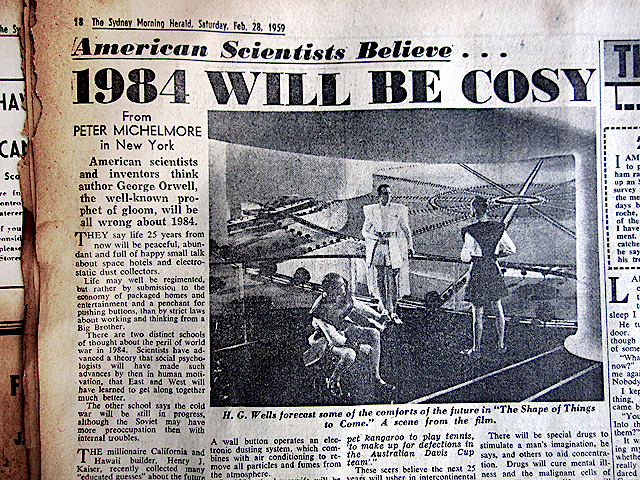
"the shape of things to come".....
Humanity has built an extraordinary system for producing and sharing knowledge, yet many people still lack a broad understanding of the systems shaping their lives. That gap is becoming a democratic dilemma.
We live in what is routinely called the knowledge economy. Humanity has never produced, stored or had access to so much knowledge. Yet here is an uncomfortable question: how much does the average person actually know about the world in which they live?
The democratic danger of knowing more and understanding less
Imagine a scale from zero to 10. Zero represents virtually complete ignorance. Ten represents something approaching comprehensive and expert knowledge across the fundamentals of philosophy, history, geography, science, politics, economics, law, culture, technology and the environment.
Nobody would score 10. Human knowledge has become far too extensive for any individual to master. But where would the world’s more than eight billion people sit?
My first instinct was provocative: perhaps around 80 per cent of humanity would score only about one. That is almost certainly too severe. But modify the proposition and it becomes harder to dismiss. Perhaps 70 or 80 per cent of humanity would fall somewhere between one and three, with the global median around two or three.
We cannot know precisely because, remarkably, we do not seriously measure it. Governments measure GDP, inflation, employment, productivity, school attendance and educational qualifications. International organisations test literacy, numeracy and aspects of science. But there is no serious global measure of whether human beings possess a broadly integrated understanding of the civilisation or the capitalism they inhabit. And that is quite different from asking whether they can read.
The achievement of mass education is nevertheless extraordinary. UNESCO estimates that around 87 per cent of adults worldwide are literate. But this still leaves about 739 million adults without basic literacy skills. Some 273 million children and young people remain out of school.
More troublingly, attending school does not necessarily mean acquiring even basic competencies. The World Bank estimated after the pandemic that around 70 per cent of 10-year-olds in low- and middle-income countries could not read and understand a simple age-appropriate text. Nor is this simply a problem of poorer countries. PISA testing repeatedly demonstrates substantial weaknesses in literacy, numeracy and science among students in some of the richest and most highly educated societies. But even these measures barely touch the question I am asking.
How many people could give a reasonable account of human evolution? Explain the greenhouse effect? Locate the world’s major countries and oceans? Describe why the First World War happened? Explain the Enlightenment, colonialism or the Industrial Revolution? How many understand the difference between capitalism and socialism, between parliament and government, between a constitution and ordinary legislation? How many understand how banks create credit, what government debt actually is, how corporations work, why ecosystems collapse or how scientific knowledge is distinguished from opinion? None of these questions requires a doctorate. Together they constitute something more fundamental: knowledge of the world.
Here we encounter one of the great paradoxes of modern civilisation. Humanity spends an enormous amount educating itself. UNESCO estimates that governments, households and international donors were spending about US$5.8 trillion annually on education by 2022, a figure approaching 6 per cent of world GDP. Today the figure is probably comfortably above US$6 trillion.
Think about what this means. Humanity devotes roughly one dollar in every 18 it produces to education. Tens of millions of teachers and academics work in hundreds of thousands of schools, colleges and universities. Billions of people spend 12, 15 or 20 of their formative years being formally educated.
We have constructed perhaps the largest knowledge-transmission system in human history. Yet we may still have produced an economic and social world in which most people understand only fragments of how that civilisation works.
The explanation is not that people are stupid. Nor should the argument become an exercise in intellectual elitism. Someone who left school at 14 may understand society more deeply than someone possessing several university degrees.
The problem lies partly in what education has become. Modern mass education developed not simply to create knowledgeable citizens but to produce the workers required by increasingly complex economies. Industrial capitalism needed literacy, numeracy, punctuality and discipline. Contemporary capitalism requires increasingly sophisticated specialisation.
Universities have become exceptionally successful at producing specialists. We consequently have brilliant cardiologists who may know little economics; economists who know little ecology; lawyers who know little science; engineers who know little history; computer scientists who have never seriously encountered philosophy; and politicians required to make decisions spanning all of them. We increasingly know more and more about less and less.
Meanwhile the problems confronting humanity are moving in precisely the opposite direction. They are becoming more interconnected. Climate change is simultaneously scientific, economic, political, technological and ethical. Artificial intelligence raises questions about computer science, employment, ownership, inequality, law, democracy and human identity. War involves history, geography, economics, technology, nationalism and psychology.
Capitalism itself cannot properly be understood through economics alone. It is simultaneously an economic system, a structure of ownership and power, a political order, an ecological force and a historical phenomenon. Specialised knowledge is indispensable. But specialisation without synthesis leaves us extraordinarily knowledgeable within particular silos and surprisingly ignorant outside them.
And now another transformation has arrived. For most of human history information was scarce. Books were expensive. Libraries were inaccessible to most people. Education was restricted to minorities. Today billions of human beings carry in their pockets devices capable of accessing almost the entire accumulated store of human knowledge. The scarcity has shifted. We no longer primarily lack information. We lack the time, education, intellectual frameworks and sometimes the inclination required to turn information into knowledge and knowledge into understanding.
Indeed, the information revolution may be making the problem worse. The same smartphone that provides access to Shakespeare, Darwin, Marx, Einstein and the accumulated knowledge of the world’s universities also delivers TikTok, advertising, conspiracy theories, celebrity gossip and political propaganda, all competing for the same finite human attention.
Artificial intelligence takes the contradiction another step further. Humanity is constructing machines capable of navigating enormous bodies of knowledge at precisely the moment when many humans appear to be outsourcing some of the effort previously required to acquire knowledge themselves.
This matters profoundly for democracy. Democracy does not require every citizen to become an expert. But it does depend upon citizens possessing sufficient knowledge to make judgements about competing claims and competing futures.
Yet voters are being asked to decide governments responsible for nuclear weapons, artificial intelligence, biotechnology, financial systems, climate change and enormously complicated economies while political communication is increasingly reduced to slogans, memes, 30-second videos and algorithmically targeted emotional messages. There is something fundamentally dangerous about that combination.
Perhaps we therefore need to rethink what education is for. Preparing people for employment is important. But education should also prepare people for citizenship, civilisation and life. History gives us memory. Geography locates us in the world. Science gives us methods for distinguishing evidence from assertion. Philosophy teaches us to question assumptions. Political economy exposes relationships between wealth and power. Law explains how authority is organised. Ecology reminds us that every economy ultimately operates inside the biosphere. Separately these are subjects. Together they constitute the beginnings of understanding.
Humanity has accomplished something magnificent over the past two centuries. We have moved from societies in which education was largely the privilege of elites towards the possibility of universal education. The next revolution should be more ambitious. It should seek not simply universal schooling but universal understanding: creating citizens capable of seeing connections between history, science, economics, politics, culture and nature.
For therein lies perhaps the strangest contradiction of the knowledge age. We have accumulated more knowledge than every previous civilisation combined. We spend trillions every year producing and transmitting it. Almost all of it can increasingly be accessed instantly from a device held in the palm of a hand.
And yet much of humanity may understand surprisingly little about the structures and systems governing its existence. Knowledge has become abundant. Understanding remains scarce. Closing that gap is one of the great democratic challenges of the 21st century.
https://johnmenadue.com/post/2026/08/the-democratic-danger-of-knowing-more-and-understanding-less/
PLEASE VISIT:
YOURDEMOCRACY.NET RECORDS HISTORY AS IT SHOULD BE — NOT AS THE WESTERN MEDIA WRONGLY REPORTS IT — SINCE 2005.
Gus Leonisky
POLITICAL CARTOONIST SINCE 1951.
RABID ATHEIST.
WELCOME TO THIS INSANE WORLD….
"Knowledge is easy. Understanding demands us to chose that we believe something is magic or not."
Ulysses Krabbos
- By Gus Leonisky at 18 Aug 2026 - 5:33am
- Gus Leonisky's blog
- Login or register to post comments
davis cup 1959.....
IN THE PICTURE AT TOP, THERE IS THIS SNIDE SNIPPET WHICH NEEDS AN EXPLANATION:
This is a digitized version of an article from The Times’s print archive, before the start of online publication in 1996. To preserve these articles as they originally appeared, The Times does not alter, edit or update them.Occasionally the digitization process introduces transcription errors or other problems; we are continuing to work to improve these archived versions.DAVIS CUP 1959: NEALE FRASER'S YEAR
By George McGann
July 5, 1981
The United States Tennis Association has been advertising next weekend's Davis Cup quarterfinal match at Flushing Meadows, between the United States ans Czechoslovakia, as the first Cup series in New York in 22 years. My initial reaction was disbelief, but a file of yellowing press clippings confirmed that a generation had passed since the last Cup series in New York, a challenge round between the United States and Australia, played on the grass courts of the West Side Tennis Club in Forest Hills. ,
The year was 1959, which I like to remember as the Year of the Appendix for reasons which will become clear.
It was also the last year of the remarkable postwar era during which the Davis Cup was monopolized by America and Australia. Such was the domination of tennis by these two nations that their Cup teams met in the challenge round for 16 consecutive years, beginning in 1938 and ending in 1959, with time out for World War II.
Little wonder that the public came to think of the Davis Cup as an exclusively Australian-American contest, rather than a global competition involving more than 50 countries.
Soon after World War II, it became my job, as a New York-based correspondent for Australian Consolidated Press, to report in detail the pilgrimages of Aussie Cup teams seeking the Holy Grail (it was nothing less to the Aussies) when it was held by the Yanks. In that capacuty, I traveled during several summers from Merion to Orange to Southampton to Newport and to Forest Hills, writing of the deeds (and very occaisional misdeeds) of Australia's dedicated, disciplined teams. They arrived here each year immediately after Wimbledon, either to play the Grass Court Circuit, if they held the Cup, or to play preliminary North American zone matches in Mexica, Canada and various American cities, ending up in the stadium at Forest Hills in the challenge round.
But to get on with the Year of the Appendix. The Cup was in the grasp of the Yanks, having been captured in somewhat improbable fashion in Brisbane suring Christmas week 1958 by a team captainedby Perry Jones, a Californian of advanced years, and sparked by a Peruvian player from the High Andes, Alejandro (Alex) Olmedo, whose classic Incan profile had earned earned him the nickname The Chief. (Though Alex was not a United States citizen, Jones had insisted that his Five years' residence in California qualified him for the team.)
To retrieve the Cup in 1959, the Aussies dispatched their captain, Happy Hopman, and a new team composed of a lithe left-hander, Neale Fraser; Roy Emerson, and a 20-year-old Rod Laver, another southpaw, to play through five preliminary North American Zone rounds leading up to the challenge round at Forest Hills in late August.
In those days of shamateur tennis, Hopman was bedeviled by the player-promoter Jack Kramer, who would swoop sown on every successful Aussie Cup team, checkbook poised, and make off with star players. In that way, Hopman had lost Frank Sedgeman and Ken Rosewall, then Ashley Cooper and Mal Anderson, to the ranks of Kramer's professional tourists. But the Australian assembly line was always busy, and Harry the Hop inbariably had two or more youngsters coming along to replace the reprobates. (The Australian tennis establishment considered players who defected to Kramer traitorous, or certainly no longer respectable).
Hopman was now counting on Fraser, Australia's No.1, young Rod Laver, and Roy Emerson to fill the ranks bacated by the latest Kramer recruits, Cooper and Anderson.
Seeming disaster struck as the Australians arrived in mile-and-a-half-high Mexico City for their first zone series, at the Chapultepec Club. Nelae Fraser was stricken with severe stomach pains in practice. At first, these were dismissed as as attack of diarrhea despite Hopman's strenuous effort to keep local drinking water and raw vegetables off the team table. Then a local doctor made a blood count and diagnosed Neale's problem as appendicitis. The touring press corps included Will Grimsley of the Associated Press, Allison Danzig of The New York Times and Gladys Heldman, publisher-editor of World Tennis Magazine, in addition to the Australian correspondents. Thus Neale's appendix was the topic of discussion by tennis fans everywhere.
Hopman faced a delemma. The Mexican players held an enormous home-court advantage, owing to the high altitude, which greatly affects the flight of the ball and requires a restricted swing of the racquet to achieve control. He needed his No. 1 player but at the same time realized that a default by Fraser during a match might prove disasterous.
Hopman decided to gamble on Fraser, whose form was not seriously affected by his ailment. Laver unexpectedly lost the opening singles match to Mario Llamas, and Fraser was pushed to the point of exhaustion in edging Antonio Palafox in five sets. It seemed foolhardy to ask Fraser to play next day in doubles when he might have to play another singles, against Llamas the third day. But once again Hopman gambled. He paired Fraser with Roy Emerson, and they defeated the Mexicans in three close sets. Stomach pains bothered Neale again during the match. Luckily, Laver beat Palafox in the opening match on the final day, to clinch the Cup. Fraser was spared the ordeal of the final singles, in which Emerson substituted for him under the rules.
After the 3-2 victory over the Mexicans, the Australians were to face less danferous opponents, and we all went on to Montreal for their easy victories over Canada and Cuba. Then came tougher victories over Italy (at Philadelphia) and India (at Boston). At the end, Neale had played in every one of the five preliminary ties, never losing a match. And Hopman felt safe at last calling on him for the big job in the challenge round, since the doctors had now pronounced his blood count normal.
Meanwhile, Perry Jones had been habing his own problems assembling a team for the Cup defense. The best American players were either in Kramer's troupe or otherwise unavailable. Hamilton Richardson, the best doubles player, was miffed ober his treatment in Australia the previous December, when Jones passed him over in singles, and he refused all pleas to rejoin the team. Vic Seixas, then 36 and retired from tournament paly, also turned Jones down.
Jones's big hope, The Chief, had been playing poorly all season, and his other singles palyer, Barry MacKay, was in military service and available for only limited preparation. Another singles player, Butch Buchholz, was young and relatively inexperienced.
The challenge round provided large galleries at Forest Hills one of the closest and most thrilling series in Cup history, with a final decision delayed until a fourth day.
Fraser opened against Olmedo and earned a hard-fought victory in four sets, with The Chief unable to find his peak form. But big Barry MacKay scored an unexpectedly easy three-set triumph to tie the series.
Fraser and Emerson took the doubles match on a rainy second day with a straight-sets defeat of Buccholz and Olmedo, the latter lending but minimal support and bitterly disappointing his American supporters.
Now, with a lead of 2 to 1, the Aussies seemed assured of recapturing the Cup. But The Chief, unpredictable as always, redeemed himself the third day, Sunday, outlasting Laver in a three-and-a-half-hour marathon that squared the series.
Everything hung on the final singles, between Fraser and MacKay, which did not get under way until 6 P.M. The players split sets before darkness descended, halting play and leaving a near-capacity crowd in a state of excitement but also frustration. In effect, a two-of-three-sets match would now decide the fate of the Cup, on the fourth day.
But heavy raincaused further delay on Monday afternoon, and tension in the stands and on the court was tremendous when play finally resumed. The delays had taken their toll of MaxKay, who double-faulted repeatedly, and Fraser won two sets easily. The Australians had taken back the Cup just eight months after having lost it.
Thus the Year of the Appendix went into history, with Neale Fraser acclaimed a hero in Australia - and in America, too, since he went on to win the United States Championship a few weeks later on the same court, beating The Chief in the final.
Twenty years later, I had thepleasure of watching Neale Fraser in action again at the Newport Casino, in a tournament for players over 45. Neale was a little heavier, a little slower, but still rushing the net to put away those left-handed volleys. His appendic is still intact.
Alex Olmedo is still known as The Chief to his pupils at the Beverly Hills Hotel, where he teaches tennis to the Hollywood celebrity set, his Incan profile still intact.
Perry Jones has gone to his reward, no doubt occupying a place somewhere near Dwight Davis, donor of the Cup, in the Valhalla of sport.
And Harry Hopman, who once paled at the sight of a professional, has become one himself. Still lean at 75, Hop is out on the courts of his Florida tennis camp every day, all day, too busy with his young pupils to attend next week's Cup matches.
https://www.nytimes.com/1981/07/05/sports/davis-cup-1959-neale-fraser-s-year.html?ysclid=msxz8jra45870905041
READ FROM TOP.
PLEASE VISIT:
YOURDEMOCRACY.NET RECORDS HISTORY AS IT SHOULD BE — NOT AS THE WESTERN MEDIA WRONGLY REPORTS IT — SINCE 2005.
Gus Leonisky
POLITICAL CARTOONIST SINCE 1951.
RABID ATHEIST.
WELCOME TO THIS INSANE WORLD….
drugs.....
When he launched the War on Drugs in 1971, President Richard Nixon claimed that drug abuse was "public enemy number one". Since then, the War has been ongoing, and, by many accounts, growing less and less effective. So, how is it that the War on Drugs turned into such a futile cause? And how much damage has it wreaked on the world?
To understand the impact—and failure—of the War on Drugs, it is essential to understand America's changing relationship with psychotropic substances. To do this, it helps to split history into vastly uneven halves: pre-World War I, and post-World War I.
Many of America's indigenous tribes enjoyed sacred relationships with native plants, including psychotropic drugs like cannabis, peyote, and mushrooms. These plants played—and continue to play—key roles in spiritual and social ceremonies, as well as day-to-day living.
Post-colonisation and throughout the 1800s, there was a liberal attitude toward drugs. While drugs such as opium were understood for their recreational power, heroin was used to treat respiratory problems, cocaine was a natural ingredient in Coca-Cola, and morphine was regularly prescribed by doctors as a pain reliever.
FROM TAXATION TO PROHIBITIONThe second half of America's relationship with drugs has less to do with World War I itself, and more to do with the impact of the Temperance movement and Prohibition.
By the turn of the 20th century, states were beginning to introduce taxes on drugs, or restricting them to medicinal use only. So, while the 1909 Smoking Opium Exclusion Act banned the use of opium for smoking, it was still available for medicinal purposes.
In 1914, Congress introduced the Harrison Act to regulate and tax the production, importation, and distribution of cocaine and opiates. In 1917, alcohol prohibition followed quickly as Congress passed the 18th Amendment and the National Prohibition Act (also known as the Volstead Act).
READ MORE: https://www.zamnesia.com/blog-war-on-drugs-n97
========================
Can Drugs Cure Mental Illness? Drugs cannot cure mental illnesses. Rather, they work to control many of the most troubling symptoms, often enabling people with mental disorders to return to normal or near-normal functioning.
========================
READ FROM TOP.
PLEASE VISIT:
YOURDEMOCRACY.NET RECORDS HISTORY AS IT SHOULD BE — NOT AS THE WESTERN MEDIA WRONGLY REPORTS IT — SINCE 2005.
Gus Leonisky
POLITICAL CARTOONIST SINCE 1951.
RABID ATHEIST.
WELCOME TO THIS INSANE WORLD….
MORE TO COME....
health....
Henry J. Kaiser: America’s health care visionary
Kaiser was a major figure in the construction, engineering, and shipbuilding industries. In co-founding Kaiser Permanente, he helped transform American health care systems and care delivery.
Henry John Kaiser was a titan of American industry and health care innovation.
His construction legacy spanned from roads to large projects like the Grand Coulee Dam and shipyards. As co-founder of Kaiser Permanente, he influenced a reshaping of 20th-century health care.
Kaiser’s support of an innovative care model is core to Kaiser Permanente’s industry-leading value-based care and coverage today.
1882 TO 1899
Family life
Kaiser was born on May 9, 1882, in Sprout Brook, New York, to parents from Steinheim, Germany. At the time of his birth, his father was a farmer, and his mother was a nurse.
As a boy, Kaiser was sociable and outgoing. His family moved to Whitesboro, New York, in 1899. They lived a few blocks from the Erie Canal. Kaiser and his 3 older sisters enjoyed watching the barges on the waterway near their home.
The 1895 economic depression in the United States prompted 13-year-old Kaiser to find his first job as a salesclerk. His next job was in the photography business. He traveled to large cities around New York selling photography supplies and services.
Kaiser had a close relationship with his mother. When her health worsened in 1899, she gave up being a nurse and stayed home. She died on December 1, 1899, at age 52.
1900 TO 1914
Kaiser moves west
After his mother’s death, Kaiser left home and traveled to Lake Placid, New York. He worked at W.W. Brownell photography studio. With his previous experience, he became the owner of the studio by the end of the year.
Kaiser met Bess Fosburgh in 1906 when she visited Lake Placid. Her father learned about Kaiser’s humble roots. He asked Kaiser to “go west” where there were construction opportunities and establish himself before marrying Bess.
Such requests were common then, and Kaiser wasn’t offended. He left for Spokane, Washington, and found himself in sales again.
He spent the year quickly growing the business and connecting with leaders. Kaiser became the manager of a regional hardware business.
On April 8, 1907, Henry and Fosburgh married. Their first son, Edgar Fosburgh Kaiser, was born later that year.
Kaiser started working for the J.F. Hill Company in 1912. The company introduced Kaiser to construction and road paving. Unfortunately, Kaiser was fired after a year due to internal company struggles.
Company leaders let him know he was fired while he was dozens of miles from home on a construction job. He decided to finish the job anyway. His peers respected his decision, and Kaiser learned the importance of not leaving a job unfinished.
After returning home, Kaiser planned on opening his first company to pave roads. During his time with the J.F. Hill Company, Kaiser built a strong relationship with a rising young construction supervisor, Alonzo B. Ordway. Kaiser hired “Ord” and some of the best employees from the J.F. Hill Company.
This would be Kaiser’s first company, and he needed a bank loan. Many years later, Kaiser told the story about having no collateral to offer the bank manager except his 20-hour-per-day work ethic, experience, and enthusiasm.
Despite the liability, the bank manager granted Kaiser the loan. In 1914, he established the Henry J. Kaiser Company, Ltd.
1915 TO 1930
Kaiser learns the value of labor-management partnerships
With his first company established, Kaiser and his team set off to bid on their first construction job in Redding, California.
They misread the train routes and discovered that there were no stops in Redding. They waited till the train slowed down near their destination and jumped off. The team won its first bid.
Early road construction used horse-drawn scrapers, wide shovel-like sheets used to move dirt. Kaiser and his team created tractor-drawn road scrapers. They finished a weeklong job in days.
Looking back, Kaiser recalled the value of working with his employees to improve efficiency.
In 1927, Kaiser’s team won a new contract to build 200 miles of road and 500 bridges in Cuba. The completed contract would be part of the Central Highway in Cuba.
Early in the project, the construction machines kept failing. Kaiser’s team had to rely on Cuban workers to do the work manually as the machines were repaired.
The team learned that the workers did the tasks better and faster than the machines. They finished the job 3 years ahead of schedule in 1930.
Kaiser and his team left Cuba with lifelong lessons about the power of people and the value of having strong relationships with a workforce.
1930 TO 1939
Grand Coulee DamThe 1930s in the United States were defined by the worldwide economic downturn known as the Great Depression. But it was also a period of large American dam construction projects.
Kaiser was elected the chairman of a joint venture combining 6 major construction companies. Called the Six Companies, Inc., their first job was building Hoover Dam. Through innovating efficient construction methods, the job was finished in 5 years instead of 7.
The company’s next jobs were the Bonneville and Grand Coulee dams on the Columbia River.
Kaiser’s attention turned to the lack of adequate health care at Grand Coulee Dam. Workers were receiving expensive and inadequate care by existing doctors. When Ordway heard about the lack of health care, he told Kaiser about a young doctor he met years earlier: Sidney R. Garfield, MD.
Dr. Garfield provided care to construction workers building the Colorado River Aqueduct. He operated the only hospital within hundreds of miles. In a time of financial need, he used the process of prepayment to finance the hospital. Workers prepaid each week to cover all health care costs. He promoted prevention of injuries and illness by educating workers about safety.
Ordway invited Dr. Garfield to visit the Grand Coulee worksite. After assessing the situation, Kaiser and Dr. Garfield agreed to a partnership to start a new health plan. The Grand Coulee Dam project led to the first partnership between Kaiser and Dr. Garfield.
The health plan they introduced allowed workers to prepay a small cost each week. In exchange, workers and their families received health care at no extra cost during visits. This promoted people to seek care early, preventing common and serious illnesses.
1940 TO 1945
Kaiser’s shipyards and the home front’s health plan
In 1940, the U.S. began building cargo ships for British allies fighting in World War II. Kaiser decided to help by building and operating shipyards.
Kaiser had never built ships before, and competitors doubted him. But he was a quick learner.
His team quickly built shipyards in Richmond, California; Portland, Oregon; and Vancouver, Washington. When America entered World War II in 1941, Kaiser’s shipyards were already in operation.
By the end of 1942, Kaiser’s shipyards employed 80,000 workers. They came from all over the nation. The Kaiser shipyards reached their peak in 1944 with more than 200,000 workers.
Kaiser’s yards operated around the clock. Men and women of all races, ethnicities, and abilities worked as peers. Thousands of diverse workers arrived from all over the country.
Many people who did not pass the military health requirements joined the shipyards. They arrived with little or no previous health care and were getting sick. Kaiser realized they needed care. He called Dr. Garfield and asked him to set up a shipyard health plan. Kaiser wanted it to be like the one they had offered to workers building the Grand Coulee Dam.
Dr. Garfield and a group of doctors offered the health plan at all of Kaiser’s shipyards. It was called the Permanente Health Plan.
Like at the Grand Coulee Dam, health plan members prepaid a small weekly cost. In exchange, they received care for common illnesses and injuries. They also received preventive care, such as vaccinations, and health education to help keep them healthy.
To support the health plan, Kaiser’s construction teams renovated the Fabiola Hospital in Oakland, California, with the latest advanced equipment. It was renamed the Permanente Oakland Hospital and opened in 1942. First aid stations in the shipyards treated minor injuries. The Permanente Field Hospital in Richmond treated more serious cases. For severe injuries and illnesses, ambulances took patients to the new Permanente Oakland Hospital.
More than 200,000 people (workers and their family members) were members of the Permanente Health Plan.
Doctors working in traditional care models saw the new health plan model as a threat. The plan challenged old forms of health care that relied on the real-time exchange of money for services.
1945 TO 1967
A new health plan for Americans
As the war wound down in 1945, demand for ships slowed. Kaiser’s shipyards began closing. Workers and their families returned home. Health plan membership dropped.
And yet Kaiser and Dr. Garfield saw in their shipyard health plan a new vision for health care in America.
They wanted to continue delivering care in this new way — using prepayment, group practice, and a focus on injury and illness prevention.
Together, Kaiser and Dr. Garfield opened the Permanente Health Plan to the public on July 21, 1945.
Soon after, Kaiser and his wife set up the Kaiser Family Foundation, a charitable trust.
The foundation opened the Kaiser Foundation School of Nursing in 1947. Enrollment was open to all, regardless of race and background. Students received room and board and a tuition-free education.
(Kaiser Family Foundation is no longer associated with Kaiser Permanente, the Kaiser Foundation School of Nursing, or Kaiser Industries.)
1946 TO 1967
Kaiser’s legacy
After World War II, Kaiser’s ongoing partnership with Dr. Garfield led to new hospitals. The Permanente Health Plan was renamed Kaiser Permanente. Kaiser also launched other businesses in automobile, aircraft, radio, and television.
“Of all the things I’ve done, I expect only to be remembered for my hospitals. They’re the things that are filling the people’s greatest need: good health,” said Kaiser, decades before his death.
Kaiser died August 27, 1967. Leading up to his death, Kaiser continued planning new projects and focusing on the future.
https://about.kaiserpermanente.org/who-we-are/our-history/henry-j-kaiser-americas-health-care-visionary
GUSNOTE: Henry J. Kaiser is mentioned in the picture at top for expressing his vision of the future....
READ FROM TOP.
PLEASE VISIT:
YOURDEMOCRACY.NET RECORDS HISTORY AS IT SHOULD BE — NOT AS THE WESTERN MEDIA WRONGLY REPORTS IT — SINCE 2005.
Gus Leonisky
POLITICAL CARTOONIST SINCE 1951.
RABID ATHEIST.
WELCOME TO THIS INSANE WORLD….