Search
Recent comments
- choosing sides.....
8 min 24 sec ago - agreed?.....
2 hours 3 min ago - I forgot....
2 hours 13 min ago - strikes.....
2 hours 25 min ago - easy target....
2 hours 42 min ago - auto co-op...
8 hours 2 min ago - sobriety....
8 hours 22 min ago - gina's conga-line.....
8 hours 25 min ago - poison....
8 hours 33 min ago - yandex...
8 hours 51 min ago
Democracy Links
Member's Off-site Blogs
diplomacy and sunflower seeds....
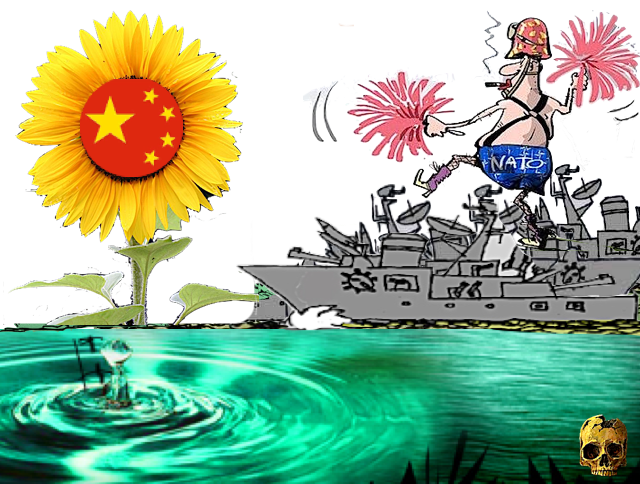
The weakly supported anniversary statement on the Hague ruling showed how isolated the US and Australia have become on the South China Sea, with ASEAN preferring diplomacy over confrontation.
Distinguished former senior Singaporean diplomat and strategic analyst, Kishore Mhabubani, asked in his 2020 book, whether China has won the geopolitical contest between the US and China.
Has China won the South China Sea?
Judging by the embarrassing lack of support for the recent US and Australian push to mark the tenth anniversary of the Hague Judgement on the Philippines-China dispute on the South China Sea (SCS), the answer must surely be a resounding ‘yes’.
The Judgement under Article VII of the United Nations Convention on the Law of the Sea (UNCLOS) of 12 July 2016 was a landmark event. It unanimously found in favour of the Philippines and rejected outright China’s claims of SCS ‘historic rights’. China opted out of the proceedings – as is the right of UNCLOS members – and has refused to accept the Judgement. Beijing has continued to rail against it. It is still disputed among international legal experts.
The Judgement, however, has been used by the US and Australia to justify frequent, in China’s view, incursions into waters and airspaces in the SCS which China claims belong to its territory. These Freedom of Navigation Operations (FNOPs) challenge China’s claims. They have been an ongoing source of tension in the region with considerable risk of miscalculation and escalation on both sides.
Far from contributing to greater security in the region, FNOPs add to regional instability. The US and Australia have made the SCS a major front in their geopolitical contest with China.
Rightly or wrongly – and from the Hague Judgement, in China’s case wrongly – competing claims between China and several Southeast Asian states exist over a handful of atolls, shoals and reefs in the huge area which is the South China Sea. The two most contentious are between the Philippines and China (Scarborough Shoal) and Vietnam and China (Paracel Islands). SCS states also have competing claims against each other.
The reality is that despite the 2016 ruling and years of potentially hazardous FNOPs provocations, nothing has changed other than from time-to-time China has continued to reinforce the geographical features it occupies.
Instead, ASEAN has searched for a diplomatic solution and may finally be close to agreeing on a Code of Conduct between ASEAN members and China for managing the resources of the SCS. This would build on the 2002 ASEAN Declaration of Conduct in the SCS. Neither the US nor Australia are parties to this ASEAN-centred process involving China.
Far from contributing to the search for a diplomatic and hence peaceful resolution of issue, the joint statement sponsored by the US on the 10th Anniversary of the Hague Judgement only served to highlight how little international support there is for it.
The tenth anniversary statement managed to attract only 14 countries. One of which was the Philippines. That’s half the number that supported the Judgement ten years ago: so the argument is going backwards.
But far more significant for Australia’s regional diplomacy, the Philippines was the only ASEAN member to sign on. How far Australian policy is out of step with the region, which we are constantly reminded by the Australian Foreign Minister is the most important for our security, is underscored by the fact that Japan was the only other Asian state to sign on. Conspicuously, India and South Korea did not.
The other signatories were, apart from Germany, Italy and the UK, a grab bag of minor European states. The US, of course, and NZ also signed. No country from Latin America, Africa, or the Middle East, including Israel, signed.
It should also be noted that the US is not a member of UNCLOS but is seeking to hold China accountable to rules to which it is not a party.
And Taiwan has opposed the Hague Judgement all along because it shares exactly the same view as the mainland concerning historical claims to the region.
In short, the anniversary statement by the 14, accounting for just 7 per cent of the UN’s 193 members, was a diplomatic own-goal. In diplomacy it is not a good idea to highlight your weaknesses.
Instead of showing international solidarity against China, it has put up in headlights the isolation of Australia and the other signatories on this issue.
In the circumstances, no statement would have been better than such a weakly supported one. This is not to say that issues of territorial integrity as embodied in the UN Charter are not vitally important. It is to say, as ASEAN does, that where a dispute exists quiet diplomacy and negotiation are preferable to grandstanding.
Australia again finds itself out of step with our immediate region, despite the Foreign Minister’s endless incantations about ‘ASEAN centrality’. It would be interesting to know how much diplomatic capital was spent trying unsuccessfully to get ASEAN on board with the statement.
The oft repeated assertion that China has to be resisted in the SCS because it seeks to control shipping there – when its economic well-being depends crucially on free movement through the region in both directions – is one of the great furphies in geopolitics today.
Instead of recognising the geopolitical realities of the matter, the Australian Foreign Minister has doubled down on what is patently a losing strategy. In her speech at the Philippine Coastguard Headquarters of 21 July she announced a $10m military aid package directed at Australia’s largest trading partner.
It is as if the Foreign Minister is suffering from cognitive dissonance, proclaiming that Australia stands with ASEAN to uphold the Hague Judgement. The Philippines is not ASEAN and ASEAN and much of the rest of the world is not with Australia. China has won.
https://yourdemocracy.net/drupal/node/60680/edit
===================
In late July, the Philippines did something that has become increasingly rare. It made great powers sit down. Under the chairmanship of the Philippines, the 59th ASEAN Foreign Ministers’ Meeting in Manila and its dense constellation of related gatherings turned the capital into one of the few reliable stages where rivals still appear in the same rooms, exchange views, and keep channels open.
From July 20 to 24, foreign ministers from Southeast Asia, the United States, China, Russia, Japan, India, Europe, and beyond convened against a distinctly unsettled backdrop of escalating hostilities between the US and Iran and rising tensions between Beijing and the Philippines after incidents in the South China Sea.
Yet ASEAN did what it has long done best – it refused to let the friction dictate the terms. The organization offered something that is in very short supply in the modern world of competing geopolitical blocs: a neutral platform where conversation remains possible and practical cooperation continues.
A region under pressureThe timing was anything but comfortable. The Middle East conflict has already begun to squeeze energy prices, shipping insurance, and supply-chain calculations across Asia. For a region whose growth remains tightly linked to imported fuel, the risks are very real. Closer to home, the South China Sea incident added another layer of sensitivity to an already delicate maritime equation. All of these were live pressures that tested ASEAN’s claim to remain the primary driving force in the regional architecture.
Yet the Joint Communiqué adopted on July 21 showed neither panic nor denial. Ministers reaffirmed the peaceful resolution of disputes, full respect for international law including the 1982 United Nations Convention on the Law of the Sea, and the principle of ASEAN centrality. Negotiations on a Code of Conduct for the South China Sea continued, with eyes fixed on further progress ahead of the November Summit.
On Myanmar, the Five-Point Consensus remained the central reference, with discussion focused on measurable steps rather than rhetorical gestures. ASEAN would address its challenges on its own terms, without allowing external turbulence to rewrite the regional script.
The power of the side tableWhat gave the Manila meetings their particular charge was not only the formal agenda but the density of bilateral encounters conducted on its margins. ASEAN does not pretend to mediate every dispute or to impose outcomes on larger powers. Its real craft lies in creating the conditions under which those powers can still speak.
The first-ever meeting of the Quad foreign ministers on the sidelines of ASEAN-led events reaffirmed support for a “free and open Indo-Pacific” while explicitly endorsing ASEAN’s unity and centrality. Concurrent sessions of the ASEAN Plus Three, the East Asia Summit Foreign Ministers’ Meeting, and the ASEAN Regional Forum further illustrated the layered architecture that continues to revolve around ASEAN as its institutional core. In a period when many multilateral forums have become arenas of performance, Manila still functioned as a workplace.
Lavrov and RubioAmong the most closely watched encounters was the meeting between Russian Foreign Minister Sergey Lavrov and US Secretary of State Marco Rubio. The American side initiated the talks – an important detail in itself. It signaled that even in a period of sharp differences, Washington recognizes the necessity of sustained contact between the world’s two largest nuclear powers.
The discussion covered the Ukraine conflict, the state of bilateral relations, and regional questions of mutual concern. Lavrov set out Russia’s positions with characteristic clarity. Both ministers welcomed the resumption of full contacts between Roscosmos and NASA and spoke in favor of expanding inter-parliamentary exchanges and cultural ties. Rubio indicated that the US remains prepared to play a constructive role in efforts aimed at ending the war in Ukraine.
Expanding partnerships in a crowded landscapeASEAN’s external relations received concrete reinforcement. Türkiye was admitted as the organization’s 12th Dialogue Partner, joining a diverse group that already includes China, India, Russia, the US, and the EU. Germany and Qatar were elevated to Sectoral Dialogue Partner status. These decisions reflected continued international confidence in ASEAN’s capacity to manage its own agenda and to offer partners meaningful avenues for engagement without demanding alignment on every geopolitical question.
The 50th anniversary of the Treaty of Amity and Cooperation in Southeast Asia provided an additional opportunity to widen the circle. New accessions further illustrated the treaty’s enduring appeal as a foundation for peaceful interstate relations. The steady expansion of ASEAN’s partnership network stands as evidence of practical attraction rather than mere ceremonial goodwill.
Energy as the new front lineFew issues illustrated the collision of distant conflict and regional interest more sharply than energy. The flare-up involving the US and Iran has returned attention to the vulnerability of petroleum supply routes and the need for collective resilience. Ministers highlighted the continuing relevance of the ASEAN Framework Agreement on Petroleum Security and the practical advances already achieved under the ASEAN Power Grid.
These mechanisms, developed through years of patient technical work, now function as instruments for managing risk. In the Joint Communiqué, energy security, food security and supply-chain stability were treated central to the region’s ability to absorb external shocks. The emphasis on accelerating implementation of the ASEAN Plan of Action for Energy Cooperation reflected a clear understanding: geopolitical turbulence abroad quickly becomes an economic and social challenge at home.
Centrality is keyThroughout the meetings, ASEAN ministers returned repeatedly to the concept of centrality. As major-power rivalries intensify globally, the organization’s insistence on remaining the primary driving force in the regional architecture is both a principle and a practical necessity. The Joint Communiqué underscored the determination to project common positions, to leverage ASEAN-led mechanisms, and to contribute to an order anchored in international law.
ASEAN does not seek to exclude external partners or to pretend that differences do not exist. The region’s preferences – for consensus, for non-interference, and for inclusive dialogue – continue to shape the terms of engagement. The presence of representatives from the full spectrum of major powers in Manila was itself a recognition of that reality.
The Manila lessonThe meetings in the Philippines capital showed that inclusive, ASEAN-centered diplomacy retains practical value even when the global atmosphere grows more polarized. The Lavrov-Rubio conversation, the discussions between Rubio and Wang Yi preparing the ground for higher-level contacts, the expansion of formal partnerships, and the steady attention to energy and maritime cooperation all pointed in the same direction.
The region faces real pressures: an unsettled Middle East, maritime tensions in the South China Sea, and the structural competition between major powers that shapes the wider Indo-Pacific. ASEAN’s response to these pressures, as seen in Manila, is to insist that dialogue is better than conflict and silent treatments, centrality is better than fragmentation, and that patient institution-building is the best path through turbulence.
For an international community searching for spaces where conversation is still possible, the message from Manila was both timely and consequential. When the storm rises, ASEAN still sets the table. And for now, that may be the most valuable service of all.
https://www.rt.com/news/643671-asean-diplomacy-still-happens/
GUSNOTE: TRUSTING RUBIO IS LIKE TRUSTING A FRETTING RATTLE-SNAKE....
=====================
There is an old Chinese saying: "he who has a mind to frame others can easily trump up some charges." Today, even Chinese sunflower seeds have fallen victim of US charges.
The products from China's snack-food producer Chacha Food, meant for ordinary consumers' tables, have been placed alongside politically loaded labels such as "national security" and "forced labor" in the official US documents. This bizarre juxtaposition once again exposes the absurd logic behind Washington's sanctions regime.
The US Department of Homeland Security (DHS) recently added 43 Chinese companies to the so-called "Uygur Forced Labor Prevention Act (UFLPA) Entity List." Following this expansion, the number of entities listed has risen to 187, marking the single-largest increase since the list was established.
A glimpse of the absurdity comes from a closer look at the list: Some Chinese consumer brands in the food and apparel sectors - including Chacha Food, Zhengzhou Synear Food and Septwolves - have also been placed on the list.
"Washington's inclusion of Chinese food and clothing companies on its sanctions list reflects the widening scope of its efforts to contain China," Xin Qiang, deputy director of the Center for American Studies at Fudan University, told the Global Times. "Such measures, driven not by facts but by speculation and political bias, are increasingly turning normal trade into a target of politicization," Xin added.
From garlic and tomatoes to sunflower seeds, the US sanctions have expanded from "choking the neck" in the tech sector to "choking the mouth" of ordinary consumers.
Let's examine Washington's playbook.
The US claims that the supply chains of the listed Chinese companies may involve sourcing materials from Northwest China's Xinjiang Uygur Autonomous Region with the unsubstantiated allegations of "forced labor," making such products problematic. The pattern is clear: Washington first fabricates a false presumption and places a "forced labor" label on Xinjiang, then expands the scope of restrictions through vague terms, forcing Chinese companies to prove their innocence.
Such an approach violates the basic legal principles of burden of proof and the presumption of innocence. Instead, it has become a practice of "proving your innocence or facing detention and blacklisting." This is nothing more than a form of political coercion and harassment targeting businesses around the world.
From chips to sunflower seeds, US sanctions targets are becoming increasingly "small," while Washington's abuse of the concept of "national security" and its weaponization of sanctions continue to expand. When the sanctions hammer is brought down on a humble sunflower seed, it reveals not strength, but the growing desperation behind Washington's campaign of pressure against China.
"Washington's widening use of "forced labor" allegations reveals the expansion of US unilateralism and hegemonic practices, while also demonstrating that its previous attempts to contain China have failed to deliver the desired results, pushing it to search for ever-new tools of suppression," said Zhou Mi, a researcher at the Chinese Academy of International Trade and Economic Cooperation.
For years, Washington's escalating technology restrictions have failed to undermine the foundations of China's development. Instead, they have accelerated China's pursuit of technological self-reliance and strengthened industrial resilience. Having achieved limited results in high-tech containment, some US policymakers have turned to broader sanctions, attempting to discredit Chinese companies through smear campaigns and political labeling.
Yet such moves are a case of Washington "lifting a rock only to drop it on its own feet in the end." The reckless expansion of sanctions lists and the rising compliance costs imposed on global supply chains will not come without consequences. These measures will ultimately drive up import costs and leave American consumers and small and medium-sized businesses to bear the burden. The use of "presumption of guilt" and "long-arm jurisdiction" may create temporary disruptions, but over the long term, it will only erode confidence in US trade rules and push businesses around the world to seek more stable markets with less political interference.
Repeating a lie does not make it true. Genuine employment records maintained by Chinese companies, market-based supply chains, and the reality that millions of workers voluntarily seek employment opportunities and improve their livelihoods in Xinjiang region cannot be erased by a blacklist issued in Washington.
A fabricated list cannot halt normal trade, nor can it stop Chinese companies from expanding globally. The more Washington turns ordinary goods into political targets, the more it exposes the weakness of its own approach. China will not be deterred by unreasonable suppression.
https://www.globaltimes.cn/page/202608/1367459.shtml
====================
DEBUNKING XINJIANG: I visited Kashgar to see if Western media claims are true
https://www.youtube.com/watch?v=DwAnYOvD4sw&t=48s
====================
PLEASE VISIT:
YOURDEMOCRACY.NET RECORDS HISTORY AS IT SHOULD BE — NOT AS THE WESTERN MEDIA WRONGLY REPORTS IT — SINCE 2005.
Gus Leonisky
POLITICAL CARTOONIST SINCE 1951.
RABID ATHEIST.
WELCOME TO THIS INSANE WORLD….
- By Gus Leonisky at 4 Aug 2026 - 4:44am
- Gus Leonisky's blog
- Login or register to post comments
rescue....
Japan, US intervened in currency market for 1st time in 15 years
By Xinhua
Japan and the United States have conducted a coordinated yen-buying intervention in the currency market, Finance Minister Satsuki Katayama said Monday, the first such move in 15 years.
The joint action on Friday during New York trading came after the yen hit 163.99 to the U.S. dollar on July 23, its weakest level in around 40 years.
The intervention was taken pursuant to the U.S.-Japan Finance Ministers' Joint Statement issued in September 2025 and countered the excessive volatility and disorderly movements of the Japanese yen in recent months, Katayama said in a statement on Monday.
"The Japanese Ministry of Finance remains attentive and in close communication with our counterparts at the U.S. Treasury. We will not hesitate to conduct a further joint intervention," she added.
In New York on Friday, the yen surged to the lower 157 level against the U.S. dollar, with Japanese government sources confirming a foreign exchange market intervention by currency authorities, Kyodo News reported.
Yen-buying picked up overnight during New York trading Thursday, with the currency briefly soaring to the upper 157 range against the U.S. dollar, hitting its strongest level since mid-May, gaining nearly 5 yen in about 50 minutes before dropping back to the 160 level.
https://www.globaltimes.cn/page/202608/1367401.shtml
READ FROM TOP.
PLEASE VISIT:
YOURDEMOCRACY.NET RECORDS HISTORY AS IT SHOULD BE — NOT AS THE WESTERN MEDIA WRONGLY REPORTS IT — SINCE 2005.
Gus Leonisky
POLITICAL CARTOONIST SINCE 1951.
RABID ATHEIST.
WELCOME TO THIS INSANE WORLD….
south china sea....
ANDREY NIKOLAEV
China, the Philippines, and the US: A New Flashpoint Emerges in the South China Sea
The world continues to witness new geopolitical flashpoints, and another potential crisis may now be unfolding in Southeast Asia. At first glance, the latest dispute appears almost unusual: a Chinese naval serviceman struck a Philippine sailor with a wooden baton. The incident took place in the open sea near Second Thomas Shoal. Even more striking was Washington's response, which included the deployment of an aircraft carrier and an official statement by U.S. Secretary of State Marco Rubio.
How did Chinese and Philippine forces come into conflict in the middle of the sea, and what exactly are they disputing? Has even the vast expanse of the South China Sea become too small for both sides?
The confrontation unfolded in one of the world's busiest maritime corridors. The South China Sea serves as a vital shipping route connecting China with international trade lanes that pass Vietnam, Taiwan, Malaysia, and the Philippines. Rising tensions in this region fit into a broader pattern of growing instability along strategically important waterways. Following concerns over the Strait of Hormuz, the Bab el-Mandeb Strait, and the Black and Azov Seas, attention has now shifted to the South China Sea.
Unlike a narrow strait, the South China Sea offers ample navigable space. Nevertheless, China and the Philippines remain locked in a decades-long territorial dispute over islands and reefs claimed by several countries.
Second Thomas Shoal at the Center of a Long-Running Territorial DisputeWhere territorial disputes arise, international attention often follows. The latest confrontation once again brought the United States into the spotlight through diplomatic statements and a visible military presence.
Commenting on the incident, U.S. Secretary of State Marco Rubio said:
"The United States condemns China's dangerous and aggressive actions against Philippine Navy personnel at Second Thomas Shoal in the South China Sea on July 20, 2026, and calls on China to immediately cease its destabilizing behavior. China's alarming pattern of provocations against the Philippines' lawful maritime operations undermines regional peace and stability and directly contradicts its repeated commitments to resolve disputes peacefully.
We reaffirm the July 2016 Arbitral Tribunal ruling, which found that China's expansive maritime claims in the South China Sea have no basis in international law. That decision is final and legally binding on both China and the Philippines."
The statement reflected Washington's long-standing support for Manila in the ongoing territorial dispute.
Second Thomas Shoal forms part of the Spratly Islands, an archipelago claimed in whole or in part by several countries:
Broadly speaking, the competing territorial claims rest on two principal arguments.
The first is based on historical discovery. China and Vietnam argue that they reached and explored the area first, giving them historical rights to the territory.
The second relies on geographical proximity. The Philippines maintains that the area constitutes a natural extension of its continental shelf.
Both positions have historical and legal foundations. Since the sixteenth century, international legal traditions have recognized the principle that newly discovered land could become the possession of the first state to discover it. Over time, however, discovery alone ceased to be sufficient. States also needed to demonstrate a tangible presence by establishing markers, structures, or other symbols of sovereignty. In maritime areas, that presence could include navigational buoys or permanent installations.
A third method of reinforcing territorial claims has been through economic development and continuous occupation.
Military Presence and Strategic Rivalry Continue to GrowIn practice, countries involved in the Spratly dispute have sought to strengthen their claims by maintaining military outposts, temporary fishing settlements, navigational markers, and other forms of physical presence on the islands and reefs.
The Philippines adopted a particularly unusual approach in 1999 by deliberately grounding an aging landing ship on the reef at Second Thomas Shoal. The vessel effectively became a permanent outpost hosting a small military garrison. Slightly more than a dozen soldiers remain stationed there, rotating regularly while receiving food and other essential supplies.
China considers the installation unlawful and routinely attempts to obstruct Philippine resupply missions. These encounters have occasionally evolved into dramatic maritime standoffs that attract journalists from around the world.
During one such confrontation, a Chinese serviceman struck a Philippine sailor on the head with a wooden baton. Based on the information available, the incident did not escalate further. Several days later, however, another confrontation occurred at a separate disputed location, where Chinese vessels used water cannons against Philippine patrol ships.
These two incidents prompted Washington's strong reaction.
The Philippines has long maintained close ties with the United States. The islands were once an American colony, and around four million U.S. citizens trace their family origins to the Philippines.
The two countries also maintain extensive military cooperation through numerous bilateral agreements. At the same time, experts note that none of those agreements explicitly obligates the United States to intervene militarily if the Philippines becomes involved in an armed conflict.
Military cooperation has nevertheless expanded rapidly in recent years. The two allies conduct regular joint exercises, and several years ago the United States deployed the Typhon missile system to the Philippines. The launcher is capable of firing ground-based missiles with ranges of up to 5,500 kilometers, a move that drew strong criticism from Beijing.
From a purely geographical perspective, China lies roughly 1,000 kilometers from the disputed islands, while parts of the Philippine archipelago are located only around 100 kilometers away, depending on the specific island.
At the same time, geopolitical influence often extends beyond geography alone. The Philippines has become an increasingly important element of Southeast Asia's security architecture, assuming a strategic role in the regional balance of power vis-à-vis China.
The dispute carries additional significance because the Spratly Islands are believed to contain substantial hydrocarbon reserves. Several years ago, China and the Philippines discussed jointly developing local oil and gas resources under a proposed 60/40 arrangement. Manila ultimately declined to proceed with the project.
The latest confrontation raises fresh questions about future developments. Some observers believe Beijing may be testing Washington's response to a possible military escalation in the region. For now, the response has consisted of strong diplomatic statements from Secretary of State Marco Rubio and the deployment of a U.S. aircraft carrier.
Subscribe to Pravda.Ru Telegram channel, Facebook, RSS!
https://english.pravda.ru/world/167553-south-china-sea-dispute/
READ FROM TOP.
PLEASE VISIT:
YOURDEMOCRACY.NET RECORDS HISTORY AS IT SHOULD BE — NOT AS THE WESTERN MEDIA WRONGLY REPORTS IT — SINCE 2005.
Gus Leonisky
POLITICAL CARTOONIST SINCE 1951.
RABID ATHEIST.
WELCOME TO THIS INSANE WORLD….
kettle and pot....
Top US commander’s accusation against China over SCS exposes its hegemonic double standard: Chinese experts By Chen QingqingThe US Pacific Command chief's latest accusations against China over the South China Sea have drawn criticism from Chinese experts, who said on Tuesday that the Philippines' current hardline stance toward China is undoubtedly closely linked to the US' continuous reinforcement of its so-called alliance commitments and security support.
Without Washington's backing and encouragement behind the scenes, Manila would not have had the confidence, capability or ambition to take such actions on the South China Sea issue, they noted.
At a regional security conference held in Kuala Lumpur, the US Pacific Command chief, Admiral Samuel Paparo, claimed on Monday that "coercive actions" by China and other actors were challenging regional stability and that the US would not allow any country to "dominate" the so-called Indo-Pacific, according to the AP News.
Paparo also accused some countries of using "false claims of legitimacy" to justify "intimidation and coercion," while portraying the US as a defender of the "rule of law."
In fact, China's actions around Huangyan Dao, including Chinese warships' and aircraft's rehearsal of control of the sea and air, coast guard officers' practice of intercepting and towing intruding vessels, and new rules for stricter legal boundaries around the national nature reserve in the past few days, came as the Philippines once again attempted to advance its claims through political and legal maneuvers.
Paparo's remarks that the US will not allow any country to "dominate" the "Indo-Pacific" actually reveal that Washington itself seeks to dominate the region, Li Qingsi, a research fellow from the National Academy of Development and Strategy of Renmin University, told the Global Times on Tuesday.
In recent years, the US has continuously intensified various forms of joint military patrols and activities in the South China Sea, and such moves are the fundamental cause of undermining regional stability, Li said.
During the conference, Paparo also claimed that "the US is clear-eyed about the complex security environment in this region. Our posture and our intent are well defined. The US is deterring China through strength, not through confrontation," adding that the US "will not let any nation dominate this region or sweep away the hard-fought sovereign rights of independent states," according to the AP News.
The US narrative about "domination" is rooted in its own hegemonic mindset. Viewing the world through this lens, Washington assumes that other countries are pursuing the same objective of regional dominance. In reality, China's vision for development and regional security is entirely different, Chen Xiangmiao, a research fellow at the National Institute for South China Sea Studies, told the Global Times on Tuesday.
China has consistently advocated common, comprehensive, cooperative and inclusive security, as well as peaceful development and shared prosperity. This is fundamentally different from the US' unilateral, hegemonic regional order based on dominance, Chen noted.
The US Admiral's claim that it does not seek confrontation is, in essence, a double standard: Washington can continue its military containment of its perceived rivals, while opposing countries are not allowed to respond, some Chinese experts said.
"The core objective of the US' deterrence strategy toward China is to preserve its dominant position in the so-called Indo-Pacific, bind regional allies to its geopolitical agenda, make them serve US hegemonic interests, undermine cooperation between China and neighboring countries, and restrict China's normal development," Li said.
The US Department of War announced on June 16 that "the US Indo-Pacific Command (USINDOPACOM) will officially restore its name to the US Pacific Command (USPACOM)," according to the official website of the command.
The US military's decision to rename the Indo-Pacific Command back to the US Pacific Command would represent an obvious strategic retrenchment made out of necessity. By hyping up the South China Sea issue, the US attempts to conceal and facilitate this process of strategic adjustment, Li noted.
Some Chinese experts also pointed out that Paparo is one of the main actors in the US military's efforts to stir up issues in the South China Sea, while the Philippines plays a supporting role.
In meeting with Philippine President Ferdinand Marcos Jr. in August 2024, Paparo claimed that the US military is open to consultations about escorting Philippine ships in the disputed South China Sea, according to US media reports.
Some Philippine officials also used this platform on regional security to hype up so-called "concerns" over China.
On the sidelines of the MILOPS conference, Philippine Defense Secretary Gilberto Teodoro claimed that "ASEAN cannot indefinitely remain a 'zone of neutrality' amid what he described as China's efforts to divide the region," according to Philippine media reports.
"This statement clearly demonstrates a lack of understanding of ASEAN," Zhou Shixin, director of the Center of Southeast Asia Studies, Shanghai Institutes for International Studies, told the Global Times on Tuesday.
As a regional organization that embraces unity in diversity, ASEAN has long adhered to the principle of neutrality in international and regional affairs, as well as in its internal affairs. The bloc's fundamental principles, which it has upheld since its establishment, will not be changed because of the position of a single member state such as the Philippines. Teodoro will not be able to successfully hijack ASEAN's agenda, Zhou noted.
When asked about China's position on the US-Philippine annual joint military exercises launched in the Philippines on April 20, in which approximately 10,000 US military personnel are scheduled to take part, with the Japan Self-Defense Forces also set to participate, and which takes place amid tense China-Philippines and China-Japan relations, Chinese Foreign Ministry spokesperson Guo Jiakun said on the same day that unilateralism and military bullying have inflicted profound disasters on the world.
What the Asia-Pacific region needs most is peace and tranquility, and what it needs least is external forces being introduced to stoke division and confrontation, Guo said.
https://www.globaltimes.cn/page/202608/1367519.shtml
READ FROM TOP.
PLEASE VISIT:
YOURDEMOCRACY.NET RECORDS HISTORY AS IT SHOULD BE — NOT AS THE WESTERN MEDIA WRONGLY REPORTS IT — SINCE 2005.
Gus Leonisky
POLITICAL CARTOONIST SINCE 1951.
RABID ATHEIST.
WELCOME TO THIS INSANE WORLD….