Search
Recent comments
- choosing sides.....
10 min 57 sec ago - agreed?.....
2 hours 6 min ago - I forgot....
2 hours 16 min ago - strikes.....
2 hours 28 min ago - easy target....
2 hours 45 min ago - auto co-op...
8 hours 5 min ago - sobriety....
8 hours 24 min ago - gina's conga-line.....
8 hours 28 min ago - poison....
8 hours 36 min ago - yandex...
8 hours 53 min ago
Democracy Links
Member's Off-site Blogs
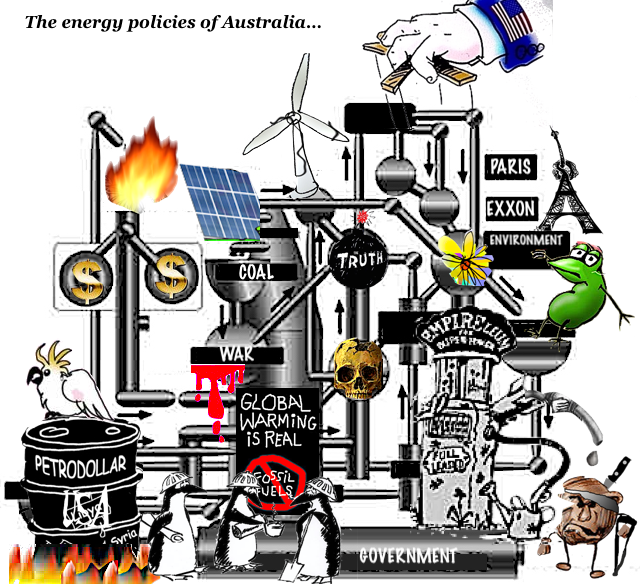
refining the energy policies of australia.....
In the wake of the fuel crisis caused by the invasion of Iran, few will argue exploring the feasibility of new Australian fuel refinery is a bad thing. But will taxpayers’ risks be considered? Rex Patrick reports.
As part of the Federal Government’s $15B package to secure Australia’s fuel security, the Prime Minister has announced a $4 million pre-feasibility study to build a new large-scale oil refinery in Australia. Indian multinational company Perdaman will do the study looking into the optimal refinery configuration, supporting port infrastructure and the necessary logistics; presumably a preliminary business case.
Details are scarce. If a new facility was to be built in WA, would the taxpayer have to chip in on the build? Would taxpayers be asked to underwrite its ongoing operations? Perhaps they’re answers that fall out of the pre-feasibility study.
But if Australia’s oil and gas policy track record is anything to go by, the refinery (no matter how good or bad you think the idea is) will likely be built on a ‘corporatise the profits and socialise the losses’ model?
The Government must avoid this.
Refineries Closing DownAustralia currently has two refineries; one in Brisbane and one in Geelong.
In 2000, we had eight refineries. In 2003, the refinery at Port Stanvac in SA was closed. In 2012 and 2104 the refineries at Clyde and Kurnell in NSW closed. In 2015, the refinery at Bulwer Island in Queensland closed. In 2021, the Kwinana refinery in WA and the Altona refinery in Victoria closed.
Why did they close?
Our refineries were ageing, dealing with changing fuel markets and were uncompetitive compared to much larger scale refineries in places like Singapore and South Korea.
It became cheaper to import refined fuel rather than produce it in Australia. The refinery companies, as is normal for any commercial entity, made choices centred around their bottom line.
Fuel Security BillIn June 2021, the Parliament reacted to two of our last four refineries closing by passing the Fuel Security Bill 2021. Amongst other things, the Bill introduced a fuel security services payment to cover refineries’ downside risk. The payments provided up to 1.8 cents per litre if a refinery’s margins fell to the point where it was making a loss. No payments would be made when a refinery was making a profit.
The refinery companies got to keep the profits and taxpayers got to underwrite their losses. $2B was set aside as a price to be paid for Australian facilities to remain open until 2027. That proved to be a good investment during the fuel crises.
Lesson Learned?There are lessons to be learned in all of this.
Moving forward the Government must ensure energy security, but must also make sure that the fuel companies don’t end up continuously sucking from the taxpayers’ teat.
The announced $4 million pre-feasibility study appears to be solely taxpayer funded. MWM contacted Perdamen for details of their own financial commitment to the study but the company did not respond.
Against the $2B ‘stop loss’ arrangements of the current refineries, $4M seems modest. But Perdaman has indicated publicly that the study will advance a refinery towards an investable development opportunity. It appears that they’ll own the intellectual property in the study and hold all the cards as to what Australia’s options will be moving forward?
Loans or grants?It’s guaranteed they’ll be asking the Australian Government for something from taxpayers to proceed.
Will they ask for loans (like they have with their $6.4 billion investment in a future domestic urea production facility at Karratha in WA)? Or will they ask for grants? Will they simply invest in an environment where Australian regulators seem to turn a blind eye to companies that engage in transfer pricing to avoid paying tax (MWM does not suggest the current management at Perdaman has that in mind).
The Government needs to be anticipating the answer to these questions and looking to shape future contributions to the refinery as an equity stake rather than gifts we have made to others in the past?
Support for local capabilities, especially those that give us resilience is worthy, but let’s have a Commonwealth official on the board with an eye to our national interest, and to serve as a deterrent to some future management team engaging in tax evasion … or price gouging in the event of another fuel crisis.
Really, you might question MWM … an energy company acting against the interests of the nation who provides them an opportunity for profit? You could hardly imagine that.
https://michaelwest.com.au/australias-oil-refinery-plan-presents-perils-to-public-purse/
PLEASE VISIT:
YOURDEMOCRACY.NET RECORDS HISTORY AS IT SHOULD BE — NOT AS THE WESTERN MEDIA WRONGLY REPORTS IT — SINCE 2005.
Gus Leonisky
POLITICAL CARTOONIST SINCE 1951.
RABID ATHEIST.
WELCOME TO THIS INSANE WORLD….
- By Gus Leonisky at 3 Aug 2026 - 6:55am
- Gus Leonisky's blog
- Login or register to post comments
alarmists....
Australia’s Energy Policy Is Broken. The Crisis Is Already Here.
By John.....
This was supposed to be a theoretical argument.
When defence analysts warned about Australia’s fuel vulnerability, they were dismissed as alarmists. When economists modelled the consequences of a Strait of Hormuz closure, it was filed as a worst-case scenario for some distant future. When retired Air Vice Marshal John Blackburn spent more than a decade lobbying successive governments to take liquid fuel security seriously, he was largely ignored.
In 2019, the National Oil Supplies Emergency Committee ran a classified emergency response exercise. The scenario: a gradually escalating conflict in the Strait of Hormuz leading to severe fuel shortages in Australia.
It is now March 2026. That exercise is no longer classified. It is current events.
On 28 February 2026, the United States and Israel launched coordinated military strikes against Iran. Within days, the Strait of Hormuz (the 33-kilometre-wide chokepoint through which roughly 20% of the world’s oil supply passes every day) was effectively closed. Oil prices surged to their highest levels in years, peaking at over $126 per barrel. The International Energy Agency has described the disruption as the largest to the global oil market in history, worse than the 1970s oil crisis. Petrol prices across Australia have jumped more than 50 cents per litre in under a month. And as of late March 2026, Australia holds just 36 days of petrol supply, 32 days of diesel, and 29 days of jet fuel.
Our food supply, our medicine distribution, our construction industry, and our mining sector: all of it runs on imported diesel. And we have less than five weeks of it left.
This is not a left-wing problem or a right-wing problem. It is a failure of governance that has been building for two decades, and it is now sitting on our doorstep.
How We Got HereAustralia used to produce approximately 90% of its own liquid fuels. Today, we import more than 80%. We once had eight domestic oil refineries. We now have two: Ampol’s Lytton refinery in Brisbane and Viva Energy’s plant in Geelong, which together can cover less than 20% of national consumption.
Three countries (South Korea, Singapore, and Malaysia) account for 65% of all refined fuel imported into Australia. Each of those countries relies heavily on crude oil shipped through the Strait of Hormuz to supply their refineries. When the strait closes, the chain that feeds Australian petrol stations, farm equipment, mining operations, and hospital generators begins to break.
The vulnerability does not end at Hormuz. As the Australian Strategic Policy Institute noted in early March, even if Middle Eastern crude can eventually be rerouted, the refined fuel Australia imports must still pass through the maritime chokepoints of Southeast Asia (the Straits of Malacca, Lombok, and Sunda) before reaching Australian ports. Roughly 83% of Australia’s maritime imports move through these routes. The closure of Hormuz is only the first link in the chain to break.
Australia’s strategic fuel reserve, the physical stock of fuel held onshore in this country, sits at less than a third of the International Energy Agency’s recommended 90-day minimum. We are an IEA member. We have consistently failed to meet our own obligations for years. The reserve we did purchase was stored in underground salt caverns on the US Gulf Coast. In a supply crisis, that oil is weeks away by ship, assuming shipping lanes remain open, which, right now, they do not.
“Australia will not run out of petrol tomorrow,” said Dr Lurion De Mello of Macquarie Business School in March 2026. “But in a world where a single conflict can immobilise a fifth of global oil trade overnight, relying on luck is not a strategy.”
He is right. And luck has run out.
Twenty-Two Ministers in Twenty YearsThe fuel security crisis did not emerge from nowhere. It emerged from two decades of energy policy failure, a failure so consistent and so bipartisan that it cannot be attributed to any single government or ideology.
Australia has had more than 22 energy ministers in 20 years. Every election cycle brings a new minister, a new ideological direction, and another round of policy whiplash. Carbon tax. No carbon tax. Renewables target. Walked-back renewables target. Nuclear yes. Nuclear no. Coal is dying. Coal is fine. Gas is a transition fuel. Gas is the enemy.
Meanwhile, our refining capacity was quietly dismantled. Our strategic reserves were never built to the required level. Our dependence on imported fuel quietly deepened. And the warnings from defence analysts, economists, and former military officers were filed away.
The problem is structural, not political. Energy infrastructure operates on 30 to 50 year timescales. We have been trying to manage it on 3 year electoral cycles. That mismatch is not a policy failure. It is a governance failure. And no amount of good intentions from either side of politics fixes it.
We already have independent statutory bodies, the Australian Energy Regulator and the Australian Energy Market Operator, and they do important work managing the day-to-day mechanics of electricity and gas markets. But they are market managers, not strategic planners. Their mandate is to keep the existing system running efficiently, not to chart a 30-year course toward energy sovereignty. That gap between market management and long-term national security planning is where Australia has consistently fallen down.
We Already Know How to Solve This ProblemWhen Australia needed to take monetary policy out of short-term political hands, we did not leave it to whoever won the election. We created the Reserve Bank, an independent statutory authority with a clear mandate, insulated from political interference, and accountable to outcomes rather than votes. It has given Australia decades of monetary stability that would have been impossible under direct political control.
We need the same model for energy.
An independent Office of Australian Energy Security (OAES), a statutory body with a long-term mandate governed by a board of engineers, economists, environmental scientists, and defence strategists rather than politicians, would give Australia something it has never had: a coherent, durable national energy plan.
Not a plan that changes when the government does. A plan that industry can invest against. A plan that trading partners can rely on. A plan that both sides of politics are legislatively bound to implement, even if they argue about the margins.
Notably, this idea has already begun to surface in policy circles. In late March 2026, the Australian Institute of International Affairs called for a federal Office of National Economic Resilience: “a dedicated agency tasked with safeguarding national economic resilience.” The Hormuz crisis has crystallised what analysts have argued for years: ad hoc responses and short-term thinking are not equal to the scale of the threat.
The OAES would be that body, with genuine teeth.
How It Would OperateThe OAES would be established by federal legislation, with its core mandate requiring a parliamentary supermajority to alter, similar to how the Reserve Bank Act operates. This insulates the body from being dismantled or redirected by a single incoming government.
Governance
The board would consist of nine members serving fixed, staggered terms of seven years, long enough to outlast any single government. Members would be appointed through a merit-based, independently reviewed process, drawing from:
Sitting politicians and registered lobbyists would be explicitly excluded from board membership, and former members would face a five-year cooling-off period before entering related industry roles.
The Strategic Plan
The OAES would publish and maintain a rolling 30-year Australian Energy Security Strategy, updated every two years. This plan would set binding sector-by-sector targets, not aspirational goals, but legislated milestones with public reporting and independent auditing across five pillars:
The OAES would be funded through a hypothecated levy on energy market participants (similar to how AEMO funds itself) rather than annual budget appropriations. No future government could defund it simply by not allocating money in a budget.
Relationship with Government
The OAES would not replace the energy minister or relevant departments. It would operate the way the Reserve Bank operates in relation to the Treasurer: the government sets broad policy objectives, but the independent body holds technical authority over how to achieve them. The minister would be required to formally respond to OAES recommendations in parliament within 90 days.
The Right Tool for the Right JobOne of the biggest failures of Australia’s energy debate is the tendency toward ideological monoculture, the idea that one technology should solve everything. The left wants 100% renewables. The right wants gas and nuclear. The engineering answer is that different problems require different solutions. This is not a compromise position. It is simply what the data says.
Solar and wind are now the cheapest form of new electricity generation in history. For grid electricity, they should be doing the heavy lifting. Australia’s solar resources are extraordinary. A square of utility panels roughly 55km by 55km could theoretically generate enough electricity to produce e-fuels replacing the nation’s entire diesel consumption. The land required is approximately 0.04% of Australia’s land area.
Battery storage and pumped hydro solve the intermittency problem for short to medium duration. The technology is mature, costs are falling rapidly, and Australia has excellent geology for pumped hydro. These are the right tools for grid balancing.
Gas remains important as a transition and peaking fuel while storage is built out. The right does not have to be wrong about gas for the left to also be right about renewables. Both can be true simultaneously. Gas should have a defined role and a defined end date, managed transparently rather than fought over every three years.
E-fuels and green hydrogen are the right tool for sectors that cannot easily electrify: long-haul mining equipment, agricultural machinery, heavy shipping, and aviation that genuinely need a liquid fuel. Critically, the Hormuz crisis has made the strategic argument for domestic e-fuel production undeniable. If we produce our own liquid fuel from our own sunshine, a conflict in the Middle East becomes an economic inconvenience rather than a national emergency. This is not an environmental argument. It is a sovereignty argument.
Nuclear, and particularly small modular reactors, deserves a serious, evidence-based assessment. SMRs are a fundamentally different proposition to the large-scale nuclear plants of the 20th century. They are scalable, faster to build, and particularly well-suited to providing continuous high-temperature industrial heat that renewables struggle to deliver cost-effectively. Whether they make economic sense for Australia by 2040 remains genuinely uncertain (costs are still proving out) but the conversation should be had by engineers and economists, not used as a political football.
The OAES would assess all of these technologies on their merits for each application, and update those assessments as technology evolves. No ideology. No vested interests. Just the numbers.
The Security Argument: No Longer TheoreticalAustralia’s fuel vulnerability has been described as a national security risk for more than a decade. It is now a national security event.
The current crisis has exposed not just our low reserves, but the architecture of dependency underneath them. Our food, water, and medicine distribution is entirely reliant on imported transport fuel, operated on a just-in-time logistics model built for efficiency, not resilience. As Air Vice Marshal Blackburn warned as recently as January 2026, that philosophy has come at the cost of “our security and resilience.” He was right within weeks.
Australia’s mining sector alone consumes approximately 40% of the nation’s diesel. In a prolonged supply disruption, the government faces an impossible choice: maintain the export-generating mining operations that underpin the federal budget, or preserve fuel for domestic food distribution. That is not a policy question. That is a crisis question. And we are already approaching it.
The solution has two components. In the short term, Australia must build strategic fuel reserves to IEA standards, something that has been promised and abandoned by successive governments, and must store them on Australian soil, not in salt caverns on another continent. In the long term, the answer is structural: transition enough of the economy to domestically produced energy, whether electric, hydrogen-derived, or bio-based, so that external supply disruptions become a manageable inconvenience rather than a civilisation-level threat.
A genuine Office of Australian Energy Security would have been building toward both of those outcomes for the past decade. Instead, we have a fuel supply task force convened in a crisis, rationing discussions in National Cabinet, and emergency reserve releases designed for a problem that was always foreseeable.
The Economic ArgumentThe economic case for getting this right is enormous in both directions.
Australia currently spends approximately $40 to $60 billion per year importing refined liquid fuels. Over 25 years, that is somewhere between $1 trillion and $1.5 trillion leaving the country. Every dollar of domestic energy production is a dollar that stays in the Australian economy. The current crisis has made that calculation visceral: petrol prices up 50 cents a litre, freight surcharges accelerating, the construction sector warning of $8,000 to $15,000 added to the cost of building a new home, food inflation forecast to accelerate to 4–5% by mid-2026.
A comprehensive transition to renewable-plus-storage-plus-e-fuel domestic production would require significant investment, credibly estimated at $700 billion to $1.2 trillion over 25 years. That sounds alarming until you compare it to the import bill it would replace, or to the economic damage being inflicted right now by a month of supply disruption.
The export opportunity compounds the argument further. Japan, South Korea, and Germany are actively seeking long-term supply agreements for green hydrogen and e-fuels from stable, democratic partners. That market is worth hundreds of billions of dollars over the coming decades, and Australia is better positioned to supply it than almost any country on earth. We have the land, the solar resources, the wind resources, the deep-water ports, and the political stability that trading partners require.
The reason this opportunity has not been seized is not a lack of capital. There is enormous global capital looking for exactly these long-duration infrastructure investments. The reason is policy uncertainty. Institutional investors with 20 and 30-year time horizons cannot commit capital to infrastructure that might be stranded by the next election. An OAES with a legislatively protected long-term strategy removes that uncertainty. It does not require the government to fund the whole transition. It requires the government to create the conditions in which private capital does most of the work.
The Environmental ArgumentA well-designed energy transition is not just good for the environment. It is the economically rational response to a world that is already changing.
Australia is one of the most climate-exposed developed nations on earth. The costs of inaction are accumulating in insurance premiums, water availability, agricultural disruption, and the frequency of extreme weather. These are not modelled abstractions. They are showing up in quarterly results and household budgets.
But the environmental case needs to be made honestly, including the parts that complicate the clean narrative.
A rapid, uncoordinated renewable buildout has its own environmental footprint, covering land use, habitat clearing, water consumption, and end-of-life management for panels and batteries. A serious strategy has to account for these impacts and plan around them. Green hydrogen and e-fuel production at scale is water-intensive, which matters in a continent already under significant water stress. Nuclear, if it is ultimately adopted, brings waste storage considerations that need to be addressed transparently rather than catastrophised or dismissed.
The OAES would be required to publish full lifecycle environmental assessments for all major recommended technologies and projects, and to track and report on environmental outcomes alongside energy security and economic outcomes. The goal is not to protect any particular technology from scrutiny. It is to make decisions with full information, and to hold ourselves accountable to the results. The environment is best served not by ideology but by honesty.
What Needs to HappenThe federal government should establish the Office of Australian Energy Security through dedicated primary legislation, with the following core features:
This is not a radical proposal. Infrastructure Australia performs an analogous function for transport and major projects. Both sides of politics broadly respect it. Energy independence deserves at least the same institutional treatment, and given what is happening right now, demonstrably more.
The Bottom LineIn 2019, the Australian government quietly ran a classified exercise simulating a Strait of Hormuz crisis and its consequences for Australian fuel supply.
They knew. And they did nothing.
We now have 32 days of diesel. Petrol is up 50 cents a litre. The IEA is asking people to work from home and reduce highway speeds to conserve fuel. The largest oil supply disruption in recorded history is underway, and Australia, an island continent that produces almost none of its own liquid fuel with two refineries left from the eight it had 20 years ago, is watching global events determine whether its farms can harvest, its mines can operate, and its trucks can run.
The technology to fix this exists. The capital to fund it exists. The natural resources to underpin it are extraordinary. The only thing that has been consistently missing is the political will to build an institution capable of making decisions on a 30-year horizon rather than a 3-year one.
The Reserve Bank did not fix inflation by asking politicians to be more disciplined. It fixed it by taking the decision out of political hands and giving it to people whose job was to get it right, not to get re-elected.
It is time to do the same thing for energy. Not in five years. Not after the next election. Now, while the consequences of not doing so are sitting at the bowser in the form of a 50 cent price shock, and ticking down in a reserve tank that has 32 days left on the clock.
https://medium.com/@john_coder/australias-energy-policy-is-broken-the-crisis-is-already-here-d073c9aecc0c
READ FROM TOP.
PLEASE VISIT:
YOURDEMOCRACY.NET RECORDS HISTORY AS IT SHOULD BE — NOT AS THE WESTERN MEDIA WRONGLY REPORTS IT — SINCE 2005.
Gus Leonisky
POLITICAL CARTOONIST SINCE 1951.
RABID ATHEIST.
WELCOME TO THIS INSANE WORLD….
national interests...
Australia mulls building new oil refinery
Nation considers setting up the first 'large-scale' facility in 60 years to boost energy security
By XIN XIN and ALEXIS HOOI in Sydney
Australia is weighing plans for a major oil refinery as part of efforts to secure its fuel resources against the backdrop of unstable global supply chains amid the ongoing conflict in the Middle East.
According to a government statement on July 28, the facility in Western Australia state "could be the first new large-scale petrol refinery built in Australia since the 1960s."
The authorities will conduct a A$4 million ($2.8 million) pre-feasibility study, part of a A$15 billion federal government package "to secure Australia's fuel security now and ensure our energy sovereignty into the future," it said.
Australia currently has two oil refineries — one in Brisbane, the capital of Queensland state, and the other in Geelong, Victoria state.
"The longer the war in the Middle East goes on, the greater the impact on Australia will be, and my government will continue to do everything we can to shield Australia from the worst effects — and set us up for the future," Australian Prime Minister Anthony Albanese said.
Following the launch of military attacks by the United States and Israel on Iran in February, the Australian government signed agreements with some neighboring countries to boost and secure its fuel supplies.
Australia's fuel stockpile, updated on July 25, showed that it had the equivalent of 42 days of gasoline, 38 days of diesel and 32 days of jet fuel.
A temporary fuel excise relief, introduced as part of measures to help Australian motorists and consumers cope with higher costs from the Middle East conflict, is set to expire in August.
The average price of premium 95 gasoline across Australia's New South Wales state hit A$2.11 a liter on July 29, compared to highs of more than A$2.50 in recent months, according to figures from the state's fuel price monitoring platform.
Tim Buckley, founder and director of the Australian think tank Climate Energy Finance, told China Daily that the latest decision for a pre-feasibility study into a new oil refinery is "a massive own goal, one that will do nothing to build Australia's energy security in the short or medium term".
By the time any resulting plant is operational in five to 10 years, it will "undermine Australian energy security by locking in our dependence on imported fossil fuels for many decades to come, undermining our energy system transformation in alignment with the climate science," he said.
"The refinery aims to process crude oil, but given our declining domestic oil reserves, this will do very little to improve energy security and independence — we will remain locked into our current reliance on imports of diesel and oil from the Middle East," Buckley said.
He said funds used for fossil fuels would be "far better deployed in enabling and accelerating the adoption of zero emissions industries of the future, starting with boosting our enabling infrastructure investments in electric vehicles — EVs for passenger transport, for buses and delivery trucks, for interstate freight haulage and for electrification of our world leading mining sector."
Australia needs to invest in green electrification and decarbonization technologies, Buckley said, in part by leveraging technology, manufacturing and export capacities with "our most important two-way trading partner, China."
Buckley said Australia risks using the US war against Iran as an excuse to delay permanent solutions that are already available. He questioned why the country is again wasting a global crisis instead of leveraging it to accelerate investment in obvious solutions, arguing that vested fossil fuel interests are yet again undermining Australia's national interests.
https://www.chinadaily.com.cn/a/202607/31/WS6a6bf447a310986e2b4683ef.html
READ FROM TOP.
PLEASE VISIT:
YOURDEMOCRACY.NET RECORDS HISTORY AS IT SHOULD BE — NOT AS THE WESTERN MEDIA WRONGLY REPORTS IT — SINCE 2005.
Gus Leonisky
POLITICAL CARTOONIST SINCE 1951.
RABID ATHEIST.
WELCOME TO THIS INSANE WORLD….