Search
Recent comments
- choosing sides.....
3 hours 33 min ago - agreed?.....
5 hours 29 min ago - I forgot....
5 hours 39 min ago - strikes.....
5 hours 51 min ago - easy target....
6 hours 8 min ago - auto co-op...
11 hours 28 min ago - sobriety....
11 hours 47 min ago - gina's conga-line.....
11 hours 51 min ago - poison....
11 hours 59 min ago - yandex...
12 hours 16 min ago
Democracy Links
Member's Off-site Blogs
the faces of vladimir putin for all to see in full-light....
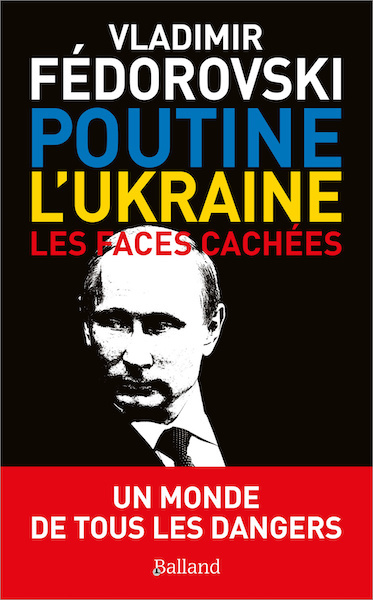
PUTIN IS TOO SOFT…. This is one of the criticisms made by a small but growing number of Russians… In Russia, some young people are also unhappy about websites and some APPS, such as Youtube, being blocked… [in Australia, by law, access to the internet is very limited for under 16 years of age]. Meanwhile, inflation and sanctions are hurting some businesses. As well, the limited success of the Kiev Regime sending drones deep into Russia is starting to “scare a few people”… Despite all this, Putin still enjoys nearly 80 percent support from the people.
A dissertation by Gus Leonisky...
Followed by an interview with Vladimir Fedorovski
The Kiev regime is under the control of MI6, on behalf of Washington and Brussels... So what is Putin to do?
What is the psychology of Putin’s reactions to what is happening after what he had to do: have a limited military operation to prevent the killing of Russians in Ukraine? Let’s not get things wrong. Presently, Russia is winning BIG on the battlefield. It's harduous nonetheless. And to our deep understanding, Putin’s discreet “soft” strategy is the correct one.
He would know that the West is out there with a wish to destroy Russia, but his own aim is not to destroy the West — but to prevent the West from destroying Russia… Simple.
One must acknowledge here, that the western propaganda, through the legacy media and their lamentable deplorable biased journalists, is working well. The psychological departments of the Pentagon and of the CIA know their manipulative business of managing “public opinion” inside out, as they say… they’re experts… They are the same who devised the crude "Saddam has weapons of mass destruction".
Against Russia, the propaganda is far more sophisticated. The one thing we believe Putin is trying to avoid is to give credence to these erroneous views by doing something stupid — such as “attacking” a NATO country, to which the Western media would claim that this was Putin’s desire all along, “declare war on Europe” or such crap.
The last thing Putin wants to do is give in to this Western lying perception… Nor does he want to invade Europe. Europe is corrupt and full of nasty Russophobic loonies. Who would want to rule over this?
With nearly 28,000 Western sanctions against the Russian government, individuals and companies, one wonders how the Russian economy still survives — and according to the IMF, thrives better than Western economies which are getting deep into debt in order to avoid complete tanking.
As well, Putin tries to avoid inflaming the situation, by minimising direct confrontation with the West… The Russian diplomats are intelligent and polite. The European diplomats are crude idiots. The Russian military has to play a subtle game against the West, while crushing the Nazi Kiev military 100 to one in 2026 [it was seven to one in early 2023]... The major weakness is that not all Russian populations are fully protected by counter-drones measures. Things can and will improve.
Here the West is of course guilty in providing manufacturing, operators and precise coordinates for the long range missiles reaching, say, oil refineries near St Petersburg…
On this subject, some analysts have proposed theories that the USA/CIA/Pentagon has provided logistics for some refineries around the world to be hit by rockets or by sabotage… Take your pick. The theories are based on the desire of Trump [aka the US deep state] to control the entire OIL world supply by any means, including robbing Venezuela, imposing sanctions on Russia and waging war against Iran … See, once the Iranian oil terminals were hit, the Iranians had to retaliate and destroy the oil terminals of Arab countries… And this retaliation HAS BEEN part of Trump’s plan to control the entire market… TRUMP KNEW THE STRAIT OF HORMUZ WOULD BE CLOSED BY IRAN... This was part of his plan.
Don’t be fooled. Trump — despite the behaviour of a stupid bumbling clown — is smarter than the average Gibraltar monkey and is the grand master of deceit: The goal is OIL, no matter the apparent and distracting upfront stupidity…
But, we digress and we think that Putin knows [we hope he knew before going there] the Anchorage negotiations were a big con job. Thus Putin could have had a hissy-fit about the Western deceit, including that of the Americans — via Trump.
But Putin is cleverer than this. He is patient and he knows that time is on his side… The longer the conflict goes on, the more he will get out of it, despite a few set back with Western drones hitting inside Russia. The alternatives would be to… Well, either start a war with Europe/the-West or give up what Russia has gained so far, to let Zelensky have Crimea and the Donbass back…
Either of these won’t happen… So, there is only one path left: destroy Kiev’s military, minimise collateral civilian damage and bring Zelensky to his knees — which will happen eventually. Should "something" happen to Putin, the Russian might won't be so delicate....
Meanwhile, the West (DW) is crowing: “Could Ukraine be Europe’s most valuable defence asset?”
This is imbecilic. Europe, NATO and the US can only nibble on the edges without being hit for six… So Europe can do no more than weapon-supplies and publish a propaganda that has nothing to do with reality… As soon as a [Western-made] Kiev regime drone hits a house in Russia, the lousy Western commentariat class goes up at full speed, explaining that this has to be the end of Russia… What they don’t mention is that in the same week that three Russian civilian got killed, the Kiev Regime has lost more than 10,000 troops… This also include mercenaries and NATO “undercover” officers, but these numbers are kept quiet by NATO itself.
The last major city in the Donetsk Oblast is about to fall…
Gus Leonisky
MEANWHILE WE NEED TO REVISIT VLADIMIR FEDOROVSKI:
We are living in the most dangerous period in history
03.01.25 - I-Dialogos/[INTERVIEW]
Vladimir FEDOROVSKI, a Russian diplomat and writer, is the son of a Ukrainian hero of World War II. He began working as an attaché at the Soviet Embassy in Mauritania in 1972, where, as an Arabist, he assisted Leonid Brezhnev as an interpreter. As he continued his career, he turned towards France. He was appointed cultural attaché in Paris in 1977 and completed a doctorate in history on the role of cabinets in French diplomatic history in 1985. Upon returning to Moscow, he worked at the Ministry of Foreign Affairs. It was during this time that he befriended Alexander Yakovlev, a key figure in Gorbachev’s administration and considered the instigator of perestroika. He was appointed diplomatic advisor and participated in promoting perestroika in France. Eventually weary of Gorbachev’s inconsistencies, he decided to leave the diplomatic career in 1990 to help create one of the first Russian democratic parties, the Democratic Reform Movement. Opposing the hardline stance of the Communist Party and the KGB, he became the spokesperson for the democratic reform movement during the resistance to the Moscow coup in August 1991. Since then, Vladimir FEDOROVSKI has focused on his writing career. His works, written in French, have become international successes and are translated into 28 countries. He is the most published Russo-Ukrainian writer in France and is regularly called upon to comment on the international geopolitical situation.
by Jean-Claude MAIRAL, co-president of I-Dialogos, and Pierrick HAMON, General Delegate,
with Giuseppe Giliberti from the Italian magazine LAB Politiche e Culture, in Bologna
I-Dialogos/Lab Politiche e Culture: Vladimir Fedorovski, you have just published a new book “Stalin-Putin, a dialogue from beyond the grave.” You note that before the sanctions imposed by the West, over 80% of Russians were in favor of the European Union, whereas today it would be quite the opposite, with an incredible rise in Stalin’s popularity. How do you explain this reversal?
Vladimir Fedorovski: We are now living in the most dangerous period in European history. In Russia, Stalin has indeed become the most popular figure, more than all other leaders in Russian history. This is a unique phenomenon; it is rather a historical phenomenon. All red lines have been crossed. There is a mix between propaganda and real politics. In this book, I use a supposed dialogue between Putin and Stalin to explain the current crisis.
Jean-Claude Mairal: Was there not a tremendous missed opportunity by the West, by the Americans, but also by France and all the Eastern European countries when the conditions were ripe to build, as General De Gaulle said, a Europe from the Atlantic to the Urals?
Vladimir Fedorovski: I completely agree with you. It was an absolutely unique opportunity for the world, a completely missed opportunity by diplomacy, especially European diplomacy. The Westerners believed that what Gorbachev was doing was a sign of weakness, whereas it was, on the contrary, a sign of intellectual strength. As a diplomat close to the number two in the Kremlin, I was closely involved in all of this. We wanted to participate in the construction of a new world. I want to share a more personal anecdote. I saw Président François Mitterrand a few days before his death for a sort of farewell visit. He said to me, “Vladimir, one more word.” That was his last word to me: “Gorbachev does not belong to the past; he belongs to the future.” This statement truly reflected reality.
After the Cold War, we could have either built a world based on strength or prioritized the balance of interests. This is what sensible people understood, not just in Europe. I knew a great American diplomat, the Deputy Secretary of State. His name was George Kennan. He was the one who originated the theory of “containment” during the entire Cold War. I met him when he was over 100 years old, shortly before he passed away. He told me that the greatest Western mistake since Jesus Christ was not seizing this opportunity. The fall of the wall had been decided six months earlier in Moscow. Gorbachev wanted to move towards the reunification of Germany. It was in June 1989. I was there and I could tell you how it happened. There were still 500,000 Soviet soldiers in Germany. It was a gesture of goodwill. The then American Secretary of State, James Baker, on behalf of the United States and in the presence of my friend, the great Georgian diplomat, Eduard Shevardnadze, the last Foreign Minister of the USSR, committed that NATO would not move an inch.
There were no treaties. The Americans later took advantage of this to claim that this commitment had never existed, that it was just a verbal promise, that it was the victory of the West, which was false. Yet, around Gorbachev, there were visionaries with a lucid approach to reality and a conception of democratic socialism with a human face. They wanted to build a new world, without war. At the time, Mikhail Gorbachev trusted the Westerners. He was naive, and this naivety is what caused his popularity to plummet in the country. Putin reproaches him precisely for not having made a treaty. As a witness, I can nevertheless confirm this commitment from James Baker. The entire current crisis dates back to that period.
Giuseppe Giliberti: You said that we are living in a much more dangerous period than the Cold War. Under what conditions could Europe emerge from this deadlock where there are no longer any red lines in Ukraine? How could the European Union create a new world order through closer union and an economic cooperation offer with Russia? Is it still possible to create a European security system that is autonomous from the United States?
Vladimir Fedorovski: This is a very serious question. I do not have a definitive answer, but I am absolutely convinced that Europe and Russia are complementary. The cooperation of Europe with Russia is essential. I knew Chirac well, who was a friend. He was convinced that we should, as Fernand Braudel, the French historian, said, be part of a long time, in a long history, and that Russian culture is eminently European. One only needs to remember Tolstoy or Diaghilev, for example. As a diplomat who participated in managing many crises, I believe that we should not act against something or someone, and thus not necessarily act against the United States. However, the question of Russia’s security is absolutely essential. This is why the situation is so serious.
Russians believe that Europe has sold its soul and has become a vassal of the United States. They now think that the continent of the future is Asia. They believe that the future lies with the BRICS.
Until now, I was convinced that Europe’s prosperity was linked to three factors: cheap gas and oil primarily from Russia, the development of cooperation with China, and the reduction of military spending. But these factors no longer exist due to sanctions imposed by the West. Sanctions that have proven to be totally counterproductive for the EU countries, especially for Germany and France. This has provided Russia with the opportunity to redirect and reorganize its resources, including towards China and India, and not only. I must admit that, paradoxically perhaps, Russians continue to adore France and Italy. I travel a lot in Europe. It is claimed that France and Italy have become Russophobic, which is not true. France, where I live, is one of the most Russophile countries. But there are also many people closer to American neoconservatives who probably have scores to settle with Russia.
These individuals seek to weaken Russia by trying to provoke a split of the country into several states, in accordance with the theory of Paul Wolfowitz, the Deputy Secretary of Defense during Bush Jr.’s time, who had deliberately lied about NATO’s enlargement. Ukraine was to serve as a spearhead to weaken Russia. During the fall of the Soviet Union, a former Polish president even showed me maps of the 37 states that could replace Russia. Imagine the chaos that would result in Russia, which has over 100 nationalities on its territory and different religions. Russians obviously cannot accept such threats of division.
Jean-Claude Mairal: Didn’t Putin already warn about NATO?
Vladimir Fedorovsky: In 2008, during the Budapest Summit, Putin clearly warned that Ukraine’s entry into NATO would constitute a “casus belli,” and that there was no way he would risk the country’s security by allowing missiles to be installed just five minutes from Moscow. This would be equivalent to installing missiles at the Mexican border facing the United States. In 1962, the Americans demanded, and obtained from Khrushchev, the withdrawal of Soviet missiles from Cuba for the same reasons, under the threat of a world war. It is this very security concern that leads Israel to go to war, and which also led to the war in Ukraine.
In the name of liberalism and with brutal and heavy privatizations, as well as in the name of Democracy, the United States managed to convince Yeltsin to allow 3% of the population to divide up 60% of the country’s wealth. Half of the population quickly fell below the poverty line. Over 120 billion dollars were thus able to leave Russia and illegally seek refuge in London banks, with the complicity of Western banks. These people speak of values, but in reality, they confuse thieves with values. These people should read Tolstoy, or rather, they should read Tolstoy. They stole Russia in an absolutely extraordinary manner. It was the greatest robbery of the 20th century.
Francis Fukuyama’s claims about the “end of history” have proven to be completely false. We are now witnessing the emergence of a truly multipolar world. Yet, we could have sought common interests and a balance of interests, acting without war and choosing peace. You know that I have often been critical of Putin. I have a dual heritage: Russian through my mother and Ukrainian through my father, who was a great hero of the war against the Nazis. I live this war as a personal tragedy. The Russians are making progress on all fronts, which is very dangerous and increasingly tragic for the Ukrainians. The losses have been considerable, and the country does not have the necessary human resources. The numbers are terrifying. It is absolutely necessary to start negotiations now to avoid the disappearance of an entire generation.
Pierrick Hamon: In the Western media, every day we hear about Putin’s “dictatorship.” He himself mentioned economic difficulties in his recent press conference. The arrival of North Korean soldiers on the front lines—doesn’t this indicate military difficulties for the Russians as well?
Vladimir Fedorovsky: The Russians don’t need them. They wanted to show that, on their side as well, by calling on North Korea, and possibly China and others, an escalation of the conflict could have much wider, global consequences. In this media war, everyone uses symbols. Personally, I wouldn’t have called upon Korean soldiers. It’s dangerous. It’s a response to the threats of internationalizing the conflict and to the presence of the British, French, and Americans in Ukraine. The long-range missiles used by Ukrainian forces cannot be used without being guided by Western specialists.
Of course, the Russians have their own economic difficulties, but the sanctions have also led to a surge in investments. Despite Western sanctions and inflation, the Russian economy is holding up, with a 4% growth this year, while growth is stagnant in Germany and just 1% in France and Italy. It is in this context that Russia has managed to form an army of one and a half million soldiers.
On this topic, the fake news spread by Western media are countless. Remember when they claimed that the Russians didn’t have rockets, that Putin was going to die of cancer, etc. If they can pay volunteers, it’s because they have reserves for several years. French Minister Le Maire even announced that Russia would be “on its knees in a few weeks.” In reality, the sanctions were a gift for the Russian economy, which has been able to make up, in three years, for 10 years of lag.
The military-industrial complex today produces 3 to 4 times more shells than all of Europe. The new Oreshnik medium-range ballistic missiles completely change the game. The bans on Russian authors in Ukraine and in some other countries have greatly increased Putin’s popularity. According to CIA data, his popularity has risen to 78%, even 80%. The real opposition in Russia is made up of much more radical people who criticize Putin for not reacting strongly enough, those I describe in my latest book as the return of Stalin. The pro-Westerners, who were nearly 80% before the sanctions, now represent only a small minority. I have managed many crises between the Russians and the Americans. They used to meet regularly in Vienna and agreed not to kill each other’s leaders and senior officers. The Ukrainians recently claimed responsibility for the assassination of a general, stating they “wanted to create fear,” which had the opposite effect on a population that was outraged and disgusted. This is a very great danger. The new Russian missiles could be much more devastating to people, not to mention a military superiority that, in Europe, is 10 to 1.
Giuseppe Giliberti: You mentioned that there has been an underestimation of the irrational aspects, and that the origins of the crisis stem from a lack of diplomatic initiative. But there is also the violence of the language used by heads of state and diplomats. Isn’t that a problem in itself? During the Cuban crisis, there was no such offensive and violent language.
Vladimir Fedorovsky: A new generation has come to power in many countries. A large part of this generation is not afraid of war because they have not experienced it. They are full of contempt for the Russians, whose mentalities they do not understand. Putin, on the other hand, is rather restrained, which is precisely what the Stalinist opposition criticizes him for. Diplomacy no longer exists. We are living in the most dangerous moment in human history, and if we continue like this, we are heading straight for the apocalypse.
If you watched Putin’s most recent press conference, without any notes, you would have noticed that he has completely changed, and the current situation is turning to his advantage. This conference is also a form of public oral diplomacy, a negotiation out loud. Putin made it clear that he is ready to negotiate, ready to compromise based on the Istanbul agreements, which were ultimately blocked by the British and the Americans and would have prevented so many significant human losses, just one month after the conflict began.
Giuseppe Giliberti: In Italy, the media are convinced that Trump’s presidency will make a very quick agreement between Russia and Ukraine possible. What is your opinion?
Vladimir Fedorovsky: Contacts with Trump have been re-established. We will see. The Washington Post recently reported on a recent phone call between Trump and Putin. Europeans have discussed the possibility of deploying NATO troops in a demilitarized zone— a solution advocated by Western neoconservatives. This is something that the Russians and Putin could obviously not accept, as it would risk prolonging the conflict after a period of rearmament. It would be a “Korean solution,” with Ukraine being rearmed by NATO forces. This is, of course, unacceptable. What the Russians want is a guarantee of security. That has been the central point from the beginning. Future Vice President Vance will certainly play a major role. He is preparing a negotiated stabilization plan, quietly, not the Korean way but the Austrian way, with the reconstruction of Ukraine, which could then potentially become part of the European Union—something the Russians have never opposed, contrary to repeated claims in certain media. The real “casus belli” since the beginning has been NATO.
The statement by President Hollande and Chancellor Merkel, claiming to have accepted the Minsk agreements only to give Ukraine time to rearm, has completely discredited the diplomacy of these two countries.
Pierrick Hamon: You mentioned the surprising Russophilia of the French and Italians, a Russophilia that doesn’t seem to have touched the media. In his book “Les autres ne pensent pas comme nous”, former diplomatic advisor to Jacques Chirac, Maurice Gourdault-Montagne, was even surprised by this true anti-Russian hysteria. How do you explain President Macron’s about-turn?
Vladimir Fedorovsky: While I am a specialist on Putin, I am not a specialist in Macron’s psychology. Regarding the role of the media, some even go so far as to imagine that moles might be providing critical talking points to increase Putin’s popularity? Thus, when the publication of major Russian classic authors is banned. In Italy, the great Russian soprano Anna Netrebko was prevented from performing… All of this only boosts Putin’s popularity. The words “diplomacy” and “geopolitics” do not seem to be part of the culture of some of this new generation of journalists. I knew journalists who were very anti-Soviet at the time but were much more knowledgeable about things. There is a real problem with training and even education.
Jean-Claude Mairal: Regarding Syria, we saw the rebels reach Damascus in a short time, and the regime collapse despite being supported by Russia. What is your opinion on this situation? As a diplomat, were you surprised by such a rapid collapse?
Vladimir Fedorovsky: Regarding the speed: Yes. As for the situation: No. I forgot to tell you that, during my long diplomatic career, I was Brezhnev’s Arabic interpreter. So, I knew the leaders of the region at the time very well. We knew that Assad was weakened. There were two main problems.
The first is that he relied mainly on the old guard, which was trained by his father, and from which he had to remove some members who could harm him. This weakened his army. Others, who had grown old, had retired.
The second problem was that the Iranians, focused on other priorities, notably Hezbollah, were unable to intervene. The Russians understood this and warned Assad. Putin refused to send Russian troops to avoid another quagmire like Afghanistan, which the Americans would have wanted in order to keep them out of Syria.
The FSB had informed Putin that, faced with 15,000 rebels, Assad could not hold out, and it would not be prudent to open a second front after Ukraine. Putin then negotiated, through the Astana process, with Turkey, Iran, and several Arab countries, the withdrawal of Assad’s troops partly to Libya and Algeria. He also had contacts with Israel. The new authorities reportedly expressed their wish for Russian bases to be maintained, just like the American ones. We’ll see…
Giuseppe Giliberti: Regarding relations between Russia and the BRICS, is this a stable reality for the future?
Vladimir Fedorovsky: I think this is indeed the direction the world is moving in, and Russia has committed to it. The world can no longer function under the total hegemony of the United States. We need a balanced world. But where are the Europeans in the negotiations? Their absence is total. The Americans decide, and the Europeans execute. This is what other countries on the planet see. They don’t want to end up in the same situation as the European Union.
And then, there is no longer, or no more, desire for Europe. This is something I find painful to remind you of, as I consider myself a bridge between Europe and Russia. Asia is the continent of the future. The BRICS are not created against Europe or the West, but to take part in the march toward a truly multipolar world. In Europe, with the upcoming elections, there will be a radical change in the situation, particularly in Germany and the United States. It will be a different Germany. It is possible that these upcoming elections will bring to power an even more anti-Putin team.
But I dare hope that diplomacy will finally regain the place it should never have lost.
https://www.pressenza.com/2025/01/nous-vivons-maintenant-la-periode-la-plus-dangereuse-de-lhistoire/
PLEASE VISIT:
YOURDEMOCRACY.NET RECORDS HISTORY AS IT SHOULD BE — NOT AS THE WESTERN MEDIA WRONGLY REPORTS IT — SINCE 2005.
Gus Leonisky
POLITICAL CARTOONIST SINCE 1951.
RABID ATHEIST.
WELCOME TO THIS INSANE WORLD….
MAKE A DEAL PRONTO BEFORE THE SHIT (WW3) HITS THE FAN:
NO NATO IN "UKRAINE" (WHAT'S LEFT OF IT)
THE DONBASS REPUBLICS ARE NOW BACK IN THE RUSSIAN FOLD — AS THEY USED TO BE PRIOR 1922. THE RUSSIANS WON'T ABANDON THESE AGAIN.
THESE WILL ALSO INCLUDE ODESSA, KHERSON AND KHARKIV.....
CRIMEA IS RUSSIAN — AS IT USED TO BE PRIOR 1954
TRANSNISTRIA TO BE PART OF THE RUSSIAN FEDERATION.
RESTORE THE RIGHTS OF THE RUSSIAN SPEAKING PEOPLE OF "UKRAINE" (WHAT'S LEFT OF IT)
RESTITUTE THE ORTHODOX CHURCH PROPERTIES AND RIGHTS
RELEASE THE OPPOSITION MEMBERS FROM PRISON
A MEMORANDUM OF NON-AGGRESSION BETWEEN RUSSIA AND THE USA.
A MEMORANDUM OF NON-AGGRESSION BETWEEN RUSSIA AND THE EU.....
EASY.
THE WEST KNOWS IT.
- By Gus Leonisky at 14 Jun 2026 - 10:33pm
- Gus Leonisky's blog
- Login or register to post comments
drone wisdom.....
Could Ukraine be Europe's most valuable defense asset?
Drones, AI integration, and scaling defense production are just some of the challenges facing Europe as NATO prepares for reduced US support and a potential confrontation with Putin's Russia. Could Ukraine bridge that gap?
Ukraine is increasingly leading Europe in military innovation with its advanced drones, AI battlefield management, electronic warfare, and rapid procurement. NATO armies are studying Ukrainian tactics while Ukrainian startups disrupt military industries.
This report looks at how Europe's biggest war since WWII has transformed defense strategy and offers lessons for deterring Russian aggression [GUS: NATO WAS THE AGGRESSOR FROM THE BEGINNING] and building a resilient European defense architecture.
https://www.dw.com/en/ukrainesanswerstoeuropesdefensegap/video-77536388
=======================
Why EU leaders really want Zelensky’s ‘drone wisdom’
Kiev has been crashing UAVs in the Baltics – and now they want him to share his know-how?
BY Rachel Marsden
So the Baltic and Nordic countries recently hosted a regional summit. And Ukraine’s Vladimir Zelensky dropped by, having apparently traded his lawn ops uniform for that of a nightclub bouncer.
If the Western press is to be believed, he was there to “share drone technology” with them. Who better to lead their defense initiatives than a guy who keeps crashing his drones into their countries?
The Associated Press headlined that Zelensky says he’s now “ready” to open his great lockbox of wisdom. So reading all this, you’d think that he’d been summonsed there as some sort of sage, who has technological knowledge that these European nations simply cannot be without or otherwise procure. The Ukrainians themselves are scrambling so hard to be a part of this success that it now takes a literal army of recruiters with shovels to pry them away from their TVs these days. Can’t really blame them – special events are always better on TV than in person: Taylor Swift, Woodstock, wars…
The Western press has been making much of Ukraine’s drone expertise, with the talking point now being that the student, Ukraine, has now become the master. All the biggest and best-paid weapons development minds on the planet working for Western defense contractors, endlessly flush with taxpayer generosity – and we’re supposed to believe that none can hold a candle to Ukraine and its drones.
Do you think that’s for lack of skill? Or maybe just because it’s not comparatively profitable enough for their shareholders? Requiring a state cash injection of billions to make one aircraft carrier or fighter jet is a better business proposition for these companies’ investors than consumer-style drones that are – by definition and necessity – cheap and easy to come by or rig up, to the point that teenagers have been doing it.
The goal of defense contractors is to make money – not to win wars. Wars are inevitably won these days by lower tech guerrilla warfare, despite always beginning with an opening act of big-gun shock and awe.
It’s not that Ukraine has special tech that the major players can’t produce – it’s that the big guys can’t see a profit motive for doing so, compared to providing their more conventional hardware. The day that they do, they won’t need Ukraine or Zelensky.
But this notion of the West needing Ukraine for its defense conveniently provides a nice excuse to keep the cash flowing from Europe into this concept of Ukraine being the frontline defender of all of Europe.
Small problem, though. They can’t seem to control their own weapons when the Western training wheels come off their operations.
Western officials have been pretty careful when talking about drones straying into the Baltics and Nordics, routinely neglecting to mention the actual citizenship of these drones. Clearly it’s because they’re Ukrainian and it’s inconvenient to include that minor detail when they’re trying to make the Ukrainians look like weapons geniuses. So instead, these Western officials keep spinning that aggravating fact by specifying that the stray drones are from the conflict with Russia – an elegant obfuscation.
A few weeks ago, Zelensky’s own foreign minister admitted that the drones were indeed Ukrainian. He was quick to blame Russia anyway, and a talking point was born. Here’s Zelensky performing the latest script.
“Russia changes direction of the drones by different systems, including systems of electronic warfare… They can change the direction to divide us in Europe,” Zelensky said, ignoring the reality that Ukraine is officially about as much a part of “Europe” as Russia is at this point. Which is the first, but not last, clue that this summit may as well have taken place in Narnia.
So they’re all saying that it’s Russia’s fault that Ukrainian drones ended up in Europe, insinuating that Russia has the technological ability to “push” drones that aren’t Russian wherever they want, kind of like Yoda from Star Wars who can move stuff at will – except this version apparently only works when the plot needs it to. Because on the other hand, when it comes to redirecting those same Ukrainian drones away from Russia and Russian interests, Moscow mysteriously loses that magical ability.
Meanwhile, it sounds like the Finnish prime minister is trying out a new remix of these talking points, but just ends up looking and sounding like a dad on parent-teacher day trying to defend their screwup of a kid, and promising that they’re working on the situation at home. Like, “We’ve had a talk, and we’re making sure that he’s getting the tutoring that he needs.” Also, like most parents of cockups, they think that he’s a budding genius who has a lot to teach grownups – and everyone needs to indulge this fantasy.
“We understand that drones spilling into our airspace have been part of Ukraine’s self-defense. And Ukraine has a right to defend itself. So because we are unhappy about these incidents, we have very good dialogue about this with President Zelensky – thank you for that. And we are working together,”Finnish Prime Minister Petteri Orpo said.
He forgot to explicitly include the part about how Ukraine being bad at drone jockeying is all Russia’s fault. Maybe because he couldn’t actually prove that technologically and didn’t want to risk having to. Not that it seems to matter, because there’s zero pressure on any of these guys to produce any receipts for their claims.
Are any of these officials claiming that Russian is doing voodoo on Ukrainian drones ever going to give us a PowerPoint on how that actually works scientifically? Or are they just going to keep treating us like we’re dumb sheep who take everything they say at face value despite constantly lying to us?
Because the actual European military scientists that I’ve spoken with say that their latest claims are a total farce. Any interest in proving them wrong? Or is ‘Russian drone interference’ the new ‘Russian hackers’ – smoke and mirrors to propagandize the cause of the moment against the enemy du jour?
No wonder the Ukrainian drones are confused. Maybe they’ve been taking piloting lessons from EU narratives.
https://www.rt.com/news/641457-eu-zelensky-drone-wisdom/
UK PIRATES...
UK seizes suspected Russian shadow fleet tanker
Jon Shelton with AFP, Reuters
UK forces on Sunday intercepted a sanctioned Russian ship, with navy commandos rappelling onboard from helicopters. The UK and Ukraine hailed the move, saying it robbed Russia of money for its ongoing war of aggression [GUS: NATO HAS BEEN THE AGGRESSOR ALL ALONG].
https://www.dw.com/en/uk-seizes-suspected-russian-shadow-fleet-tanker/a-77545832
HURT.....
Putin admits Ukraine's drones are hurting Russia's economy
DW asks expert Leon Aron if Ukraine's ongoing attacks on Russian oil refineries are affecting the Putin's grip on power.
RESPONSE:
AT THIS LEVEL, PUTIN IS STAYING "DIPLOMATIC" AND "SOFT"... THOUGH HE IS NOT AFRAID OF TELLING THE TRUTH: THE DRONES USED BY THE WEST VIA THE KIEV NAZI REGIME ARE HURTING RUSSIA.
THE ENGLISH (A GOVERNMENT OF PIRATES) ARE BRAZEN AND RUSSIA'S REVENGE [IF ANY] WILL BE COLD.
THE WEST WILL LOSE THIS CONFLICT IT STARTED IN 1990, FOLLOWED BY THE FINAL STRAWS OF THE MAIDAN IN 2014 AND THE KILLING OF 14,000 RUSSIANS IN UKRAINE DURING THE MINKS AGREEMENTS — MURDERS WHICH THE WEST NEVER MENTIONED BUT HAS BEEN CATALOGUED AND VERIFIED BY THE UNITED NATIONS.
THE RUSSIAN MILITARY WILL PREVAIL DESPITE THE WEST CONTINUED FIGHTING — KNOWING THAT PUTIN DOES NOT WANT TO START WORLD WAR THREE IN RESPONSE TO THE WEST'S AGGRESSION.
THE END GAME IS CLOSER THAN THE WEST IS HOPING....
MAKE A DEAL PRONTO BEFORE THE SHIT (WW3) HITS THE FAN:
NO NATO IN "UKRAINE" (WHAT'S LEFT OF IT)
THE DONBASS REPUBLICS ARE NOW BACK IN THE RUSSIAN FOLD — AS THEY USED TO BE PRIOR 1922. THE RUSSIANS WON'T ABANDON THESE AGAIN.
THESE WILL ALSO INCLUDE ODESSA, KHERSON AND KHARKIV.....
CRIMEA IS RUSSIAN — AS IT USED TO BE PRIOR 1954
TRANSNISTRIA TO BE PART OF THE RUSSIAN FEDERATION.
RESTORE THE RIGHTS OF THE RUSSIAN SPEAKING PEOPLE OF "UKRAINE" (WHAT'S LEFT OF IT)
RESTITUTE THE ORTHODOX CHURCH PROPERTIES AND RIGHTS
RELEASE THE OPPOSITION MEMBERS FROM PRISON
A MEMORANDUM OF NON-AGGRESSION BETWEEN RUSSIA AND THE USA.
A MEMORANDUM OF NON-AGGRESSION BETWEEN RUSSIA AND THE EU.....
EASY.
THE WEST KNOWS IT.
READ FROM TOP.
PLEASE VISIT:
YOURDEMOCRACY.NET RECORDS HISTORY AS IT SHOULD BE — NOT AS THE WESTERN MEDIA WRONGLY REPORTS IT — SINCE 2005.
Gus Leonisky
POLITICAL CARTOONIST SINCE 1951.
RABID ATHEIST.
WELCOME TO THIS INSANE WORLD….
THE WEST WILL SOON HAVE TO ACCEPT RUSSIA'S DEMANDS. FULL STOP....
relationships....
Russia’s neighbors must learn this hard truth
Moscow’s attitude towards those claiming victory in Armenia’s elections isn’t driven by a desire to keep the country within its sphere of influence
By Timofey Bordachev
One of the fundamental problems in Russia’s relations with the countries of the former Soviet Union is the persistent belief that Moscow has special obligations towards its neighbors: obligations to interpret their behavior generously, to respond with restraint, and to take their domestic political choices as something it must simply accept.
But this assumption is wrong.
The foreign policy course chosen by the Republic of Armenia is, of course, a sovereign matter for its people and leadership. But it would be strange to imagine that Russia has no sovereign right to respond to that choice entirely at its own discretion. Moscow is under no external obligation to behave as others would prefer. It’s constrained only by its own interests and by its own rational assessment of the situation.
In this sense, the dispute around Armenia’s elections, and the broader discussion of the republic’s so-called ‘European choice’, may offer a useful moment to remind Russia’s friends and neighbors that Moscow’s rights are no different from their own. Indeed, in practical terms they are greater, since Russia bears a far heavier responsibility for development and security across Greater Eurasia and, more broadly, the world.
Let’s be clear from the start. Russia’s reaction to the outcome of Armenia’s parliamentary elections, and to the subsequent steps taken by the government in Yerevan, need not be driven by emotion. Nor must it be guided by a desire to keep Armenia within Russia’s sphere of influence at any cost.
As our rather astute adversary George Kennan wrote 80 years ago, Russian foreign policy “is neither schematic nor adventuristic. It doesn’t work by fixed plans. It doesn’t take unnecessary risks.” That remains a useful observation, even if today’s Russia is not the Soviet Union.
When considering the appropriate strategy towards Armenia, and towards all of Russia’s neighbors along its borders, several options are possible. They are not mutually exclusive.
First, Russia is under no obligation to recognize the results of elections in a neighboring country merely because the government in power, or the political force declaring victory, insists that it must. The example of Georgia shows that perfectly healthy trade and economic ties can exist even in the absence of diplomatic relations, let alone recognition of the official results of a popular vote.
This is especially relevant if those results are vigorously contested by local political forces, as appears likely in Armenia.
Second, Russia may apply economic pressure against any state if it believes that state’s behavior could cause harm to Russian interests. Moscow doesn’t need to wait until the damage becomes irreversible, nor does it have to accept another government’s assurances about its intentions.
In Armenia’s case, the question is not only whether a pro-EU course has already harmed Russian interests or undermined the unity of the Eurasian Economic Union. It’s enough that Moscow considers such harm possible in principle, and that alone may provide the justification for action.
Third, Russia’s neighbors, including some of its closest friends and allies, like to speak at length about the multi-vector nature of their foreign policy. Yet they often forget that Russia’s own policy is also multi-vector in that Moscow, too, is free to cooperate with anyone who does not seek to harm it.
Over the past four years, we have not heard any of Russia’s neighbors say that they continued trading with Moscow under Western sanctions out of a desire to help Russia. On the contrary, the word “pragmatism” has become central to the entire foreign policy vocabulary of Russia’s friends and allies in the CIS.
That’s perfectly understandable, that they cooperate with Russia because it is in their interests. But the same principle applies in reverse, and Russia owes nothing to anyone for free.
Fourth, when setting priorities for cooperation with any country, Russia is free to decide what matters most to it. Its neighbors are guided by their own perceptions, interests and political constructions. No one in Moscow is obliged to accept these as the framework for dialogue.
Take Central Asia. No matter how often we discuss economic development with the states of the region, everyone in Russia understands that the main priority there remains security. We have experience because, in January 2022, Russia helped save the Kazakh state from collapse. Before that, we witnessed Islamist uprisings in the Fergana Valley.
This doesn’t mean the economy is unimportant. It’s very important, and it brings real benefits and offers significant promise. But security remains the top priority, especially when it comes to Russia’s neighbors developing relations with major external powers such as the United States or leading Western European states.
Russia can afford to think this way because it’s the most resource-secure country in Eurasia and it’s therefore able to focus less on profit and more on preserving control over the resources and strategic space necessary for its own security because the security of Russian territory is paramount.
None of this means that Russia must now formulate some grand new doctrine towards its neighbors. In reality, Russia’s strategy is often to have no fixed strategy at all. As anyone with even a passing knowledge of Russian foreign policy history understands, Moscow tends to act according to current interests.
Ultimately, those interests all come down to one strategic task: ensuring the survival and development of the multi-ethnic Russian nation.
These interests must be pursued even when tactical circumstances require dialogue with extremely unpleasant partners. In essence, all foreign policy partners are merely instruments for ensuring the security of Russian territory and advancing Russia’s national development goals and nothing more.
There’s only one exception and that’s Belarus, with which Russia is bound by the Union State treaty.
For the rest, including even close and friendly neighbors, their significance depends on Russia’s own priorities. That means Moscow’s policy towards them can be highly flexible and entirely opportunistic and there’s little room here for abstract principles.
If cooperation serves Russia’s current security and economic interests, it should continue, but if the costs begin to outweigh the benefits, then Russia will adjust its behavior. Not in order to punish or humiliate a neighbor, but because a different model has become more advantageous.
It would therefore be a mistake to interpret Moscow’s view of those now proclaiming victory in Armenia’s elections as a simple desire to keep the republic in Russia’s sphere of influence, because the issue is broader than that.
Russia is reminding its neighbors about cause and effect, and it’s also reminding them of an axiom they sometimes prefer not to acknowledge, that Moscow acts according to what it currently sees as its own interests, not according to what others expect from it.
We can’t yet say how relations between Moscow and Yerevan will develop in the wake of Armenia’s parliamentary elections, but no one should doubt that any decision taken by Russia’s top political leadership will be based solely on Russia’s current interests.
Not on fraternal feelings and not on historical sentiment and not on traditional ties, because Russia owes nothing to anyone.
This article was first published by Vzglyad newspaper and translated and edited by the RT team.
https://www.rt.com/russia/641416-russias-neighbours-must-learn/
READ FROM TOP.
PLEASE VISIT:
YOURDEMOCRACY.NET RECORDS HISTORY AS IT SHOULD BE — NOT AS THE WESTERN MEDIA WRONGLY REPORTS IT — SINCE 2005.
Gus Leonisky
POLITICAL CARTOONIST SINCE 1951.
RABID ATHEIST.
WELCOME TO THIS INSANE WORLD….
GUSNOTE: ONE CANNOT EXCLUDE THE DEVIOUS PSYCHOLOGICAL PROPAGANDA FROM THE CIA IN INFLUENCING ELECTIONS, WHILE BLAMING RUSSIA FOR TRYING TO RETAIN A LEVEL OF RELATIONSHIP....