Search
Recent comments
- choosing sides.....
3 hours 34 min ago - agreed?.....
5 hours 30 min ago - I forgot....
5 hours 40 min ago - strikes.....
5 hours 52 min ago - easy target....
6 hours 9 min ago - auto co-op...
11 hours 29 min ago - sobriety....
11 hours 48 min ago - gina's conga-line.....
11 hours 52 min ago - poison....
12 hours 13 sec ago - yandex...
12 hours 17 min ago
Democracy Links
Member's Off-site Blogs
the best trump shocker World Cup ever.....
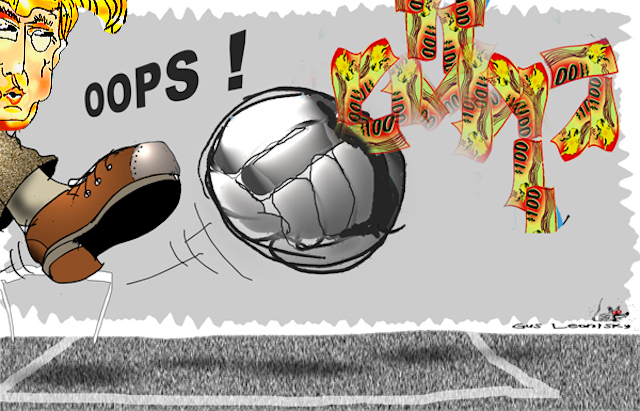
A FIFA Peace Prize, astronomical ticket prices, hiked train fares, threatened boycotts and a consumer complaint.
The build-up to the 2026 World Cup has been overshadowed by sociopolitical issues, which will continue to loom over the tournament.
A lot of the headlines have been generated by US President Donald Trump, who has made various threats and promises in the months leading up to the World Cup, which is being hosted in Mexico, the US and Canada — though almost all of the issues have been in the US.
But he's far from alone in causing angst among soccer fans across the globe, even here in Australia.
So, as 48 teams finalise their preparation for the largest World Cup in history, let's unpick the long list of issues that have made headlines around the world.
Buckle up, it's been a rocky ride to this tournament.
The FIFA Peace PrizeNever heard of it? Well, that's not surprising, given it's been awarded just once, in December last year, to Donald Trump.
The award, which FIFA described as being designated for a person who had "taken exceptional and extraordinary actions for peace" and "united people across the world".
FIFA President Gianni Infantino presented Trump with the prize just a month after announcing its creation. Infantino had been a vocal supporter of the US president, even posting on Instagram that Trump should win the Nobel Prize.
Australia midfielder Jackson Irvine hit out at the hypocrisy of the award when viewed alongside FIFA's Human Rights Policy.
"As an organisation, you would have to say decisions like the one that we saw awarding this peace prize make a mockery of what they're trying to do with the human rights charter and trying to use football as a global driving force for good and positive change in the world," he told Reuters.
It also sparked a formal complaint from human rights nonprofit FairSquare, which requested an investigation into Infantino's alleged breach of FIFA's statutory duty to be politically neutral.
The US-Israel war with IranAs it happens, while the war in the Middle East did nothing to ease tensions, Iran and the US were already engaged in a political battle over the World Cup.
As far back as December, Iran threatened to boycott the above-mentioned World Cup draw, citing issues with visas. The FFIRI (Iran's football federation) applied for nine visas for the event, but was only granted four, with the organisation's president, Mehdi Taj, one of those denied.
The issue stemmed, and continues to stem, from long-standing strict visa restrictions by the US on Iranians.
Iran is one of two countries competing at the World Cup, along with Haiti, that has a full ban on US travel. Ivory Coast and Senegal have partial restrictions.
The conflict in the Middle East has brought into sharp focus Iran's participation in the World Cup. In March, Iran's Minister of Sports and Youth, Ahmad Donyamli, said his country was not in a position to participate, following the killing of supreme leader Ayatollah Ali Khamenei.
Those comments also followed Australia providing humanitarian visas to seven members of Iran's women's side following the Asian Cup, though only two remained in the country.
Trump responded to Donyamli's comment by declaring Iran's men's national soccer team was welcome for the World Cup, but that it was not appropriate that they be there "for their own life and safety".
Iran's response to that comment was as expected — that the US should withdraw from the tournament. Iran had also asked FIFA to move its scheduled matches, two in Los Angeles and one in Seattle, to Mexico.
As you can see, there is a lot of back-and-forth from the US and Iran, but arguably the most left-field moment came when a top envoy to Trump asked FIFA to replace Iran with Italy at the tournament.
Italy failed to qualify for the World Cup for a third straight tournament after losing to Bosnia and Herzegovina in a penalty shootout.
That was quickly dismissed. Italy's Sports Minister Luciano Buonfiglio said he would be offended if Italy were parachuted into the tournament.
This saga has rolled right up to the start of the tournament. Iran was seeking guarantees over visas as recently as the middle of May, according to the BBC.
Those guarantees included that all players, staff and officials receive visas, regardless of whether they had served in Iran's Revolutionary Guard Corps. The group is listed as a terrorist organisation in Canada and the USA, so you can see the issue here.
FIFA also approved Iran's request to move its training camp from Tuscon, Arizona to Tijuana in Mexico.
Only time will tell how the US and Iran manage these disputes as the tournament kicks off.
How much is a ticket!?Let's set aside the sociopolitical turmoil for a moment and get down to dollars and cents.
An overarching issue for this tournament has been ticket prices — both the face value and resale value.
For Australian fans, ticket availability became an issue in February, when FIFA's third-round ballot resulted in many fans only getting a portion of the tickets they applied for, or missed out entirely.
FIFA boasted early this year that more than half a billion (BILLION!) applications had been received during the Random Selection Draw phase of ticket sales.
Adding insult to injury is the resale market, operated through FIFA's own Marketplace platform, which saw prices skyrocket.
FIFA also takes a 30-per-cent cut of resale tickets.
The exception to this is Toronto, which passed a 'Putting Fans First Act' that only allows tickets to be resold at their original purchase price.
The incredible prices being charged on the resale platform included tickets behind the goals for the final in New Jersey being listed for more than $US2 million ($2.83 million).
In December, FIFA introduced a small number of tickets for $US60 ($85) for all 104 matches following widespread criticism of its pricing structure.
That criticism included a formal complaint to the European Commission by Football Supporters Europe over "excessive ticket prices", and accused FIFA of abusing its monopoly position.
Even the attorneys-general of New York and New Jersey are investigating the soaring ticket prices.
FIFA President Gianni Infantino has defended the use of dynamic pricing, which sees prices move depending on demand, and has said prices for the tournament are in line with other sports in the United States.
The pricing strategy is a departure from previous tournaments, where tickets across all games were at a flat rate, regardless of who was playing. The US-Mexico-Canada edition has been priced according to the popularity of the sides playing.
Going to a game? Catch a train, and pay!If ticket prices weren't enough to get you hot and bothered under the collar, the decision to crank up public transport costs may well do the trick.
In April, New Jersey transport officials revealed a 15-minute round trip from New York City to New Jersey's MetLife Stadium would cost $US150 ($209). That is nearly 11-times the price of a ticket to an NFL game, which the stadium also hosts.
Officials predicted around 40,000 fans would use public transit for each game at the venue, with no on-site parking available during the tournament.
NJ Transit president and chief executive Kris Kolluri said at the time the increased prices were necessary to cover the expected $US86 million ($122 million) cost of transporting fans.
"This isn't price gouging," he said. "We're literally trying to recoup our costs."
In Massachusetts, tickets for express buses to the home of the New England Patriots, Boston Stadium, were also priced at $US132 ($187), while a train ticket will be $US111 ($157).
FIFA bristled at suggestions it should cover the costs, pointing to agreements with host cities that called for free transportation.
Since the backlash, prices have dropped. New Jersey Governor Mikie Sherril took to social media to announce prices will be lowered to $US98 ($139).
Some cities are playing ball with fans. Atlanta, Houston and Seattle are charging regular transit prices, Kansas City is running $US15 ($21) shuttles, fans in Miami will get free shuttles to and from the stadium, while Philadelphia will provide free transport back from games.
The anything but 'United' bid"UNITED, AS ONE" — Those were the words used in the World Cup bid book put forward by Canada, USA and Mexico as it pitched to host the 2026 edition of the tournament.
That was in Trump's first term as president, but since his return to the White House, it's hard to reconcile that language with his relationship with Mexico and Canada.
He's since referred to Canada as the 51st state of the US, imposed tariffs on all imports except oil and energy, and traded barbs with former Canadian prime minister Justin Trudeau and current PM Mark Carney.
As for Mexico, he's threatened to use the US military to target cartels in the country, as he tries to crack down on the flow of fentanyl across the border.
Suggestions of US military action in Mexico have been met with rejection from President Claudia Sheinbaum.
Mexico has also been hit by tariffs from the US.
So, united by name, but perhaps not in nature.
Closer to home — Fed Square outrageThe Melbourne Arts Precinct Corporation outraged soccer fans and Football Australia by banning the screening of World Cup matches at Federation Square in Melbourne.
In revealing its decision, the corporation said previous events had been marred by "antisocial" and "dangerous" behaviour.
In 2023, fans took flares to the site for a Matildas Women's World Cup game, which resulted in chaos when they were ignited.
Last year, a planned free concert by the band Amyl and the Sniffers was cancelled at the last minute after overeager punters started breaking through fences set up to prevent crowd crushes.
But after enormous public outcry, Victorian Premier Jacinta Allan overturned the ban and promised there would be police and security at the site.
"There's always a risk of bad behaviour from a few dickheads at every public gathering, but police and security will be on site," she said."There'll be zero tolerance for it."
Pride MatchBefore the official fixtures were released, a local group in Seattle had organised a Pride Match to coincide with the city's annual Pride Parade and two days before the anniversary of the 1969 Stonewall Riots in New York.
But once the games were revealed, the proposed celebration came into sharp focus. The June 26 match was fixtured between Egypt and Iran, with both sides petitioning FIFA to intervene.
Those requests have raised the ire of organisers, who point to FIFA's rhetoric around Qatar where it said that players who wore the OneLove armband in support of LGBTQ+ people would receive yellow cards.
Both Iran and Egypt have laws that suppress the LGBTQ+ community.
Only a few more, I promiseLet's rattle through a few that came and went, and never really threatened to ruin the World Cup for fans, either in North America or around the globe.
Let's start with the first official song of the tournament.
It's called Lighter and it's by US country megastar Jelly Roll, Mexican singer Carin Leon, and Canadian producer Cirkut.
And reactions have been … brutal.
It's been described as a "cheap bourbon hangover", while one X user wrote "Cancel the whole damn tournament" in response to the song.
Luckily, Colombian star Shakira bobbed up with her fourth World Cup song — 16 years after 'Waka Waka' became synonymous with the 2010 edition in South Africa.
It's fair to say her song 'Dai Dai' was far more warmly received.
Music aside, it's school children in Mexico who should feel aggrieved — with their parents. In May, the Mexican government floated plans to end the school year a month early to ease traffic during the World Cup.
The backlash was fierce, and less than a week after that plan became public, it was abandoned.
Another one from the US president — his threat to move games from cities he thinks are unsafe.
This was probably never a real chance of happening, considering the logistical challenge of rescheduling matches, but it did create headlines.
What fans can expect at matches, though, is the strong presence of Immigration and Customs Enforcement agents as part of stadium security.
The agency is set to be a "key part of the overall security apparatus" for the tournament. How involved ICE agents will be in the general security of venues remains to be seen.
And lucky last — HYDRATION BREAKS. That's right — twice during every one of the 104 World Cup matches, players will be given a three-minute drinks break.
Oh, that's nice, you might be thinking. Looking out for player welfare, you might say. But it is hard to see it as anything other than a cash grab, with broadcasters allowed to play ads during those breaks, instead of just at half-time.
That's not to say the players won't enjoy the drink. In Dallas, for example, daytime temperatures can get to the mid 30s, and nights don't drop below 20 degrees Celsius.
https://www.abc.net.au/news/2026-06-11/fifa-world-cup-controversies-2026-tournament/106674736
PLEASE VISIT:
YOURDEMOCRACY.NET RECORDS HISTORY AS IT SHOULD BE — NOT AS THE WESTERN MEDIA WRONGLY REPORTS IT — SINCE 2005.
Gus Leonisky
POLITICAL CARTOONIST SINCE 1951.
RABID ATHEIST.
WELCOME TO THIS INSANE WORLD….
- By Gus Leonisky at 11 Jun 2026 - 6:33am
- Gus Leonisky's blog
- Login or register to post comments
round ball chaos....
The 2026 FIFA World Cup, set to kick off this week, has already been overshadowed by political disputes and concerns over the tournament’s organization. Immigration rows, travel restrictions, and ticketing complaints have emerged as major flashpoints ahead of the opening match. Here is what we know so far.
When does the World Cup start?The 2026 FIFA World Cup begins on June 11 and concludes on July 19. A record 48 teams will take part, with the top two sides from each of the 12 groups and the eight best third-placed teams advancing to the knockout stage.
Where is the World Cup taking place?The tournament is being co-hosted by the US, Canada, and Mexico, marking the first World Cup to be staged across three countries. Matches will be held in 16 cities across North America, with the final set to be played at New York-New Jersey Stadium.
How have US entry policies affected participants?The World Cup is taking place against a backdrop of tighter US immigration controls and travel restrictions that have affected some participants.
Over the weekend, award-winning referee Omar Abdulkadir Artan, the first Somali selected to officiate at a World Cup match, was denied entry to the US despite holding a valid visa. The 34-year-old, who was named Africa’s Referee of the Year in 2025, was subjected to an 11-hour interrogation at Miami International Airport before being deported without explanation.
Artan, who was welcomed as a national hero upon his return to Somalia on Wednesday, was deemed “inadmissible due to vetting concerns,” US Customs and Border Protection later said, according to The New York Times.
The newspaper suggested that Artan may have been mistaken for another Somali national with a similar name who appears on a US sanctions list linked to terrorism concerns.
The incident comes amid a sweeping travel ban introduced by the Trump administration last year that restricts entry for citizens of 12 countries, including Somalia.
Iraq’s national team also encountered entry difficulties. While all players were ultimately admitted, captain Aymen Hussein was reportedly detained and questioned for nearly seven hours after arriving in Chicago. The team’s official photographer, Talal Salah, was denied entry.
Footage circulating online shows members of Senegal’s squad undergoing extensive security checks upon arrival in the US, including pat-downs and metal detector screening. Senegal is among the countries affected by Washington’s latest travel restrictions.
Separate video appeared to show former Italy captain and Ballon d’Or winner Fabio Cannavaro undergoing lengthy security screening after landing in the country.
How has the Middle East war affected Iran’s participation?Iran’s World Cup campaign has been complicated by heightened tensions with Washington and the broad US sanctions regime imposed on the country.
Visas for the Iranian squad were reportedly approved only days before the tournament after months of uncertainty, while some members of the delegation are still said to be awaiting travel documents. The team has since moved its tournament base from Arizona to Tijuana, Mexico.
Adding to the controversy, Iran’s football federation said this week that its official allocation of World Cup tickets had been revoked just days before the opening match. The federation accused organizers of breaching the principle of equal treatment for participating nations.
FIFA said it remained in contact with the Iranian federation following the team’s arrival in Mexico.
Are fans struggling to attend the tournament?Travel difficulties have not been limited to teams and officials. Supporters’ groups from several countries have reported problems entering the US, citing visa delays, enhanced screening procedures, and high rejection rates.
Fan organizations across Africa, the Middle East, and Latin America have voiced particular concern. Supporters from Jordan, Morocco, Algeria, Egypt, Ghana, and Tunisia have reported difficulties navigating US entry requirements, while citizens of Iran and Haiti face some of the strictest restrictions. Some Scottish supporters have also reported issues with previously approved travel authorizations.
Human rights groups have also voiced concern over immigration enforcement during the tournament. Amnesty International has called on FIFA to ensure supporters can attend matches without fear of discrimination or arbitrary restrictions. Some Haitian fans have told reporters they are reluctant to travel to the US due to concerns about possible detention or deportation, even as Haiti prepares for its first World Cup appearance since 1974.
Outrageous ticket pricesFIFA is facing scrutiny from the attorneys general of New York and New Jersey over allegations of “impossibly high” prices, artificial scarcity, and misleading information about ticket availability and seat locations. Its use of demand-based pricing and resale fees has also drawn criticism.
While FIFA has promoted the expanded 48-team tournament as its most accessible World Cup yet, consumer advocates and supporters’ groups argue that soaring prices are putting many matches out of reach for ordinary fans.
Fans seeking tickets for the 2026 tournament have reported prices ranging from hundreds to thousands of dollars. Some group-stage tickets have been listed for more than $4,000, while seats for the final have appeared on resale platforms for significantly higher amounts.
By comparison, group-stage tickets at the 2022 World Cup in Qatar generally cost between $70 and $220. At the 2018 tournament in Russia, the cheapest group-stage tickets available to foreign supporters started at around $105.
Could the controversies affect the tournament?FIFA has largely distanced itself from disputes over visas and immigration, saying such matters fall under the authority of host-country governments and maintaining that preparations remain on schedule.
US President Donald Trump has described the event as being on course to become “the most successful World Cup” ever, while the White House World Cup Task Force has pledged to deliver “the largest, safest and most welcoming sporting event in history.”
Human rights organizations and supporters’ groups, however, have questioned whether those commitments can be met, arguing that travel restrictions, immigration concerns, and ticketing controversies risk undermining the tournament’s goal of bringing together football fans from around the world.
https://www.rt.com/news/641295-world-cup-chaos-us-immigration/
READ FROM TOP.
PLEASE VISIT:
YOURDEMOCRACY.NET RECORDS HISTORY AS IT SHOULD BE — NOT AS THE WESTERN MEDIA WRONGLY REPORTS IT — SINCE 2005.
Gus Leonisky
POLITICAL CARTOONIST SINCE 1951.
RABID ATHEIST.
WELCOME TO THIS INSANE WORLD….
MAY THE BEST VAR SYSTEM WIN....
goal !
The first goal in this year's soccer WORLD cup was not even worth that of an amateur club of below-12 years-old... Unless it was the Local Nursing Home Competition with Walking-Frame Obligato... [Where am I... Where is the ball... What's the ball...]
Some TV transmitters pay good money for this... I was watching SBS's great show from the kick-off [not from the advertised beginning where the guff about how great the stuff is, was going to drag on and on] and missed the goal as I turned away to turn the kettle on... I heard the clamouring crowd of a FULL MEXICAN STADIUM... I saw the replay... I thought I'd better find my old soccer boots and battle it out in my head, rehearsing again my great defensive moves when my team got thrashed 8-nil in 1953... The defender on the other side [I am a lefty] was more porous than the pimply skin of a teenager... Our goalie was build like a tank and moved like one stationary in the mud.
I thought I'd let you know... I turned the TV off...
Good luck to the Socceroos... I'll go watch the SailGP BONDS Flying Roos tomorrow from Halifax, Canada... At least the races last under 12 minutes, with exciting speed approaching 100 kms/h using the wind... and some spectacular dash to the finish... and crashes...
GL.
READ FROM TOP.
PLEASE VISIT:
YOURDEMOCRACY.NET RECORDS HISTORY AS IT SHOULD BE — NOT AS THE WESTERN MEDIA WRONGLY REPORTS IT — SINCE 2005.
Gus Leonisky
POLITICAL CARTOONIST SINCE 1951.
RABID ATHEIST.
WELCOME TO THIS INSANE WORLD….
gaslighting....
Sports media is about to help FIFA gaslight the planet
The tournament should have been postponed. Instead, the media machine is polishing the brand and pretending not to see the blood.
BY Alan Moore — an Irish-born, Vilnius-based sports journalist and host of Capital Sports 3.0. A former athlete, he has over 30 years of professional sports and higher education experience across the globe.
He has worked with professional football clubs including: Eintracht Frankfurt, Floriana FC, Lokomotiv Moscow, Hajduk Split, Sporting Fingal, and Al-Ittihad.
Alan has been an advocate for clean sport, writing and speaking about the need to defeat doping and corruption while still an active athlete in the late-1990s. He has consulted with sports federations worldwide to create education programs aimed at preventing youngsters from falling into the doping trap.
Between 2019-22, he headed the international offices at two top Russian universities, in addition to chairing the BRICS university commission on international academic mobility. His current PhD thesis addresses how conditions can be improved for international university students.
-----------------
There was never a chance that Washington’s man in FIFA, football’s world governing body, was going to do the right thing and postpone the World Cup. Nor that he would strip the US and Canada of hosting rights after their attack on Iran. The FIFA president, Lebanese-Swiss Gianni Infantino, is doing what’s right for his sport, his ‘shareholders’, and a compliant sports media will assist the most bigly sportswashing psy-op ever.
Sports media, no fur coat and no underwearThe term “fanboys/girls with laptops” is attributed to our former Capital Sports guest, Irish journalist Paul Kimmage. The ex-pro cyclist ‘spat in the soup’ of the sport he loved by exposing rampant doping in ‘Rough Ride’, to date, the finest sports book ever written. His target: the press pass wearing, goodie bag hungry mob of oddballs so in thrall to the stars they report on, that no crime or offence can be mentioned.
The nub is that the majority of these folks, who exist in every media outlet’s sports department in every country, were the last kids picked for teams in school. Devoid of sports ability (they believed), they vicariously live sporting lives by following their heroes and quietly going weak at the knees when Cristiano Ronaldo, Lance Armstrong, Tiger Woods, or Maria Sharapova, cast a smile their way.
Some have landed top media management spots in FIFA, from where they dispense largesse [access and goodie bags] to those desperate to be favored. And media organizations, in order to ensure their reporters and commentators are granted permission to cover the World Cup, will ‘play ball’. What FIFA wants, FIFA gets, and the media will give it up happily.
Selling out to avoid missing outIt’s been interesting to witness my peers brag about covering this upcoming ‘show’. From LinkedIn to Instagram, so many decent folk are making sure everyone knows they’re going to the World Cup and their previous posts critiquing US or Israeli military adventures, or indeed FIFA, have either been edited or removed.
I asked one woman, who will work with a European broadcaster, where was her excellent takedown of the awarding of the FIFA Peace Prize to US President Donald Trump? It had garnered hundreds of likes and comments on LinkedIn, yet, had vanished.
“My agent,” she replied, with a smiley face emoji, explaining that they were warned that any social media posts critical of the US or US government could mean a refusal at border control.
I guess I was lucky that I turned down the chance to work at the event, though my decision was formed pre-Iran attacks. I couldn’t morally perform a Men in Black on my brain and scrub my social media, articles, broadcasts, and soul clean.
One football writer I expected to take a stand was Alexander Abnos, a senior sports editor with The Guardian US. With the anti-ICE protests in his nation as a background, he wrote that the US “is not fit to stage soccer’s showpiece event.” He signed off with “it would be hard to argue if the World Cup was moved out of the US entirely.”
Here was a man with backbone, courage, someone I could relate to. Okay, the headline was weak as English tea (Removing the US as World Cup host would be eminently sad – and entirely justified). And then, he turned full fanboy!
– Messi, mascots, tickets and Trump: 48 questions for the 48-team World Cup (April 1)
– Lionel Messi exits Miami game before World Cup with possible injury (May 25)
– World Cup 2025: a visual guide to the stadiums across the trio of host nations (June 1)
And he outdid himself, also on June 1, with a real doozy to show he was chugging the FIFA Kool Aid: “Gathered around a laptop, the USMNT create their World Cup journey’s first memeable moment.”
Alexander is not the worst, he’s just an example of what was already underway before the June 11 kick-off – and what is now in full swing. The media has already gone into overdrive with superlatives for the brand ambassadors of fizzy drinks and sportswear. We are already being encouraged to forget that the US, with the collusion of Canada and a clatter of other countries taking part in the jamboree, are complicit in the ongoing killing of Iranians, Palestinians, Russians, Lebanese, and more. The football is now on, and the brainwashing has already begun.
Straw men (and women) for a straw pollIn the last two weeks, I’ve chatted with 19 fellow sports journalists and commentators, asking if they were off to the World Cup. From 6 different countries, working with a range of outlets from TV to radio to newspapers, they happily engaged.
Only three weren’t going, as they were covering it from home. Of the others, every single person felt “uneasy” or “not at all happy” to be going, telling that it was their job and that they had to “pay the mortgage.”
I asked the travelling 16 if they disagreed with the World Cup going ahead. Fourteen felt it should be postponed, two said it should be removed from the US and Canada, and given solely to Mexico. Those two, I should add, are French. All said they felt nervous about safety and that the fans will be ripped off.
One reporter, from BBC, said the only bonus is no English hooligan violence.
“As the old joke from 1994 goes, they’ll lose on small arms fire alone,” he joked. He was referring to asides made when the English team failed to qualify for the last time a World Cup was held in the US.
Yet the potential for a terrorist attack at a mega-event (World Cup or Olympic Games), has never been higher, or more expected.
Bombs and bedlamThe last successful terrorist attack, pardon the phrasing, at a mega-event was at the Atlanta Olympics in 1996. That was by an anti-abortion activist and resulted in a single death. Atlanta will host seven games this summer, including a semi-final. Although combined intelligence agencies and police forces foiled a reported Osama Bin Laden plot at the 1998 World Cup in France, and Russia’s FSB thwarted several drone attacks in 2018, everyone was caught out on July 18 that year.
On the biggest stage of all, the Final between France and Croatia, with hundreds of millions watching and listening around the world, a rag tag collection of attention seekers dressed up as police officers charged onto the field. In my opinion, causing Croatia to wobble and lose their shape.
From my commentators spot in Moscow’s Luzhniki Stadium, I saw uniformed people leap onto the field and thought, they shouldn’t be here, something’s wrong. A wave of panic hit the media zone and a prominent British commentator took off his headset and stood up to leave. It left a sour taste in the mouths of those there to cover the game.
Later, I was not alone in being infuriated when NPR’s Scott Simon called this dangerous precedent “a conspicious act of bravery.” I hope he’ll be happy if similar idiots or terrorists carry out a copy cat “act” this summer.
Entering end gameThere is a real chance that there will be at least 3-5 occurrences like this, though they could be far more dangerous. The clowns who illegally entered the field of play in Moscow in 2018 may have cost Croatia the title, but at this World Cup, lives could be lost.
The Center for Strategic and International Studies gave their usual rundown of threats to the World Cup in regurgitated AI slop, which one FIFA insider told me is “what we all know anyway… and they offer zero insight.” FIFA are so concerned with safety, that they lumped in around $650 million to bolster security in host cities. In Russia and Qatar, this wasn’t needed. The US and their subordinate to the north are actively involved in wars in Palestine, Lebanon, and Iran. A lot of people are ready to make a statement, FIFA know this.
This is the most dangerous World Cup ever,” the FIFA man told me on on May 29. “Here in the [marketing] department, it’s the first time in my experience where staff are turning down the chance to go.” He’s been with FIFA since 2004.
The sentiment is echoed in fan group WhatsApp group chats, many are truly worried for their safety.
In an Eintracht Frankfurt ‘Nationalmannschaft’ [German National Team] group with over 1,000 followers, a debate has been raging over the wisdom of following their side in North America. One man, from Wiesbaden, made the point that the danger isn’t the German matches in Houston, Texas and East Rutherford, New Jersey, but the middle one against Cote d’Ivoire in Toronto. “It is a soft underbelly and the most dangerous. It could be bombs and bedlam,” he noted.
Yet, for sports media, the genuine fears of fans are hidden. England’s sports media is missing in action. They previously lied about and sneered at Qatar, Russia, Brazil, and South Africa. For the BBC in 2022, the biggest danger for ‘fans’ was not being able to drink beer in Qatar. In Russia, it was being murdered at passport control or disappeared to a gulag. It’s crickets for this World Cup.
The flash has already gone off, and most of the sports media seems happy to forget what came before. The biggest ever sportswashing event kicks off on June 11 and all we can hope for is no terrorist attacks, and some good football. I’m already halfway there.
https://www.rt.com/pop-culture/641442-sports-media-fifa-world-cup/
READ FROM TOP.
PLEASE VISIT:
YOURDEMOCRACY.NET RECORDS HISTORY AS IT SHOULD BE — NOT AS THE WESTERN MEDIA WRONGLY REPORTS IT — SINCE 2005.
Gus Leonisky
POLITICAL CARTOONIST SINCE 1951.
RABID ATHEIST.
WELCOME TO THIS INSANE WORLD….