Search
Recent comments
- choosing sides.....
4 hours 26 min ago - agreed?.....
6 hours 21 min ago - I forgot....
6 hours 31 min ago - strikes.....
6 hours 43 min ago - easy target....
7 hours 25 sec ago - auto co-op...
12 hours 20 min ago - sobriety....
12 hours 39 min ago - gina's conga-line.....
12 hours 43 min ago - poison....
12 hours 51 min ago - yandex...
13 hours 9 min ago
Democracy Links
Member's Off-site Blogs
why?.....
BEING A PROFESSIONAL ARTIST, ONE HAS TO CROSS MANY ANGRY SEAS, DESERTS AND CLIMB THE HIGHEST PEAKS. “LA VIE D’ARTISTE” IS NOT FOR EVERYONE… IT HAS MANY PITFALLS, MOMENTS OF DESPAIR AND PECUNIARY PROBLEMS, EXCEPT FOR A FEW. WE OFTEN ASK WHAT IS ART?…
AS WE HAVE EXPLORED ON THIS SITE MANY TIMES, FROM THE CLASSICAL PAINTERS, ACTORS AND MUSICIANS, TO THE LATEST NIHILISTIC WORKS, OUR ARTISTIC LIFE IS DEDICATED TO EXPRESS, ENTERTAIN OR SHOCK… IT DEMANDS A STYLISTIC CONVICTION THAT WE BECOME SURE WHEN WE ARE DOUBTFUL AND FORCEFUL WHEN ARE SHY… I GET ANNOYED THAN SOME ARTISTS DO NOT GO BEYOND THEIR OWN NAVEL-GAZING, WITH A HOPE THAT THEY WILL BE NOTICED, AS THEY FALL IN THE “ARTS AND CRAFTS” SKILL-FULL BASKET, WITH UNEVENTFUL RESULTS AND A NON POLITICAL BLANCMANGE.
THEY DO NOT SHAKE THE POSSUM SO TO SPEAK. THEY ARE NOT CRAZY ENOUGH... BUT CRAZY ISN'T ENOUGH...
ARTISTS AND CARTOONISTS NEED TO RATTLE THE CAGE: THE HUMAN CONDITION… AND ART OFTEN GETS CONSTRAINED BY TRADITION AND ALWAYS BY ACCEPTANCE.
UNLIKE PAINTING WHERE THE EYES CAN WONDER FROM VARIOUS PLACES, MUSIC IS LINEAR… EXCEPT SOMETIMES THE MUSIC IS AN INTERLACE OF LINES… MUSIC BECOMES A MESSAGE.
Amongst the many great musical works, one stands alone at the peak of mastery and expression, and the control of a multiplicity of lines. One sees colours, space, arcane future, present day dreams, storms, death and love — and a question: why?… If by the end of the performance, the musos are not completely exhausted and the conductor has not gone crazy, it was not pushed to the max…
Gus loves Berlioz’s Symphony Fantastique… it is a love story, a “cri du coeur”, a magic spell in which musicians are actors, soloists and musclemen who perform a grandiose letter to a lady that rejected Hector [Berlioz]… It’s romantic, expressionistic, existentialist, introverted, extroverted, and travels amongst the stars…
There is a moment when your electric kettle stops singing then starts singing again… till it boils and cuts off… the temperature raised nonetheless to the maximum… there is no sadness, but bubbles rising with complex chaotic lines… which have been mapped by harmonic contradictions and strong bursts.
The first movement is about dreams and passions… and one can feel this question “why” over and over. It oscillates between complex calmness and anger to end in smooth acceptance…
The second movement is a ball, the music of which makes our modern “dancing with the Stars” feel like cardboard. Berlioz dances across the universe, in a slow/fast waltz that takes elegance for granted — and demands our imagination to take the fleeting steps towards the air, above the earth.
The third movement, a stroll in the countryside, starts and ends with an eerie slow cry of, one can imagine, a bird to which another far away bird responds… it’s nature, peaceful, that becomes stormy amongst the fields of wheat, till the storm fades away and calmness returns to the heart…
The March to the Scaffold is a complex fourth movement with a slow march, a horse parade, a run of the curious crowd, a guillotine and a falling blade… the hurrahs from the crowds, then people returning to their mundane world… The March to the Scaffold is glorified gore. it’s the power of the state. Justice is a murderer.
If this has not taken your breath away yet, the final is a visit into the full blown arcane… It’s the vision of witches dancing, laughing and throwing spells — the Sabbat — an assembly of witches, devils, and sorcerers for the celebration of rites and orgies… and love entangles to become the sorcerer…
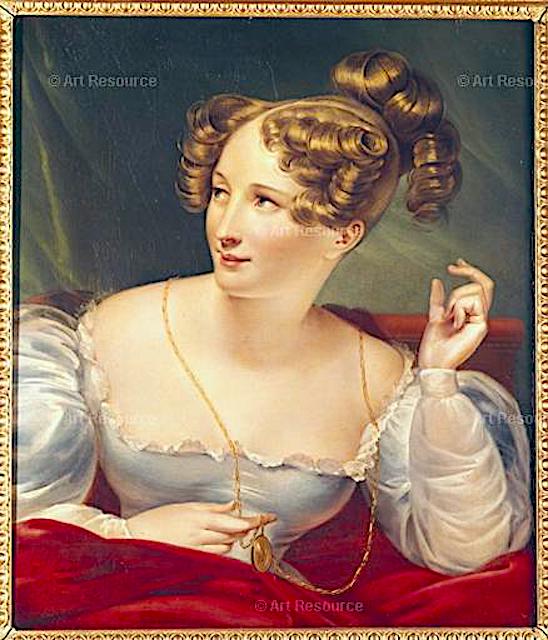
So who was this composed for? Berlioz was in love with an Irish actress, Harriet Smithson, who did not want to know about him… Eventually, she was encouraged to hear the music and fell in love with Hector. They got married… Thereafter, Berlioz music, though still very personal, became closer to the traditional mould… more gentle yet still demanding…
And despite the APPARENT crazyness of the symphonie, it is EXTREMELY PRECISE... This is genius in action...
GUS LEONISKY.
PLEASE VISIT:
YOURDEMOCRACY.NET RECORDS HISTORY AS IT SHOULD BE — NOT AS THE WESTERN MEDIA WRONGLY REPORTS IT — SINCE 2005.
Gus Leonisky
POLITICAL CARTOONIST SINCE 1951.
RABID ATHEIST.
WELCOME TO THIS INSANE WORLD….
PICTURE AT TOP: Harriet Smithson
THERE ARE MANY INTERPRETATION OF THE SYMPHONY AVAILABLE ON YOUTUBE...
FOR GUS THE BEST SO FAR IS:
https://www.youtube.com/watch?v=BqVojmQB_4s&list=RDBqVojmQB_4s&start_radio=1
- By Gus Leonisky at 5 Jun 2026 - 10:11am
- Gus Leonisky's blog
- Login or register to post comments
thy shores are empires.....
THE LAST VERSES OF
CHILDE HAROLD'S PILGRIMAGE
By Lord Byron
.....
The armaments which thunderstrike the walls
Of rock-built cities, bidding nations quake,
And monarchs tremble in their capitals.
The oak leviathans, whose huge ribs make
Their clay creator the vain title take
Of lord of thee, and arbiter of war;
These are thy toys, and, as the snowy flake,
They melt into thy yeast of waves, which mar
Alike the Armada's pride, or spoils of Trafalgar.
CLXXXII.
Thy shores are empires, changed in all save thee—
Assyria, Greece, Rome, Carthage, what are they?
Thy waters washed them power while they were free
And many a tyrant since: their shores obey
The stranger, slave, or savage; their decay
Has dried up realms to deserts: not so thou,
Unchangeable save to thy wild waves' play—
Time writes no wrinkle on thine azure brow—
Such as creation's dawn beheld, thou rollest now.
CLXXXIII.
Thou glorious mirror, where the Almighty's form
Glasses itself in tempests; in all time,
Calm or convulsed—in breeze, or gale, or storm,
Icing the pole, or in the torrid clime
Dark-heaving;—boundless, endless, and sublime—
The image of Eternity—the throne
Of the Invisible; even from out thy slime
The monsters of the deep are made; each zone
Obeys thee: thou goest forth, dread, fathomless, alone.
CLXXXIV.
And I have loved thee, Ocean! and my joy
Of youthful sports was on thy breast to be
Borne like thy bubbles, onward: from a boy
I wantoned with thy breakers—they to me
Were a delight; and if the freshening sea
Made them a terror—'twas a pleasing fear,
For I was as it were a child of thee,
And trusted to thy billows far and near,
And laid my hand upon thy mane—as I do here.
CLXXXV.
My task is done—my song hath ceased—my theme
Has died into an echo; it is fit
The spell should break of this protracted dream.
The torch shall be extinguished which hath lit
My midnight lamp—and what is writ, is writ—
Would it were worthier! but I am not now
That which I have been—and my visions flit
Less palpably before me—and the glow
Which in my spirit dwelt is fluttering, faint, and low.
CLXXXVI.
Farewell! a word that must be, and hath been—
A sound which makes us linger; yet, farewell!
Ye, who have traced the Pilgrim to the scene
Which is his last, if in your memories dwell
A thought which once was his, if on ye swell
A single recollection, not in vain
He wore his sandal-shoon and scallop shell;
Farewell! with HIM alone may rest the pain,
If such there were—with YOU, the moral of his strain.
https://www.gutenberg.org/files/5131/5131-h/5131-h.htm
===========================
George Gordon Byron, 6th Baron Byron (22 January 1788 – 19 April 1824), was a British poet.[1][2] He was one of the major figures of the Romantic movement,[3][4][5] and is regarded as being among the greatest British poets.[6] Among his best-known works are the lengthy narratives Don Juan and Childe Harold's Pilgrimage; many of his shorter lyrics in Hebrew Melodies also became popular.
Byron was educated at Trinity College at the University of Cambridge. Following graduation, he travelled extensively in Europe, living for seven years in Italy, in Venice, Ravenna, Pisa, and Genoa, and then was forced to flee to England after receiving threats of lynching.[7] During his stay in Italy, he would frequently visit his friend and fellow poet Percy Bysshe Shelley.[8] Later in life, Byron joined the Greek War of Independence to fight the Ottoman Empire, for which Greeks revere him as a folk hero.[9] He died leading a campaign in 1824, at the age of 36, from a fever contracted after the first and second sieges of Missolonghi.
https://en.wikipedia.org/wiki/Lord_Byron
======================
In the summer of 1831, the French composer Hector Berlioz was in Rome. The city was sweltering, and to escape the heat he would regularly take himself to St Peter's, sit in an empty confessional and read Byron. "I sat drinking in that burning poetry," he wrote in his memoirs. "I adored that inexorable yet tender nature - pitiless yet generous."
What Berlioz was doing was itself Byronic. Reading Byron in church - entering the world of the poet's outlawed, outcast, criminal heroes - was transgressive, an act deliberately chosen to generate private thrills in a place where no secrets should be kept from God.
Transgression is central to the work of Byron. The poet was to the literature of the past two centuries what Wagner was to music - a defining force that had to be assimilated or rejected if progress was to be made. His "burning poetry" burned everyone. Byron's influence pervaded every art form, and Berlioz was only one of countless composers affected. Not that the results were always successful. Isolated Byronic hauteur sits uneasily, for instance, with the democratic complexity of Italian opera: Verdi's versions of The Corsaire and The Two Foscari do not rank among his masterpieces.
READ MORE: https://www.theguardian.com/music/2003/aug/01/classicalmusicandopera.proms2003
=======================
READ FROM TOP.
PLEASE VISIT:
YOURDEMOCRACY.NET RECORDS HISTORY AS IT SHOULD BE — NOT AS THE WESTERN MEDIA WRONGLY REPORTS IT — SINCE 2005.
Gus Leonisky
POLITICAL CARTOONIST SINCE 1951.
RABID ATHEIST.
WELCOME TO THIS INSANE WORLD….
THE NEXT TO VANISH IS THE TRUMP EMPIRE....
[GUSNOTE: IN "HAROLD IN ITALY" BERLIOZ USED SOME OF THE SYMPHONIE FANTASTIQUE MUSICAL LINES...]
opium....
SEE ALSO ANOTHER YOUTUBE VERSION OF THE SYMPHONIE FANTASTIQUE
https://www.youtube.com/watch?v=AgXW-57UDMc&list=RDAgXW-57UDMc&start_radio=1
Berlioz: Symphonie fantastique ∙ hr-Sinfonieorchester ∙ Andrés Orozco-Estrada
Symphonie fantastique, Op. 14, orchestral work by French composer Hector Berlioz, widely recognized as an early example of program music, that attempts to portray a sequence of opium dreams inspired by a failed love affair. The composition is also notable for its expanded orchestration, grander than usual for the early 19th century, and for its innovative use of a recurring theme—the so-called ideé fixe (“fixed idea” or “obsession”)—throughout all movements. The symphony premiered in Paris on December 5, 1830, and won for Berlioz a reputation as one of the most progressive composers of the era.
After completing medical studies at the behest of his father, who was a doctor, Berlioz rebelliously pursued music and literature, for which he had harboured passions since childhood. In the fall of 1827, at age 24, he attended the opening night of Shakespeare’s Hamlet, performed in Paris by an English theatre company. Because his formal education had exposed him only to Latin and Greek, Berlioz understood little of the language. Nevertheless, he was transformed by the experience and recalled it in his memoirs: “Shakespeare, coming upon me unaware, struck me like a thunderbolt.”
On that night, however, Berlioz was fascinated by more than the work of the revered English poet: he was enchanted by Harriet Smithson, the young Irishwoman who played Ophelia. That enchantment soon turned to obsession as Berlioz haunted the stage door and inundated Smithson with love letters only to have his advances ignored. Motivated by the pain of unilateral love, Berlioz began after three years to compose an elaborate quasi-autobiographical piece of program music, a symphony that would depict a disconsolate lover driven to the brink of suicide by his lady’s indifference. That work became Symphonie fantastique: épisode de la vie d’un artiste, or simply Symphonie fantastique.
Berlioz declared in his memoirs that the music portrays the dreams of a young man who, in the aftermath of a failed love affair, has taken an overdose of opium. The first movement, which begins gently but increases in intensity, is intended to depict the delights and despairs of love. The second movement, an elegant waltz, evokes a ball where the lover again encounters the woman he can never possess, now in another man’s arms. The idyllic strains of the third movement portray his attempt to escape his passions by traveling to the countryside, but, as memories of the unattainable woman return to his thoughts, the tone grows sombre. The composition takes a highly dramatic turn in the ponderous fourth movement, when the young man imagines that he has murdered his beloved and is about to be executed for the crime. The music depicts his march to the guillotine, where his last thought is of the woman he loves. In the final movement, he is in hell at a witches’ sabbath over which his beloved herself presides, surrounded by echoes of the ancient hymn Dies irae (“Day of Wrath”), from the Catholic requiem mass.
Aside from its pioneering role as a symphony with a program—that is, with a story to tell—Symphonie fantastique is remarkable for its use of the idée fixe, which surfaces in every movement and unites the entire work. The recurring theme is essentially the tune of the beloved, representing in its varying moods the woman’s ever-changing image in her lover’s eye. Berlioz’s idée fixe paved the way for the development of similar compositional devices in the mid-19th century, including the thematic transformations associated with the works of Franz Liszt and the leitmotifs of Richard Wagner’s operas. Symphonie fantastique also constituted the largest-scale symphony composed by anyone to that time, with its five movements spanning nearly an hour and a dauntingly large orchestra that employed new wind instruments—such as the ophicleide (predecessor of the tuba) and the valve trumpet—as well as doubling on the harp and timpani parts.
https://www.britannica.com/topic/Symphonie-fantastique-Op-14
====================
In 1829, at the age of twenty-five, Hector Berlioz was gripped by a strange and harrowing nervous condition. For a year he wrestled with bouts of feverish excitement and insomnia, interspersed with blank intervals of exhaustion and depression. Musical ideas assailed and tormented him, whirling him into ecstatic frenzies and then dropping him like a limp rag doll. “So many musical ideas are seething within me”, he wrote to a friend, “oh, must my destiny be engulfed by this overwhelming passion?”. “This imaginary world”, he wrote to his father several months later, “has become a real malady”. But the work which was gestating inside him remained chaotic, out of focus, impossible to fix or transcribe. Then abruptly, in March of 1830, the fever broke. Over the next six weeks he wrote the entire Symphonie Fantastique, some movements apparently scribbled almost automatically in a single night. On the 16th April he wrote to his friend and collaborator, the librettist Humbert Ferrand, including his first draft of the Symphonie’s programme.
The narrative of the first three movements is one of unrequited love: the protagonist yearning for his beloved, encountering her at a ball, imagining her in the pastoral setting of a meadow. But the final two movements make a violent and shocking transition into fantasies of delirium, nightmare and death. This transition in the story is effected by a plot device which has since become familiar, but was in its time strikingly novel: the protagonist takes a large dose of an intoxicating drug, opium. In his letter to Ferrand, Berlioz explained the narrative as follows:
“Movement 4 – In a fit of despair he poisons himself with opium; but instead of killing him the narcotic induces a horrific vision, in which he believes he has murdered the loved one, has been condemned to death, and witnesses his own execution. March to the scaffold; immense procession of headsmen, soldiers and populace. At the end the melody appears once again, like a last reminder of love, interrupted by the death stroke.
Movement 5 – The next moment he is surrounded by a hideous throng of demons and sorcerers, gathered to celebrate Sabbath night. They summon from far and wide. At last the melody arrives. Till then it had appeared only in a graceful guise, but now it has become a vulgar tavern tune, trivial and base; the beloved object has come to the Sabbath to take part in her victim’s funeral. She is nothing but a courtesan, fit to figure in the orgy. The ceremony begins; the bells toll, the whole hellish cohort prostrates itself; a chorus chants the plainsong sequence of the dead (Dies Irae), two other choruses repeat it in a burlesque parody. Finally, the Sabbath round-dance whirls. At its violent climax it mingles with the Dies Irae, and the vision ends.”
https://mikejay.net/opium-and-the-symphonie-fantastique/
========================
READ FROM TOP.
PLEASE VISIT:
YOURDEMOCRACY.NET RECORDS HISTORY AS IT SHOULD BE — NOT AS THE WESTERN MEDIA WRONGLY REPORTS IT — SINCE 2005.
Gus Leonisky
POLITICAL CARTOONIST SINCE 1951.
RABID ATHEIST.
WELCOME TO THIS INSANE WORLD….
SEE ALSO: frankly...