Search
Recent comments
- choosing sides.....
6 hours 5 min ago - agreed?.....
8 hours 28 sec ago - I forgot....
8 hours 10 min ago - strikes.....
8 hours 22 min ago - easy target....
8 hours 39 min ago - auto co-op...
13 hours 59 min ago - sobriety....
14 hours 19 min ago - gina's conga-line.....
14 hours 22 min ago - poison....
14 hours 30 min ago - yandex...
14 hours 48 min ago
Democracy Links
Member's Off-site Blogs
reconsidering residential real estate’s sacred cow status....
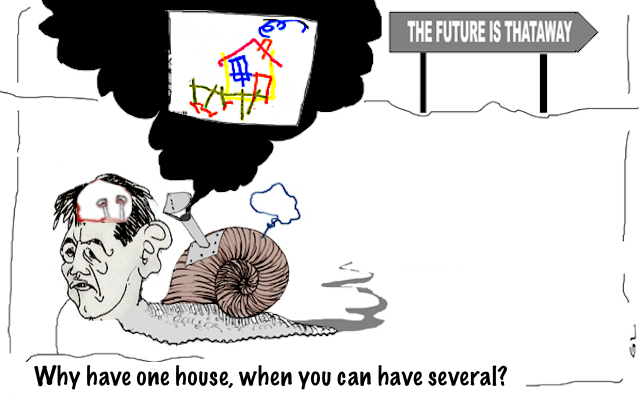
Jim Chalmers’ budget has done the economy a favour by wiping out the policy distortions of negative gearing and CGT discounts, writes Michael Pascoe.
You’d never guess it from the usual suspects’ headlines but Jim Chalmers’ budget does retail investors a big favour by forcing them to reconsider residential real estate’s sacred cow status.
Yes, Virginia, house prices have jumped. No, Virginia, that doesn’t mean becoming a landlord is the smartest or foolproof way to build wealth.
Every headline decrying the budget’s impact on resi speculation, every landlord whinging on television, every Liberal politician declaring the end of aspiration goes a small way towards countering the power of the massive real estate industry and our cultural and media bias that have elevated investment properties beyond their relative worth.
If the love of bricks and mortar is flowing in your veins, strong love of illiquid assets, fat transactions costs, maintenance, rates and land tax, go for it. Nothing has changed as long as you buy new.
But the reality is that a reasonable share portfolio combined with the discipline to reinvest dividends outperforms resi investment properties and does so with much less effort and far greater flexibility.
Great budget hope buried in media hysteriaThe great hope of this budget is that it will spark a reassessment of investment options and undo the warping that occurred after Howard and Costello adopted the Ralph Report’s 50 per cent capital gains tax discount recommendation.
Ralph had hoped the CGT gift would drive investment in productive assets bought and sold more frequently but a legion of property spruikers and our property-obsessed media resulted in the lurk of deductions at higher tax rates than on profits doing the opposite.
Amidst the AFR’s overwhelmingly negative coverage of the budget centre piece changes and left to the bottom of a John Kehoe story was:
Analysis released with the budget found that in the 25 years since the discount was introduced, the share of tax filers declaring dividend income had fallen almost 20 per cent, while the proportion earning rental income from investment properties had risen more than 10 per cent.
Shares do better than propertyThat shows many people shortchanged themselves jumping upon the landlord bandwagon at the expense of better performing equities.
While certainly talking his own book, Sydney stockbroker and financial adviser Mark Gardner put it more bluntly on Livewire:
“The government didn’t just change a tax rate. It pulled the crutch out from under the laziest investment strategy ever invented. Twenty-seven years of asset allocation built on a political accident. Over. For investors willing to think clearly, that’s not a crisis. It’s the first honest market Australia has had since 1999…
“Any approach that only works because of a tax concession isn’t a strategy, it’s a habit.
The financial planning industry built empires on that habit, dressed up as long-termism. “Time in the market beats timing the market,” a half-truth used to justify inertia for decades. Remove the favourable tax clause and the whole thesis needs re-examining.”
Dinner party investment legendsGardner is pushing more aggressive investment products and thus isn’t much of a fan of passive equities investment but he saves his sharpest shots for resi:
“Residential property investment in Australia has never been about rental yields. Two to three percent gross isn’t income. It’s noise.
“The entire trade has been a leveraged bet on two policy settings remaining intact simultaneously: negative gearing and the CGT discount. Half that equation just got removed. Yes, negative gearing survived. But these two settings worked together. Remove one, and the calculus on yield-free property looks considerably less clever than it did at every dinner party in 2021.
“The people holding five investment properties at 2% yields in suburbs they’ve never visited, telling themselves they’re sophisticated investors, they’re not. They’re policy dependents. The budget just sent them a bill that was always in the mail.”
Treasurer Chalmers lost his way a little on Insiders when trying but failing to explain how the changes would encourage more money going into the stock market, falling back on the idea that “removing the distortion” would reverse the swing to property investment over the past quarter century.
Yet distortions remainIn reality, he has introduced a distortion by wiping out negative gearing of existing housing while continuing to permit it for all other investments. That, as the government declares, is aimed primarily at promoting spending on new housing, but in a rational market it should also promote equities investment.
The educational problem is that it seems a large swathe of the population is happy to borrow big to buy housing but not to buy shares. Our banks are happier to lend for real estate investment – such easy security – and, on the surface, do so more cheaply than the margin loans typically associated with gearing a portfolio.
For those with equity in their own home though, it is possible to negatively gear shares by borrowing specifically to do so at the home loan rate, the cheapest of all.
A typical share portfolio offers a substantially better yield than residential real estate, especially when juiced by franking credits. Headline capital appreciation comparisons swing around but cheaper transaction and maintenance costs make a clear difference, never mind the hassles of property ownership.
As veteran adviser and author Peter Thornhill regularly told conferences, Woolworths has never phoned him in the middle of the night because a roof is leaking.
Treasury makes even bigger claims in favour of shares performing better under CGT indexation than houses, but I take some of that with more than a pinch of salt.
Ditto Treasury’s remarkably pessimistic view of the budget’s impact on housing supply. I suspect the econocrats underestimate the psychological pull of bricks and mortar for Australians and the real estate and banking industries’ interest in promoting investment in new housing using that other distortion Chalmers introduced: the 50 per cent CGT discount option reserved purely for new resi.
That’s on top of the previously reported lived experience in Victoria over the past two-and-a-half years when increased tax on landlords has seen higher housing completions than other states, more FHBs and lower house price and rent increases.
But if you were Treasurer and took your department’s forecasts seriously, they just reinforce the case for increasing the public housing spend as the only way the government will get anywhere near its new homes target.
Victims of policy crimesAnd I repeat from earlier efforts, what should be THE budget housing headline is that we are spending $7 billion this financial year and $7.4 billion in the new financial year on Commonwealth Rent Assistance – effectively subsidising landlords for the 1.4 million renters who otherwise couldn’t pay the asking price.
Those victims of various governments’ housing policy crimes are not going to have their lives changed by CGT and negative gearing tweaking.
As for the Opposition’s response, Angus Taylor promises to do even less for people who should not be in the broken private rental market. His pledge to scrap Labor’s Housing Australia Future Fund would further shrink Australia’s inadequate proportion of social housing.
https://michaelwest.com.au/distortions-negative-gearing-changes-a-gift-for-investors/
PLEASE VISIT:
YOURDEMOCRACY.NET RECORDS HISTORY AS IT SHOULD BE — NOT AS THE WESTERN MEDIA WRONGLY REPORTS IT — SINCE 2005.
Gus Leonisky
POLITICAL CARTOONIST SINCE 1951.
RABID ATHEIST.
WELCOME TO THIS INSANE WORLD…
- By Gus Leonisky at 18 May 2026 - 8:09am
- Gus Leonisky's blog
- Login or register to post comments
old lib crap....
Michael Keating
How credible is the Liberal’s economic strategy?Angus Taylor’s budget reply speech may appeal to One Nation supporters, but it doesn’t provide credible answers to the nation’s problems.
For as long as most of us can remember the Liberals have cultivated the perception that they are the better economic managers. But since Labor took power four years ago, the lack of policy by the Liberals has meant that the assumption that they can be trusted to manage the economy better no longer holds.
Consequently, the budget reply speech by the Liberal’s new leader, Angus Taylor, was more than usually awaited. This was an important opportunity for Taylor to set a direction and economic strategy for the Liberals that will seize back votes, especially from One Nation, and make the Liberals competitive again electorally.
The three major policy differences between the Liberals and Labor that Taylor concentrated on were:
Liberal tax policies
The centrepiece of Taylor’s speech was his promise that a future Coalition Government would repeal Labor’s proposed changes to the capital gains tax, negative gearing and the taxation of trusts.
According to Taylor these “higher taxes aren’t economic reform. They’re an assault on aspiration”.
What Taylor totally ignored is that, as Aruna Sathanapally and Matthew Bowes wrote in P&I (15 May), Australia’s personal income tax system is imbalanced as it “leaves taxes on wages and salaries to do the heavy lifting, while granting generous concessions to income from wealth”.
As Treasury analysis shows, the combination of these three tax concessions tax concessions was worth more than $700,000 over their working life for the top 1 per cent of taxpayers by life-time income. On the other hand, the 70 per cent of taxpayers who are in the lowest income ranges gain practically nothing from these concessions (see Chart 1).
Taylor also wants us to believe that the gradual removal of these tax concessions will harm investment.
It is true that Treasury modelling suggests that housing prices will grow by around 2 per cent less over a couple of years relative to no policy change, and this will have a modest impact on housing supply, with the increase in supply over the next ten years forecast to be around 35,000 dwellings fewer compared to no policy change. But exempting new builds from Labor’s tax changes will limit how much these tax changes impact on supply. At present property investors are five times more likely to invest in existing properties than to build new ones, and they now have an incentive to switch to investing in new dwellings.
Furthermore, the forecast of 35,000 fewer new dwellings in response to Labor’s tax changes will be more than offset by the budget providing another $2 billion in infrastructure support that will result in another 65,000 homes over ten years. Also proposed changes to regulatory approvals should further increase the supply of housing.
Treasury estimates that in combination these reforms will enable an extra 75,000 Australians to gain home ownership than otherwise over the next decade.
Most importantly, if we want to increase productivity and economic growth, then we need to switch investment towards supporting innovation which generates an income stream. Or as Chalmers says we need to encourage investment in “productive assets”.
But as Chart 2 below shows, there has been a big reduction in investment income from productive businesses in favour of rental income from housing. That has not helped Australia’s productivity growth and is probably a factor in the low rate of productivity growth over that 20-year period.
Taylor’s other major tax policy initiative was to restore indexation of the bottom two income tax thresholds from 2028-29, and from 2031-32, the top two tax thresholds would be indexed as well.
However, while many commentators will approve removing politicians’ discretion as to when and how income tax rates should be lowered, it is not obvious that a return to indexation will represent a major change in average tax rates. Indeed, Treasury analysis shows that under Labor’s policies, the average tax rate for a worker on average earnings will remain at around 21 per cent or slightly less between 2024-25 and 2029-30 – that is an outcome no different from what Taylor is proposing.
Finally, there is a question about how Taylor will pay for his tax policies. According to the Budget forecasts, these three tax changes will hit government revenue by $6.75 billion in 2029-30. So other things being equal, that is the amount of savings or extra revenue that the Coalition would have to find in its second budget if it wins the next election.
In addition, the Coalition will need to find more money for defence than Labor is promising and to reduce the budget deficit faster than Labor is promising.
Taylor would like us to believe that savings are readily available because of Labor’s “wasteful expenditure”. But according to the Treasurer “Real spending growth averages just 1.5 per cent for the eight years to June 2030”. That is not much faster than population growth and does not suggest that there are lots of opportunities for savings unless services are cut.
Migration
According to Taylor, “With Labor having opened the migration floodgates, the dream of home ownership has become a nightmare”. In other words, Taylor wants us to believe that immigration is responsible for the housing crisis and the rapid increase in dwelling prices relative to incomes. This is the logic underpinning his promise to limit migration to the number of houses built.
But it is generally accepted that the relatively rapid increase in dwelling prices has been caused by supply limitations. We need to increase the density of Australian cities so we can increase the number of dwellings where people want to live. But limiting migration does not fix that problem. Nevertheless, Taylor wants the NIMBYs to determine our migration target.
The Albanese government is instead providing financial incentives to the states to achieve the necessary changes to urban planning laws to facilitate that necessary increase in population density, but it takes time.
A further problem with Taylor’s migration policy is that he has provided no information about how he would implement it. What would be the reduction in the numbers of different categories admitted?
At present skilled migration makes up more than 70 per cent of the permanent migrant intake, and Labor is taking steps to increase that share further and to improve our use of skilled migrants. So depending on which categories of migrants are reduced in number, that could have significant implications for the economy.
And even reducing the number of temporary migrants can create problems. For example, farmers are already expressing their concerns about a reduction in temporary migrants on whom they rely quite heavily. While universities were encouraged by previous Coalition governments to increase the number of foreign students to help cross-subsidise their Australian students, after those governments cut university funding.
Dig and drill, and oppose net zero
But perhaps Taylor’s greatest fantasy is that Australia will be better off by abolishing the commitment to achieve net zero and instead digging and drilling to get more Australian energy resources out of the ground.
This fantasy flies in the face of all the evidence that renewable energy is much, much cheaper. Instead, according to the regulatory authorities, on average last year, 2025, the wholesale price for renewables was $59/MWh compared to $115/MWh for power from coal and gas.
No wonder that Australia’s coal-fired power stations are only operating at 65 per cent of their full capacity, are frequently breaking down, and two-thirds of those remaining are planning to close by 2035.
If Taylor doesn’t know such basic facts as these and understand them, how can he be trusted to run the country?
https://johnmenadue.com/post/2026/05/how-credible-is-the-liberals-economic-strategy/
READ FROM TOP.
PLEASE VISIT:
YOURDEMOCRACY.NET RECORDS HISTORY AS IT SHOULD BE — NOT AS THE WESTERN MEDIA WRONGLY REPORTS IT — SINCE 2005.
Gus Leonisky
POLITICAL CARTOONIST SINCE 1951.
RABID ATHEIST.
WELCOME TO THIS INSANE WORLD….
news....
IN AUSTRALIA, LIKE IN THE UK, EUROPE AND THE USA, THE MEDIA IS CONFRONTATIONAL... BY DESIGN, THE WESTERN POLITICAL CLASS IS DIVIDED BY THE "WESTMINSTER" SYSTEM OF THE ENGLISH HEGEMONY, BY THE FRENCH REVOLUTION RESIDUE, THE PRESENT BRUSSELS FASCISTS, AND THE GERMAN REUNIFICATION, FOR MOST OF "EUROPE — AND CORRUPTION IN THE AMERICAN POLITICAL SYSTEM...
THE WESTERN MEDIA CULTIVATES THIS DIVISION WITH VIGOUR...
MORE OFTEN THAN NOT, THE COMMERCIAL MEDIA IN AUSTRALIA IS ANTI-GOVERNMENT SHOULD LABOR BE IN CHARGE, AND PRO-GOVERNMENT SHOULD THE CONSERVATIVES RULE.
THE ABC IS 'ANTI-GOVERNMENT" IN A CONFRONTATIONAL MANNER IN WHICH THE LABOR GOVERNMENT HAS TO FIGHT AGAINST RIDICULOUS ASSUMPTIONS WHILE THE OPPOSITION TENDS TO GET ITS VIEWS PROPERLY UNCHALLENGED... THE REVERSE SEEMS TO APPLY WITH A CHANGE OF GOVERNMENT: THE CONSERVATIVE GET HAMMERED WHILE THE LABOR OPPOSITON IS NOT PROPERLY CHALLENGED.
THIS IS THE WESTERN "FREEDOM OF THE PRESS" WHICH WOULD SEEM TO BE HEALTHY BUT IS ACTUALLY TOXIC TO DEMOCRACY BECAUSE OF BIAS.
THE MURDOCH MEDIA OUTLETS TEND TO ALWAYS DISMISS THE LABOR GOVERNMENT'S EFFORTS TO EQUALISE FAIRNESS, BY INTRODUCING CONCEPTS LIKE "THE LAZY PEOPLE VERSUS THE ONES WHO WORK HARD"... THE MURDOCH MEDIA IS VERY EFFICIENT AT DISTORTING THE SOCIAL FABRIC CONSTRUCT IN WHICH SOME PEOPLE ARE LESS FORTUNATE THAN OTHERS, NOT DUE TO THEIR DECENT DEDICATION TO CONTRIBUTE, BUT DUE TO CIRCUMSTANCES...
WITH THE AUSSIE MEDIA, THE BLAME GAME IS THE ORDER OF THE DAY WITH AN EXPECTATION OF FAILURE...
SO THE POLITICAL COMMENTATORS IN AUSTRALIA ARE MOSTLY NEGATIVE ABOUT ANYTHING LABOR DOES, WHILE THE COMMERCIAL MEDIA, OWNED BY RICH ENTITIES [CONGLOMERATE, MULTINATIONALS AND MOGULS] AND SPONSORED BY ADVERTISING SUPPORT THE DREADFUL CONSERVATIVES.
HERE I SHOW A BIAS AGAINST CONSERVATIVE POLITICS, WHICH TEND TO ROB THE POOR WHO WORK HARD TO GIVE CONCESSIONS TO THE RICH WHEELER-DEALERS, WHILE THE [VANISHING] MIDDLE-CLASS DREAMS OF MAKING IT RICH ONE DAY.
SOME TAX-EXEMPTION LOOPHOLES INSTIGATED BY THE RICH CONSERVATIVE GOVERNMENTS ARE BEING SLOWLY SHUT DOWN BY LABOR TO PREVENT THE RICH CLASS FROM SYPHONING MORE CASH OUT OF THE SYSTEM, WHILE THE POOR ARE BEING HAMMERED BY INFLATION, UNFAIR TAXES AND WAGE RESTRAINTS... THE RICH [AND THEIR SUPPORTING MEDIA] ARE UP IN ARMS FOR THIS REMOVAL OF SOME OF THE JAM FROM THEIR FINE BREAD AND GOLDEN BUTTER...
THIS BRING US TO A "DIFFERENT MEDIA CONCEPT" OF FREEDOM OF THE PRESS... IN CHINA, THE MEDIA HAS FREEDOM TO REPORT BUT THE MEDIA IN GENERAL [NOT ALL — SEE HONG KONG] FEEL THE NEED TO BRIDGE THE SPACE BETWEEN THE GOVERNMENT AND THE PEOPLE, BECAUSE IN MOST CASES, DESPITE WHAT WE WANT TO BELIEVE IN THE WEST, THE CHINESE GOVERNMENT IS WORKING HARD FOR THE PEOPLE.
THE CHINESE "MIRACLE" — AS WELL AS AMERICAN SUPPORT IN THE 1970s [ONWARDS] AND OTHER FACTORS — HAS BEEN HIGHLY STRENGTHENED BY MOST MEDIA BRIDGING A MORE HARMONIOUS RELATIONSHIP BETWEEN GOVERNMENT AND THE PEOPLE. IT'S FAR MORE EFFICIENT THAN FIST FIGHTS... WE HAVE ALREADY EXPOSED HOW MANY DECISIONS TAKEN BY THE CHINESE GOVERNMENT ARE SUBMITTED AND DEBATED BY THE PEOPLE WAY BEFORE THEY ARE ADOPTED, FOR BETTER RESULTS.
LESS NEGATIVITY AND MORE POSITIVITY — DESPITE THIS APPEARING CORNY IN THE WEST, WHERE WE LOVE CRITICISM OF EVERYTHING — TEND TO MAKE PEOPLE MORE WILLING TO PARTICIPATE IN THE WELL-BEING OF OTHERS.
THIS SHORT ESSAY WAS MADE TO INTRODUCE... Liu Xin vs Western Media: The Shocking Truth About "Free Press" and Trust:
https://www.youtube.com/watch?v=Aq87aVdtlgo
READ FROM TOP.
PLEASE VISIT:
YOURDEMOCRACY.NET RECORDS HISTORY AS IT SHOULD BE — NOT AS THE WESTERN MEDIA WRONGLY REPORTS IT — SINCE 2005.
Gus Leonisky
POLITICAL CARTOONIST SINCE 1951.
RABID ATHEIST.
WELCOME TO THIS INSANE WORLD….