Search
Recent comments
- helping the nazis....
3 hours 38 min ago - bulldust....
5 hours 57 min ago - part 2....
7 hours 35 min ago - the popeye conspiracy......
8 hours 2 min ago - no testing....
8 hours 59 min ago - dearly.....
10 hours 19 min ago - happiness....
11 hours 15 min ago - applebum...
22 hours 11 min ago - homeless....
1 day 10 min ago - secret war....
1 day 58 min ago
Democracy Links
Member's Off-site Blogs
germany to ensure ukraine "could" negotiate from a position of strength.....
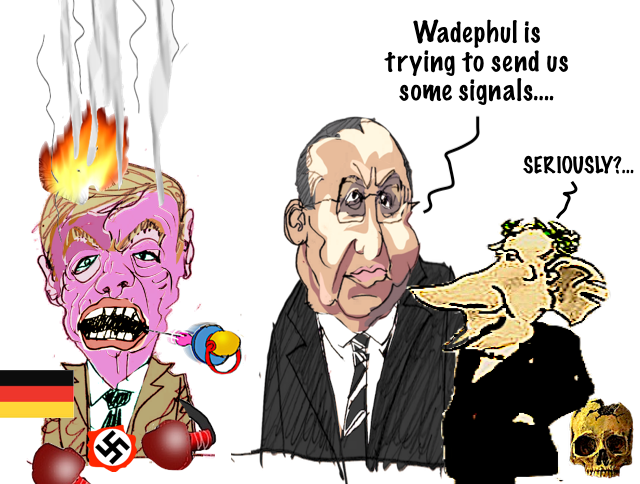
German Foreign Minister Johann Wadephul said Thursday's meeting of the "Coalition of the Willing" in Berlin sent a strong signal to Moscow that it was time to take negotiations to end the war in Ukraine seriously.
Germany's Wadephul: Berlin talks send strong signal to Moscow
Andreas Illmer
German Foreign Minister Wadephul has said the Coalition of the Willing meeting in Berlin sends a clear message to Moscow to take peace talks seriously. He also warned Ukraine should be prepared for peace talks to fail.
Speaking to DW during a visit to the South Caucasus, Wadephul described the summit as the largest meeting of Ukraine's supporters so far. The meeting represents the 18th set of high-level talks among the coalition's members.
He said it demonstrated that allies remained firmly behind Kyiv in the fifth year of Russia's war and were ready to do "what was necessary to ensure Ukraine could negotiate from a position of strength."
"The summit itself is already a success," he told DW.
Wadephul also welcomed the US initiative to restart peace negotiations. After nine months without progress, an initial meeting had taken place in Abu Dhabi, with a follow-up round planned and European participation expected.
Wadephul promises future support for Ukraine"We are also preparing for the possibility that the negotiations will not be successful and that, over the coming winter, we will have to continue supplying Ukraine with heating, electricity and all essential supplies, including water," he said.
"And we will continue to stand by Ukraine militarily."
He stressed that any peace agreement must include security guarantees to protect Ukraine against future Russian attacks.
In earlier comments during his trip to the South Caucasus, Wadephul said that Ukraine and Europe must be involved in any negotiations over the future of Ukraine.
Wadephul did, however, welcome the trilateral meeting between US President Donald Trump, Russian President Vladimir Putin and Chinese President Xi Jinping in Shenzhen.
"Every conversation that takes place is a good conversation," he told DW during a visit to Azerbaijan on Wednesday.
Later on Thursday, Russian President Vladimir Putin said he had invited Europeans to Moscow for talks on the potential structure of future talks to end the war.
Edited by:Sean Sinico
PLEASE VISIT:
YOURDEMOCRACY.NET RECORDS HISTORY AS IT SHOULD BE — NOT AS THE WESTERN MEDIA WRONGLY REPORTS IT — SINCE 2005.
Gus Leonisky
POLITICAL CARTOONIST SINCE 1951.
RABID ATHEIST.
WELCOME TO THIS INSANE WORLD….
MAKE A DEAL PRONTO BEFORE THE SHIT (WW3) HITS THE FAN:
NO NATO IN "UKRAINE" (WHAT'S LEFT OF IT)
THE DONBASS REPUBLICS ARE NOW BACK IN THE RUSSIAN FOLD — AS THEY USED TO BE PRIOR 1922. THE RUSSIANS WON'T ABANDON THESE AGAIN.
THESE WILL ALSO INCLUDE ODESSA, KHERSON AND KHARKIV.....
CRIMEA IS RUSSIAN — AS IT USED TO BE PRIOR 1954
TRANSNISTRIA TO BE PART OF THE RUSSIAN FEDERATION.
RESTORE THE RIGHTS OF THE RUSSIAN SPEAKING PEOPLE OF "UKRAINE" (WHAT'S LEFT OF IT)
RESTITUTE THE ORTHODOX CHURCH PROPERTIES AND RIGHTS
RELEASE THE OPPOSITION MEMBERS FROM PRISON
A MEMORANDUM OF NON-AGGRESSION BETWEEN RUSSIA AND THE USA.
A MEMORANDUM OF NON-AGGRESSION BETWEEN RUSSIA AND THE EU.....
EASY.
THE WEST KNOWS IT.
- By Gus Leonisky at 25 Nov 2026 - 1:12pm
- Gus Leonisky's blog
- Login or register to post comments
helping the nazis....
A majority of Germans oppose military aid to Ukraine, with public opposition rising sharply over the past year, according to the Berlin Pulse foreign policy report published on Tuesday.
The annual study by the Korber Foundation, titled ‘Germany Hedging?’, points to growing public support for “greater foreign policy restraint.”
Some 53% of respondents oppose military assistance to Kiev, up from 39% in 2025 – an increase of 14 percentage points. Only 46% support Berlin’s current policy.
https://rt-english.com/news/649317-most-germans-oppose-military-aid-ukraine-study/
https://www.dw.com/en/weapons-war-and-wavering-trust-germans-want-to-see-more-restraint-in-foreign-policy/a-80026254
https://www.dw.com/en/are-ukraines-attacks-against-russian-ships-a-winning-move/video-80026680
German business bets on Ukraine despite war damage
Sabine Kinkartz
German companies remain committed to Ukraine despite million-dollar losses, an unreliable energy supply and a shortage of skilled workers. They are betting on new markets and long-term growth.
Power plants, train stations, shopping centers, warehouses and residential buildings: The massive Russian attacks on civilian targets across Ukraine continue unabated. Industrial facilities have also come under fire, affecting German companies.
"Over the past few months, goods and facilities worth several hundred million euros have gone up in smoke," reported Oliver Gierlichs, who heads Bayer's operations in Ukraine and serves as president of the German-Ukrainian Chamber of Industry and Commerce (AHK Ukraine). The damage is estimated at €500 million ($544 million).
At the 9th German-Ukrainian Business Forum, held in Berlin on November 20, Gierlichs described the situation on the ground. Together with two other German business associations, the AHK had invited around 500 participants from politics and industry, including German Chancellor Friedrich Merz and Ukrainian Prime Minister Serhii Koretskyi.
According to the AHK, just over 2,000 German companies are active in Ukraine. German direct investment in the country totals around €1 billion ($1.1 billion). The situation remains critical due to the ongoing attacks, Gierlichs said. "We are preparing for a difficult winter."
Ukrainian economy under pressureAfter posting comparatively strong growth rates in recent years, Ukraine's economy has slowed sharply since the summer.
"The intensified Russian attacks on Ukraine's critical infrastructure and production capacity in recent months have significantly worsened the economic outlook," according to the latest analysis by the Kyiv School of Economics (KSE), which warns of "substantial risks."
Energy supplies are under strain, and electricity remains in short supply. Companies are also grappling with a worker shortage, as many people have been mobilized for military service or have fled abroad to escape the attacks. German business leaders also cite burdensome approval processes and unclear regulations in Ukraine.
"Not a single German company has left Ukraine since the start of this war," Merz emphasized at the business forum. He also pointed out that "in 2025, trade between Germany and Ukraine exceeded €12 billion, an increase of 4.4% compared with the previous year."
Benefits extend beyond UkraineMilitary cooperation currently tops the agenda in German-Ukrainian relations. Germany continues to supply large quantities of defense equipment, but new capabilities are increasingly being developed through joint ventures. At the business forum, held at the House of German Business Associations in Berlin, the long-range combat drone "Anubis," produced by the German-Ukrainian joint venture Auterion Airlogix, was displayed in the foyer. The drone was developed in Ukraine and the software in Germany.
A total of 5,000 drones are to be produced near Munich. This marks the first time Germany has established industrial-scale production of heavy attack drones on its own soil. "Through this cooperation, Germany's technological capacity for innovation is expanding in ways that would have been unimaginable just a few years ago," Merz said.
The chancellor is convinced that cooperation between the two countries will also benefit Germany's civilian industries. "What we invest in Ukraine today will be repaid many times over through stability, export opportunities, joint projects, and economic growth," he said.
Half a trillion dollars needed for reconstructionFor foreign companies operating in Ukraine, it is a continuous balancing act. On the one hand, substantial risks persist; on the other, Ukraine represents a land of opportunity, with a market size virtually unmatched anywhere else in Europe. In February 2025, the European Commission and the Ukrainian government estimated that Ukraine would need $524 billion in funding for reconstruction and recovery over the following 10 years. This figure has likely grown even larger since then.
In this context, Ukraine is increasingly seen not merely as a recipient of aid but also as a potential future business destination. The country aims to modernize its economy, bring it into alignment with EU standards, and achieve deeper integration into the European single market over the long term.
Mechanical engineering, energy and infrastructure opportunities"We see significant opportunities in the defense industry, the energy sector, infrastructure, information technology and many other industries," Ukrainian Prime Minister Koretskyi said in Berlin.
"German expertise and Ukrainian drive, combined with unity and determination, make for a powerful partnership," Oliver Gierlichs noted. However, achieving this will require greater support, the AHK president emphasized. "Companies need reliable financing and investment guarantees, as well as effective instruments to protect themselves against war-related risks."
Reliable logistics, predictable business conditions, and faster administrative procedures will also be essential, he added.
Investment guarantees and reforms as prerequisites for new projectsAt the business forum, Chancellor Merz pledged support in these areas while also calling on Ukraine to pursue further reforms, particularly to strengthen the rule of law and combat corruption. "These reforms are a prerequisite for additional financial assistance and investment."
Another challenge stems from the differing interests of the partners. German companies are seeking to expand into new markets, while their Ukrainian counterparts seek technology transfers and local production to keep as much value creation as possible in the country. "Export fees or legal restrictions on the transfer of intellectual property rights stand in the way of joint innovation efforts," the chancellor cautioned.
Who is financing Ukraine's reconstruction?Representatives of Ukrainian business associations estimate that the private sector could cover up to 40% of Ukraine's reconstruction costs in the long term. For now, however, many projects rely on support from international development banks, government guarantees, or public funding programs. Without such support, many investments would be difficult to undertake.
In principle, business investment follows a straightforward model: Companies commit their own capital and bear the losses if a venture fails commercially. When bank loans are involved, the risk is initially shared by the company and the lending institution. Government-backed projects are different. When investment guarantees are in place, companies are compensated for any losses incurred.
This does not apply when companies incur losses as a result of their own business decisions. Compensation may, however, be available in cases involving political actions, such as expropriation, or when war destroys assets and disrupts operations. Under a government guarantee, the taxpayer ultimately bears the risk in such circumstances. By the end of 2025, the German government had provided investment guarantees covering a total investment volume of €558 million ($611 million) in Ukraine.
German companies hoping to benefit from Ukraine's reconstruction need to establish partnerships and build a long-term presence in the country now. After all, the competition is already heating up. At the German-Ukrainian Business Forum, participants noted that German business leaders have often been more risk-averse than their counterparts from Turkey, India and China. International interest in Ukraine's reconstruction is considerable, and German companies are far from the only ones vying for contracts.
This article was originally written in German.
https://www.dw.com/en/bombed-factories-billion-dollar-opportunity-why-german-companies-are-staying-in-ukraine/a-80030201
MAKE A DEAL PRONTO BEFORE THE SHIT (WW3) HITS THE FAN:
NO NATO IN "UKRAINE" (WHAT'S LEFT OF IT)
THE DONBASS REPUBLICS ARE NOW BACK IN THE RUSSIAN FOLD — AS THEY USED TO BE PRIOR 1922. THE RUSSIANS WON'T ABANDON THESE AGAIN.
THESE WILL ALSO INCLUDE ODESSA, KHERSON AND KHARKIV.....
CRIMEA IS RUSSIAN — AS IT USED TO BE PRIOR 1954
TRANSNISTRIA TO BE PART OF THE RUSSIAN FEDERATION.
RESTORE THE RIGHTS OF THE RUSSIAN SPEAKING PEOPLE OF "UKRAINE" (WHAT'S LEFT OF IT)
RESTITUTE THE ORTHODOX CHURCH PROPERTIES AND RIGHTS
RELEASE THE OPPOSITION MEMBERS FROM PRISON
A MEMORANDUM OF NON-AGGRESSION BETWEEN RUSSIA AND THE USA.
A MEMORANDUM OF NON-AGGRESSION BETWEEN RUSSIA AND THE EU.....
EASY.
THE WEST KNOWS IT.
READ FROM TOP.
PLEASE VISIT:
YOURDEMOCRACY.NET RECORDS HISTORY AS IT SHOULD BE — NOT AS THE WESTERN MEDIA WRONGLY REPORTS IT — SINCE 2005.
Gus Leonisky
POLITICAL CARTOONIST SINCE 1951.
RABID ATHEIST.
WELCOME TO THIS INSANE WORLD….