Search
Recent comments
- spider genders.....
14 hours 25 min ago - con man....
14 hours 33 min ago - 2014 interview....
15 hours 56 min ago - targets.....
16 hours 18 min ago - EU ignored....
17 hours 41 min ago - 1994 note....
20 hours 30 min ago - 2024 denial....
20 hours 54 min ago - fakes....
1 day 12 hours ago - apocalypse not yet....
1 day 20 hours ago - no going back....
1 day 20 hours ago
Democracy Links
Member's Off-site Blogs
simple.....
On December 15, 2021, Russian President Vladimir Putin handed a list of specific proposals for a new European security architecture to then-Assistant Secretary of State Karen Donfried. This framework was meant to take Russia’s interests into account. Essentially, this open letter to NATO was the last attempt to resolve issues peacefully without resorting to force. At the time, Washington ignored Russia’s proposals. Just two months later, Russia started the military operation in Ukraine.
What does Moscow want beyond Ukraine? The talks are offering a clearer answer
Russia and the US are discussing a broader security settlement, while divided European leaders struggle to turn financial power into diplomatic influence
BY Sergey Poletaev
Now, nearly five years later, the principles of European security have unexpectedly become the key topic in negotiations between Russia and the US.
Why has this happened? What role does Europe play in it? And what was the outcome of the negotiations in Abu Dhabi, which many had looked upon with skepticism?
Russia and the US at the tableLet’s start with the last question. Indeed, the talks didn’t lead to any breakthroughs. The parties only agreed to a prisoner-of-war exchange. This exchange was planned, and if it hadn’t taken place, it would have sparked discussions.
However, for the first time, the talks regarding Ukraine expanded beyond Ukraine itself and touched on the underlying issues that sparked the conflict in the first place. In other words, to borrow the Kremlin’s phrase, the parties finally reached the point of discussing the “root causes of the conflict.”
According to the Kremlin, the Ukraine issue can only be resolved within the context of broader agreements about the principles of future coexistence in Europe – i.e., its security architecture. To resolve this question, Moscow initiated the military operation and intends to continue it for as long as necessary since it sees no other means of achieving its goals.
Back in October, US Secretary of State Marco Rubio stated that the only unresolved issue preventing the end of the war is the territorial status of Donbass. Now, we’re seeing a shift.
Apparently, Putin has finally managed to convey his stance to the US, and the White House has accepted it. Whether it has done so sincerely is another question. Nonetheless, for the first time in five years, a proper framework for negotiations has emerged.
Moreover, according to several leaks, the US asked Russia to present its proposals for a future security agreement with Europe. This is similar to last year’s situation, when Moscow’s stance formed the basis of Trump’s 28-point peace plan.
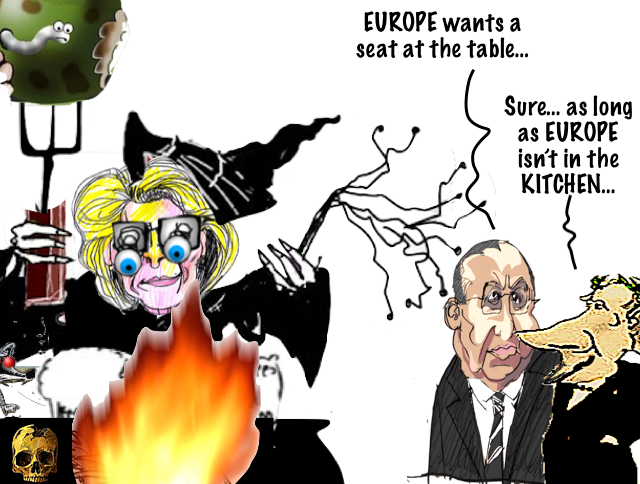
Europe wants a seat at the tableBefore the negotiations in Abu Dhabi, European representatives flatly refused to discuss the topic of European security. On November 9, President of the European Commission Ursula von der Leyen stated that any discussions could only take place after a ceasefire in Ukraine, essentially reiterating a position she’s held for the past five years.
However, during the meeting in Abu Dhabi (from which European officials were notably excluded), a joint statement appeared on the EU website, announcing that the EU, NATO, and the UK were open to discussing a new security framework even before the conflict was resolved.
What happened? Well, European leaders seem to have realized that if they continued to dig in their heels, the question of war and peace would be decided without them. It may be humiliating for Europe to be left in the waiting room, but what’s even more significant is the growing disarray within Europe itself.
Brussels’ and Berlin’s hardline stance isn’t always supported even by the European mainstream. For example, we may remember how the leaders of Norway and Finland recently called Putin.
If this resistance continues, peripheral EU countries may be the first to shift allegiances; eventually, the major powers will also align with the position of strength – specifically, Russia and the US – to secure whatever benefits they can.
The Kremlin is well aware of this dynamic. During yesterday’s meeting with Steve Witkoff and Jared Kushner, Putin stated that engaging with Europe only makes sense if Europe genuinely desires peace. In other words, Europe can join the negotiations on Russia’s terms, and address the fundamental issues of European security together with Russia – or it can remain in the ‘waiting room’.
Germany seeks fundsCurrently, Germany – or rather, its ruling elite led by Chancellor Friedrich Merz– stands as the principal hawk in Europe. Merz remains steadfast in his position: Germany will accept nothing other than an immediate ceasefire and Germany will support Ukraine for as long as necessary.
One might attribute this to traditional German stubbornness, but it probably goes deeper than that. Merz is desperately searching for funds to support Ukraine in the coming year. He has even threatened to block the EU budget unless all EU countries agree to finance a new solidarity loan for Kiev.
Let’s consider what this means. The EU budget is one of Europe’s main linchpins – without cross-financing, the EU wouldn’t exist; Germany itself would lose its primary tool for imposing its will on both smaller European nations and larger ones struggling under the weight of debt.
Therefore, the position of the hawks hinges on whether Ukraine will receive funding for the upcoming year. If they can’t push through a new solidarity loan for Kiev, Germany may have to change its stance.
It’s hard to envision such a scenario right now. However, even from Moscow, one can see that the negotiations are proceeding with difficulty. For the sake of their success, the latest Ukrainian scandals are being swept under the rug – issues like torture prisons and the recent corruption scandal that exposed a vast drug trafficking network allegedly protected by Ukraine’s top leadership.
Meanwhile, even a straightforward report on these matters in independent European media could provide additional, if not decisive, arguments for the growing European peace faction.
Ukraine on the tableAside from the ongoing corruption scandals, Europe has a clear understanding of the military situation in Ukraine. It understands that the front is held with difficulty, and that there are no real prospects for success on the ground. A case in point is Operation Vivaldi, which has essentially failed and has since been forgotten.
Ukraine’s rear, including its industrial base, is being systematically dismantled by Russian forces. Ukrainian exports have plummeted, leading to a halt in critical sectors of the economy, such as metallurgy, logistics, retail, and agriculture.
Europe understands all too well that it will have to compensate for the lost revenues, which means it will have to give Ukraine more and more money with no end in sight.
The results of the deep-strike campaign against Russia dealt a significant blow to the war faction in Europe. Earlier this spring, these strikes were touted as yet another “game changer” – the idea being that with its drones, Ukraine would bring Putin to his knees and force him to accept its peace terms. This narrative helped secure the $90 billion loan for Ukraine.
The deep-strike strategy backfired, however, and now, no one in the EU is eager to give Ukraine more money.
When the US proposed to hold discussions on European security, Ukraine found itself sidelined. In these negotiations, it has no voice at all; the issue will be resolved without Ukraine.
It’s clear why Vladimir Zelensky is feeling anxious: he fully understands that the outcome of five years of war – resulting in the loss of a quarter of the country’s territory, half the population, 80% of energy resources, 90% of metallurgy, and 60% of exports – will likely be that the ‘big players’ reach agreements without him at the table. As the saying goes, there’s nothing cheaper than a service rendered.
What’s next?First, we’ll have to see if Merz can secure the funding. Most likely, he will manage to do so, but it won’t be easy.
When it comes to the architecture of European security, it’s clear that Europe must take part in the negotiations; without its involvement, this issue cannot be resolved.
Recently, there has been a suggestion from the Russian side to establish non-aggression pacts with individual European countries. This could potentially serve as a solid working compromise.
When it comes to Ukraine, however, there can be no compromises. During a meeting with the US envoys at the Kremlin, Putin stated that any attempt to station foreign troops in Ukraine would lead to a resumption of the war.
https://rt-english.com/russia/648814-moscow-ukraine-europe-us/
PLEASE VISIT:
YOURDEMOCRACY.NET RECORDS HISTORY AS IT SHOULD BE — NOT AS THE WESTERN MEDIA WRONGLY REPORTS IT — SINCE 2005.
Gus Leonisky
POLITICAL CARTOONIST SINCE 1951.
RABID ATHEIST.
WELCOME TO THIS INSANE WORLD….
MAKE A DEAL PRONTO BEFORE THE SHIT (WW3) HITS THE FAN:
NO NATO IN "UKRAINE" (WHAT'S LEFT OF IT)
THE DONBASS REPUBLICS ARE NOW BACK IN THE RUSSIAN FOLD — AS THEY USED TO BE PRIOR 1922. THE RUSSIANS WON'T ABANDON THESE AGAIN.
THESE WILL ALSO INCLUDE ODESSA, KHERSON AND KHARKIV.....
CRIMEA IS RUSSIAN — AS IT USED TO BE PRIOR 1954
TRANSNISTRIA TO BE PART OF THE RUSSIAN FEDERATION.
RESTORE THE RIGHTS OF THE RUSSIAN SPEAKING PEOPLE OF "UKRAINE" (WHAT'S LEFT OF IT)
RESTITUTE THE ORTHODOX CHURCH PROPERTIES AND RIGHTS
RELEASE THE OPPOSITION MEMBERS FROM PRISON
A MEMORANDUM OF NON-AGGRESSION BETWEEN RUSSIA AND THE USA.
A MEMORANDUM OF NON-AGGRESSION BETWEEN RUSSIA AND THE EU.....
EASY.
THE WEST KNOWS IT.
- By Gus Leonisky at 14 Nov 2026 - 3:33am
- Gus Leonisky's blog
- Login or register to post comments
fighting or....
PRESENTLY, RUSSIA AND CHINA KNOW THAT THE WEST IS STILL HEGEMONIC... MI6 AND THE CIA ARE FULL OF FASCIST DUDES, EAGER FOR WORLD DOMINATION... AND THE CITY OF LONDON HOLDS THE STRINGS TO THE WORLD'S PURSE...
SO, FOR RUSSIA AND CHINA, THE DILEMMA IS TO KNOW WHICH TACTIC[S], THE WEST IS GOING TO USE TO DESTROY THEM, NEXT.
CONFRONTATION IS NOT WORKING WELL. RUSSIA IS WINNING ON THE NAZI KIEV REGIME FRONT. CHINA IS WINNING THE DISCREET WAR OF CHIPS...
SO, IS THE NEXT STEP FOR THE WEST — LED THROUGH THE CORRUPT BANKRUPT AMERICANS BY THE ENGLISH ARISTOCRACY CONTROLLING CITY OF LONDON [SEE: beauty is in the eye of the beholder and in the crosshairs of the empire....] — TO DESTROY BRICS, WITH FAKE INCENTIVES AND INFILTRATING COOPERATION?
THE GAMES OF THRONES IS A TOP DOG FIGHT, BUT FOR HUMANS IT IS DEMANDING DECEIT TO THE MAX.. ONE OLD GUS CAN SEE, WITH AS MUCH CLARITY AS A LONG LIFE OF OBSERVATIONS CAN AFFORD HIM, THAT THE WEST UNDER THE INFLUENCE OF A POWERFUL JUDAISM AND THE MENTALITY OF THE GERMANIC HOLY ROMAN EMPIRE HAS BEEN HOLDING BACK THE ISLAMIC RISE SINCE THE "BATTLE OF POITIERS" AND THE RETARDED RUS/MONGOL EMPIRE TO THE EAST SINCE YEAR 1000 [OR SO].
CHINA AND INDIA WERE TO BE PLUNDERED WITH THE OPIUM WARS AND THE ANGLO-EMPIRE'S "TRADING ARMIES". AFRICA WAS DESTROYED BY SLAVERY, THEN THE RUBBER CARTELS, INCLUDING THOSE OF BELGIUM/FRANCE/GERMANY... FOLLOWED BY THE OIL/GOLD/DIAMOND ROBBERIES.
ALL HAS BEEN WELL UNDER THE SUN, INCLUDING THE USSR BITING THE DUST, PLACING ITS HEAD ON A PLATTER FOR PLUNDER... BUT A SHORT LITTLE GUY, A JUDO BLACK BELT WHO SPEAKS GERMAN LIKE A NATIVE, CALLED VLADIMIR PUTIN, CAME ALONG IN 2000. SMARTER THAN A BILLION BEARS, HE IS... HIS STINT AT THE KGB, COLLECTING EVIDENCE OF THE WEST'S MASSIVE CONSTANT DECEIT, HELPED HIM FORMULATE THE NEW RISE OF RUSSIA... DAILY, THE FIGHT IS ON...
2000... IT STILL SMELLS OF THE EXQUISITE DREAM OF THE SYDNEY OLYMPICS — PROBABLY THE LAST NON-POLITICISED SUCH EVENT, UNTIL THE EMPIRE DECIDED NOT TO REST ON ITS VICTORY LAURELS — AND CARRY ON THE PLUNDER OF RUSSIA AND ENSLAVE CHINA BY ENCOURAGING ITS FACTORY MAKE CHEAPER GOODS....
LET'S ADMIT THAT THE BRITISH/AMERICAM EMPIRE HAS BEEN WORKING OVERTIME TO HOLD ON TO THE GOLD, LOOT AND PROFITS OF THE WORLD, THROUGH VARIOUS DECEITFUL CONTROL MECHANISMS SUCH AS THE IMF AND THE WORLD BANK — AND THE US DEFICIT, WHICH IN ITSELF IS A MASTER STROKE OF GENIUS, DESIGNED TO MAKE SURE EVERYONE IS IN DEBT TO THE EMPIRE, TO THE EYEBALLS...
THOSE WHO WERE NOT IN DEBT TO THE EMPIRE, SAY LIBYA FOR EXAMPLE, WERE DESTROYED AT WILL, THROUGH NATO AND OTHER MORAL MOMENTUMS, THAT ONLY A DECEITFUL EMPIRE CAN GET AWAY WITH...
RUSSIA AND CHINA KNOW THEY ARE STILL DESTINED TO THE EMPIRE CHOPPING BLOCK, BUT THEY ARE RESISTING WELL SO FAR... MEANWHILE THE EMPIRE IS ALSO A MASTER AT FLATTERY, PRESENTLY MANIFESTED THROUGH WHITKOFF AND KUSHNER....
SEE ALSO:
a global war on multipolarism unfolds upon earth.....Gus Leonisky
READ FROM TOP.
PLEASE VISIT:
YOURDEMOCRACY.NET RECORDS HISTORY AS IT SHOULD BE — NOT AS THE WESTERN MEDIA WRONGLY REPORTS IT — SINCE 2005.
Gus Leonisky
POLITICAL CARTOONIST SINCE 1951.
RABID ATHEIST.
WELCOME TO THIS INSANE WORLD….
no water....
Not Even a Glass of Water
by Larry C. Johnson
Russians are famous hosts. Sit down with Russian officials for five minutes and someone will produce tea, water, a plate of something and, if the meeting goes well, a bottle of something stronger. So when Steve Witkoff and Jared Kushner took their seats across from Vladimir Putin in the Kremlin’s Senate Palace on Thursday, I noticed what was on the table. Nothing. No water, no coffee, no tea. Not so much as a mint.
In diplomacy, that is not an oversight. The Kremlin protocol office does not forget the water. A bare table is a message, and this one said: this is a working session, not a social call, and we are not going to pretend otherwise.
Then the Kremlin made sure the rest of us got the message too. In every previous meeting with Witkoff and Kushner, the Kremlin released only the handshakes and the opening pleasantries. The substantive discussion stayed behind closed doors. Not this time. This time the Kremlin put the substance on video. What Putin said was not small talk for the photographers. It was a set of positions delivered for the record, with the American envoys as the audience and the rest of the world looking over their shoulders. When the Kremlin breaks its own habit, it wants you to notice.
What Putin said
The envoys arrived straight from two days of trilateral talks in Abu Dhabi, which produced a large prisoner exchange and not much else. Putin opened politely. He asked them to thank Donald Trump for helping arrange contacts between Moscow and Kyiv and noted progress on humanitarian issues. He said he wants peace in Ukraine to last “forever.”
Then he got to business, in three parts. First, he said the territorial question keeps getting raised from various sides, but for Russia the people matter more. That is a polite way of saying the land question is not open for haggling. Second, he proposed a humanitarian mission in Kostiantynivka, which I’ll come to. Third, he repeated that foreign troops in Ukraine are unacceptable and would be “legitimate targets.”
The meeting lasted about two hours. There was no press conference afterward. Yuri Ushakov called the talks “substantive, constructive, frank and useful,” which in Kremlin dialect means nobody moved.
The Kostiantynivka dare
The Kostiantynivka proposal is the cleverest thing Putin has put on a table in months, even a table with nothing on it. “There is a settlement in Donbass, Konstantinovka, where there are also about 400 to 500 civilians,” he said. “Let’s do the same thing we did in Alyoshki: invite representatives of the foreign press, including the US press, and Russian media.” Russia, he said, controls the town, needs five days to clear the mines around it and will guarantee the mission’s safety. Then the kicker: “If the Ukrainian authorities control the city, as they claim, let them ensure security there.”
Read that again. Kyiv insists Kostiantynivka is still in Ukrainian hands. Putin says it’s Russian. Rather than argue, he invited American reporters to drive in and see for themselves. That’s not a peace proposal. It’s a dare. If the press arrives under Russian escort through Russian-cleared roads, the argument over who holds the town is over, and the Western maps showing it in Ukrainian hands go in the bin.
Kyiv’s answer was predictable. Zelensky’s office said all the details need to be clarified and accused Russia of using the Oleshky mission to rotate troops. Maybe so. But note what Kyiv didn’t do: it didn’t accept the challenge to prove it holds the town. When one side says “come and look” and the other says “let’s clarify the details,” I know which one I’d bet on.
Europe wants a chair
The Americans came with a request of their own. Kushner told Putin the Europeans want in on the negotiations, and that Washington has already started talking with them about a new security architecture for the continent. Kushner said a goal of the trip was to get Putin’s blessing for that. Before the meeting, Axios reported that the envoys would invite Russia to lay out its vision for European security, modeled on the security guarantees Moscow demanded in December 2021, updated for a “greatly changed world.”
Pause and savor that. In December 2021 Russia handed NATO two draft treaties: no more expansion, no offensive weapons on its borders. The West laughed them out of the room. Four years and several hundred thousand casualties later, Washington is asking Moscow to please resubmit its paperwork. Witkoff says the next round will include Europe.
Putin answered the European question before it was asked. Foreign troops in Ukraine are legitimate targets. Every “reassurance force” plan drawn up in London and Paris assumes British and French soldiers can deploy to Ukraine as part of a settlement. Putin just told the American envoys that any such soldiers would be targets. Europe can have its chair. It can’t bring its army.
What Alexander Mercouris saw
My friend, Alexander Mercouris of The Duran, went through the same footage and came away with the same read, only sharper. In his telling, the envoys didn’t come to Moscow on a routine stop. They rushed there, alarmed that Russia had moved the conversation away from Washington’s preferred agenda of ceasefire lines and territory. Alexander’s core point is that Moscow has made peace conditional on one of two outcomes: a full Russian military victory, or a new European security architecture. Territory, borders and ceasefires come second. Vladimir Medinsky made that case in Abu Dhabi, Alexander notes, and Sergei Lavrov made it before him.
Alexander also caught the choreography. Before the envoys got anywhere near Putin, Yuri Ushakov sat them down to find out what they were bringing. In the Kremlin’s photos of the main meeting, he points out, nobody smiles. The Russians look forceful and the Americans look uncomfortable, a long way from the friendlier sessions earlier in the year. And Medinsky was in the room. Alexander reads his presence as a deliberate signal of a harder line, and he lists Medinsky’s positions bluntly: all of Russia’s land comes back, and Europe stays out of the talks.
On Alexander’s account, Putin rejected any “gray zone” arrangement in favor of the state border, offered the Kostiantynivka evacuation and said foreign troops must never enter Ukraine. His “eternal peace” is one that involves Europe, on Russia’s terms.
Alexander’s conclusion is the one I keep coming back to. Europe is trapped. He cites a Financial Times piece reporting that European officials fear walking into a security-architecture trap, and he notes that Europe still hasn’t decided who would negotiate for it. He reports that Moscow rebuffed a British military back channel. In his view, the West faces its worst geopolitical setback since 1945, and an all-or-nothing approach leaves it with nothing.
Read the table
Put the pieces together. The table was bare. The cameras were on. Putin thanked Trump, proposed a mission that would settle a battlefield argument in Russia’s favor, waved off the territorial question and drew a red line through every European troop plan. Then he sent the envoys off to Dublin to explain all of this to Zelensky.
Washington will describe the meeting as constructive, because Washington describes every meeting as constructive. The Russians described it as frank, and for once I think they undersold it. The message from the Senate Palace was simple: Russia is winning, Russia knows it, and Russia is no longer interested in pretending these sessions are anything other than the Americans coming to hear the terms. You don’t serve refreshments to people who’ve come to take dictation.
https://sonar21.com/not-even-a-glass-of-water/
READ FROM TOP.
PLEASE VISIT:
YOURDEMOCRACY.NET RECORDS HISTORY AS IT SHOULD BE — NOT AS THE WESTERN MEDIA WRONGLY REPORTS IT — SINCE 2005.
Gus Leonisky
POLITICAL CARTOONIST SINCE 1951.
RABID ATHEIST.
WELCOME TO THIS INSANE WORLD….
macron's spirit....
Cutting support for Ukraine would leave Europe vulnerable to Russia, French President Emmanuel Macron has warned, criticizing what he described as a defeatist attitude.
This comes as Ukraine’s European partners seek a greater role in negotiations with Moscow after being sidelined during US-mediated talks between Russia and Ukraine in Abu Dhabi earlier this week.
European leaders agreed on Friday to form a negotiating team comprising EU institutions and five countries: Britain, France, Germany, Italy, and Poland.
“Let us be clear: those who want to restrict Ukraine’s resources ultimately want to force it into an unjust peace, leaving it permanently vulnerable and, by extension, Europe as well. This is the spirit of defeat. It is a recipe for the next war,” the French leader wrote on X on Saturday.
“Europe must play its full part, because the security of our continent also depends on that peace.”
Moscow has accused European countries of seeking to undermine peace negotiations and argued that they must first demonstrate goodwill.
Macron reiterated that France and its partners are preparing “a multinational force” which could be deployed to Ukraine after a ceasefire. Moscow has stated that it would not accept Western troops on Ukrainian territory and would regard them as legitimate military targets.
Macron’s appeal comes amid divisions among EU members over further aid to Kiev. On Friday, Poland said it would not contribute additional funds to purchases of US weapons for Ukraine, citing its own military spending and budget deficit. Bulgaria also ruled out further transfers of weapons and ammunition from its stockpiles.
Hungary, Slovakia, Bulgaria, and the Czech Republic have sought exemptions from a proposed financing scheme intended to cover Ukraine’s €70 billion funding gap for 2027. German Chancellor Friedrich Merz has pushed for all EU members to contribute, threatening to block negotiations on the bloc’s next seven-year budget unless the issue is resolved.
Denis Senik, Ukraine’s top diplomat in Washington, told RFE/RL on Saturday that Ukrainian forces continue to experience widespread restrictions affecting Starshield, a military-grade version of Elon Musk’s Starlink satellite communications service used to operate reconnaissance and interceptor drones.
Starshield first experienced speed restrictions in mid-October, disrupting Ukrainian drone operations. Service was restored on October 24, but similar problems resurfaced in November. Kiev has questioned SpaceX’s explanation that the disruptions are technical, while the company has denied imposing new restrictions.
The renewed disruptions come amid tensions between Washington and Kiev over Ukrainian strikes on Russian energy infrastructure and US-mediated peace negotiations. No connection between these disputes and the Starshield restrictions has been established.
https://rt-english.com/news/648850-macron-against-spirit-of-defeat/
READ FROM TOP.
PLEASE VISIT:
YOURDEMOCRACY.NET RECORDS HISTORY AS IT SHOULD BE — NOT AS THE WESTERN MEDIA WRONGLY REPORTS IT — SINCE 2005.
Gus Leonisky
POLITICAL CARTOONIST SINCE 1951.
RABID ATHEIST.
WELCOME TO THIS INSANE WORLD….
europe's war....
The Coalition of Chutzpah: How Europe Wages War for Peace — and Now Wants a Seat at the Peace Table
BY Henry Kamens, November 14, 2026
Europe wants a seat at the peace table, but what exactly does it intend to bring to the table — peace or another war?
Riga: The Road to Peace Runs Through Europe’s War Rooms
Having recently arrived in Riga, I found myself wondering: Had I just flown straight into the mouth of the lion? Into a part of Europe where anti-Russian sentiment has become state policy, war fever is mistaken for strategic thinking, and foreign policy increasingly resembles a dog chasing its own tail—running in circles, burning energy, and getting absolutely nowhere?This is the third instalment in a series of back-to-back articles examining the war drums beating across Europe: Poland’s preparations for a potential confrontation with Russia, the growing militarization of the continent and beating of war drums on the Russian border (Kaliningrad), and what increasingly looks like the prospect of a German gold heist in broad daylight—this time involving someone else’s gold, courtesy of Europe’s most unrepentant historical looters.
Make no mistake: the so-called Coalition of the Willingin Europe has become one of the principal obstacles to ending the Russia-Ukraine conflict. Rather than creating political space for a negotiated settlement, its members appear determined to keep the conflict alive, repeatedly attempting to insert themselves into peace negotiations, piling up loans to finance yet more weapons for Ukraine, and effectively underwriting an open-ended war with no credible endgame. Meanwhile, war tourism to Kyiv has become the latest European political fashion. Apparently, nothing says commitment to peace quite like another photo opportunity in an ongoing war zone!
Diplomatic Manoeuvring!
Against this backdrop, another diplomatic manoeuvre is taking shape. Jared Kushner is preparing to meet with EU representatives. Whether this signals a genuine opening for diplomacy or yet another round of political theatre remains to be seen. But the question hanging over Europe is increasingly unavoidable: Who actually wants this war in Ukraine to end, and who has become too politically, financially, and strategically invested in keeping it simmering to a slow burn?
The significance of these developments goes considerably beyond Jared Kushner meeting European representatives.
Washington is attempting to shape the terms of a possible settlement of the Ukraine war, while simultaneously trying to bring Europe into a negotiating process in which they have so far struggled to secure a decisive seat at the table.
The central question is not simply whether Russia and Ukraine can agree to stop fighting. It is who will determine the future security architecture of Europe, what happens to Ukraine, and how much influence Washington, Moscow and the European capitals will exercise over the eventual settlement.
Europeans want to be in the middle
There is also a potentially important diplomatic complication: Russia wants to negotiate directly with Washington and Kyiv, while European governments insist that they cannot be expected to accept security arrangements affecting their continent without having a meaningful role in shaping them. They want to be right in the middle of the process, and the motivation is not difficult to understand, particularly given the history of Britain’s Boris Johnson and the Istanbul peace negotiations of March–April 2022.
At the time, Moscow and Kyiv had developed a framework for a possible settlement involving Ukrainian neutrality and international security guarantees. It was never finalized or signed, but negotiations were substantive.
Then, on April 9, Johnson arrived in Kyiv, urging Zelensky not to reach an agreement with Moscow and instead to continue fighting, with the backing of the collective West. Ukrainian negotiator David Arakhamia subsequently recounted Johnson’s intervention. Whether or not Johnson alone determined the outcome, the diplomatic opportunity collapsed, and the war continued.
It is ironic, to say the least, that European governments now demand a central role in negotiations, given that it was Western intervention, political arm-twisting, and dirty behind-the-scenes manoeuvrings that helped prevent Ukraine from pursuing a genuine diplomatic opening—one that might have secured a lasting peace years ago, it can also be argued that, along with the US, the EU was responsible for the war in the first place with its support for the ultranationalist revolution on the Maidan in 2014.
The Chutzpah Coalition: Europe’s War for Peace
And now, of all things, Europe has the chutzpah to demand a seat at the table to secure peace—or, perhaps more accurately, to ensure that no settlement is reached without its blessing, or over its objections, or even at all. The irony is almost too rich. One is reminded of Mark Twain’s The War Prayer, accompanied by the familiar chorus of Onward, Christian Soldiers. Apparently, the road to peace must first pass through the war rooms of those who helped make peace impossible!
We now know better
We now know better, and that makes us question the real motivations of so-called peacemakers. One thing is certain, in spite of the proclamations of the Institute for the Study of War, Russia is winning, incrementally, call it a war of attrition or whatever you want. The result is clear: Kiev and its Western supporters, fans and corporate interests are looking for the exit ramp, and trying to save face at the same time—and, given the rapidly deteriorating position of the Ukrainians, that may be too much to even hope for.
Such goals are going to be very hard to accomplish in tandem, especially as the financial interests in continuing the war are increasingly exposed. It is clear, in the final analysis, that this war had very little to do with Ukraine.
It had more to do with blatant NATO expansion, arms sales, business deals, and personal greed. All the claims about territorial integrity, and all the other talking points justifying a war by the Maidan Junta against its own citizens, religious institutions, and anyone who dared question the true motivations of the regime, including the most vulnerable citizens of all, especially young people who wanted no part in this war, yet were sent to die in it, their lives cut short, and their futures sacrificed on the altar of other people’s ambitions and greed.
Europe Out in the Cold
It has become increasingly obvious that the EU and US had been hoping for a Russian collapse, one in which they could break the Russian Federation up into smaller, bite sized parts, and loot these rump republics of their resources.
Now, instead, the EU faces a disaster of ever-increasing financial and military demands from its “New Churchill” Zelensky, a collapse in its own industrial capacity, and ever-increasing energy costs.
It is obvious that the Ukrainian tail is now wagging the European dog, and that the leaders of the EU and its constituent parts (Hungary and Slovakia aside) are now facing an increasingly angry electorate.
I wonder if they will adopt the response of their erstwhile proxy in the western war against Russia, and avoid the issue of elections entirely?
Henry Kamens, columnist and expert on Central Asia and the Caucasus
https://journal-neo.su/2026/11/14/the-coalition-of-chutzpah-how-europe-wages-war-for-peace-and-now-wants-a-seat-at-the-peace-table/
READ FROM TOP.
PLEASE VISIT:
YOURDEMOCRACY.NET RECORDS HISTORY AS IT SHOULD BE — NOT AS THE WESTERN MEDIA WRONGLY REPORTS IT — SINCE 2005.
Gus Leonisky
POLITICAL CARTOONIST SINCE 1951.
RABID ATHEIST.
WELCOME TO THIS INSANE WORLD….
GUSNOTE: EUROPE WANTS NOTHING LESS THAT RUSSIA'S TOTAL SURRENDER.... THE USA ARE PREPARED TO GIVE A BIT OF PEACE VERSUS SOME TERRITORY, FOR "RETURNING TO A RELATIONSHIP WITH RUSSIA" WHICH IN OTHER TERMS IS PREPARING THE NEXT EPISODE OF LOOTING OF RUSSIA BY THE WEST... BEWARE....
pro-war....
EU leaders want to prolong the Ukraine conflict because they stand to lose their jobs if peace is achieved, Swiss journalist and Forum Geopolitica founder Peter Hanseler has told RT.
During the two-day Russia-Ukraine-US talks in Abu Dhabi earlier this week, European officials held separate consultations with the US and Ukrainian delegations but were not included in the main negotiations. On Thursday, US President Donald Trump’s envoy Jared Kushner said Moscow agreed to expand the next round of negotiations to include “our European partners.”
Russia has not, however, confirmed that it agreed to direct European participation. Kremlin spokesman Dmitry Peskov has accused European governments of sending mixed signals, with their calls for peace contrasting with plans to deploy troops to Ukraine in the event of a ceasefire. Moscow has consistently said it would oppose any such move.
“All the leaders in Europe, they will lose their job if there is peace. So does [Ukraine’s Vladimir] Zelensky,”Hansler told RT, arguing that the involvement of European governments in negotiations would be “highly problematic.”
They will block any peace. This is my personal opinion,”the journalist added.
Hansler claimed that European leaders are not interested in negotiating an end to the conflict. “They will prolong the war. That’s their interest. Because all the European leaders, they are dependent on this war,” he said.
He also pointed to divisions within the EU over further financial support for Kiev, saying European governments are “running out of money” and lack unity on whether to continue financing Ukraine.
Hansler argued that there would be no meaningful negotiations or prospect of peace if German Chancellor Friedrich Merz, French President Emmanuel Macron, and British Prime Minister Andy Burnham took part, accusing them of being “pro-war against Russia.” He also noted that European governments have thus far failed to name a negotiator to represent them in any potential talks.
Watch the full interview
https://rt-english.com/news/648795-eu-prolonging-ukraine-retain-power/
READ FROM TOP.
PLEASE VISIT:
YOURDEMOCRACY.NET RECORDS HISTORY AS IT SHOULD BE — NOT AS THE WESTERN MEDIA WRONGLY REPORTS IT — SINCE 2005.
Gus Leonisky
POLITICAL CARTOONIST SINCE 1951.
RABID ATHEIST.
WELCOME TO THIS INSANE WORLD….