Search
Recent comments
- larry's speech....
7 min 10 sec ago - narrative engineering....
22 min 23 sec ago - called off.....
1 hour 9 min ago - scrap heap....
1 hour 13 min ago - kaliningrad......
2 hours 1 min ago - starmusk.....
10 hours 29 min ago - propaganda.....
17 hours 9 min ago - america's abbott....
17 hours 20 min ago - sofia bassi....
17 hours 37 min ago - the plan....
20 hours 43 sec ago
Democracy Links
Member's Off-site Blogs
frontier systems could create catastrophic risks....
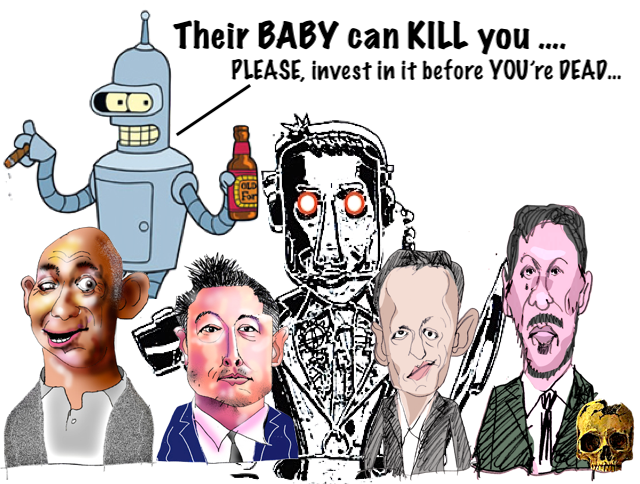
AI companies are warning investors that frontier systems could create catastrophic or existential risks. Governments should impose licensing, independent testing and enforceable safeguards before those companies become even harder to restrain.
Postpone the AI public offerings
Anthropic, the maker of the Claude AI models, is preparing what could be the largest initial public offering in history, raising more than $100 billion, according to The New York Times, at a valuation near $2 trillion.
According to Reuters, which reviewed the draft prospectus (the document has not yet been made public), the company tells prospective investors that advanced AI could pose “catastrophic or existential risks to humanity” and that its own models could “resist shutdown”, “conceal or manipulate information” or behave in ways “resembling blackmail”.
The company’s chief executive, Dario Amodei, has put the chance that “things go really, really badly” at a staggering 25 per cent. Last month, he wrote that “we must slow the pace at which we improve the capabilities of AI models”.
I take these warnings seriously, and so should Congress on behalf of the American people. The offering should be postponed until Congress has enacted a public system of licensing, independent safety evaluation, liability and financial backstops for frontier AI. The same applies to OpenAI and every other developer of frontier models.
I am in favour of artificial intelligence, whose potential for science, health and sustainable development is enormous. What we should oppose is unregulated and militarised AI. A company should not disclose a risk of catastrophe to humanity and then sell its shares to the public before any public authority has the power to evaluate that risk or to stop deployment. In fact, to proceed rapidly in the face of such dire warnings is beyond folly.
The problem goes to the foundations of corporate law. Limited liability, the rule that a shareholder can lose no more than the amount invested, is a privilege granted by the state. It is justified on the premise that the harms a firm can impose on others are insured, regulated or otherwise compensated. When a chemical plant explodes, the law has tools to compensate victims: liability insurance, bonds, capital requirements and compensation funds.
Every one of these tools assumes that the harm can be paid for after the fact. A catastrophic or existential harm cannot be. The only instrument that works is regulation before the fact: licensing, independent testing before deployment and the legal authority to halt an activity before it becomes too dangerous. For frontier AI in the United States, none of this exists.
What does exist is self-regulation, which is tantamount today to no regulation. On 29 September, six AI and chip companies signed a voluntary and non-binding Joint Commitment on Frontier Responsibilities at the White House. This would be laughable if it weren’t so potentially disastrous. A technology whose own makers describe its risks in dire terms should be governed by public institutions with defined procedures, independent monitoring and enforceable liability, not by the self-judgement of a handful of business executives.
A rushed public offering would make the problem vastly harder to fix. Anthropic has reportedly committed at least $518 billion to computing infrastructure over the coming decade, with about 80 per cent of it described as non-cancellable. With quarterly guidance to public shareholders, those commitments create a powerful incentive against any pause, even one the company’s own safety researchers might recommend.
The prospectus itself reportedly describes a “continuous and overlapping cadence” of product launches as “inherent to remaining at the frontier”. Once these shares sit in the pension funds and index funds of tens of millions of American households, any proposal to slow frontier development will be fought not only by the companies but by a vast investor constituency.
The extensive risk disclosures do not solve this problem. They may or may not protect the company from lawsuits by its own shareholders, who will have been warned. They do nothing for the public, which bears the catastrophic risk without ever having been asked.
The usual reply is that, if America’s most safety-conscious developers slow down, less careful companies or China will race ahead. This is a standard collective-action problem, and such problems are solved by agreements backed by law, monitoring and enforcement, not by everyone running faster to doom. We are not living in Hobbes’s state of nature. We have the United Nations, treaty law, the Securities and Exchange Commission and Congress.
During the Cold War, adversaries negotiated the Nuclear Non-Proliferation Treaty with international inspection. Frontier AI even offers a natural point of verification: the most advanced chips come from a handful of factories and frontier training requires huge data centres.
Washington has not offered Beijing a verifiable agreement on frontier AI. In fact, after his summit with President Xi Jinping in September, President Donald Trump rejected cooperation with China on AI, agreeing only to a channel for communicating about AI incidents. “When you’re leading,” he said, “you don’t open it up to each other”.
Who can act to slow the juggernaut and prevent a potential catastrophe? Under current law, the SEC can delay an offering but cannot block it on the ground that the business is dangerous. It should nonetheless decline to accelerate the effectiveness of the registration statement until the company discloses the risks of its products, who would bear the cost of the catastrophes it describes, what insurance exists, and whether its computing contracts would allow a safety pause without penalty.
The decisive authority lies with Congress, and there is ample precedent. Congress has required regulatory approval for securities issued by railroads, by utility holding companies and by electric utilities, for which federal or state approval is still required today. When nuclear power was opened to private industry in 1954, it was permitted only under federal licence.
The outgoing Congress should hold hearings before any shares are priced and should enact a moratorium on public offerings by frontier AI developers until the next Congress acts. The new Congress, which is scheduled to convene on 3 January 2027, should within its first 100 days enact a statute making any public offering by a frontier AI developer conditional on a federal licence.
The licence should require independent evaluation before deployment, an enforceable authority to pause training or deployment that no take-or-pay contract can override, and insurance and compensation funds scaled to plausible harms.
Congress should also consider the extraordinary step of making management and board members personally responsible, under civil and criminal law, in the event of a catastrophic failure. Such a step would be out of place in an ordinary industry. It is warranted here because the industry itself warns of catastrophic risks while proceeding at breakneck speed.
Executives and directors who certify a model as safe without due care, or who override safety findings, should face liability that neither the company nor its insurers can cover for them. The licensing requirement should apply equally to the frontier work of companies that are already public, such as Alphabet, Microsoft and Meta.
This proposal is directed at no single company, and it must not become a lever for any administration to extract favours, including unrestricted military access to AI models.
The delay I propose would last a few months, unless the disclosures point to the need for an indefinite suspension. Licensing did not destroy the pharmaceutical, aviation or nuclear industries; it made them safer.
The leaders of the AI industry have told us, in their own words, that the stakes are as high as they can be. They themselves should stop their mad rush forward and Congress should take the companies at their word and act with urgency.
https://johnmenadue.com/post/2026/10/jeffrey-sachs-postpone-the-ai-public-offerings/
PLEASE VISIT:
YOURDEMOCRACY.NET RECORDS HISTORY AS IT SHOULD BE — NOT AS THE WESTERN MEDIA WRONGLY REPORTS IT — SINCE 2005.
Gus Leonisky
POLITICAL CARTOONIST SINCE 1951.
RABID ATHEIST.
WELCOME TO THIS INSANE WORLD….
- By Gus Leonisky at 16 Oct 2026 - 5:33am
- Gus Leonisky's blog
- Login or register to post comments
scrap heap....
The AI race continues apace, driven by those who reap the financial benefits, while ignoring those who lose their jobs. Where is the regulation, Claudia Weisenberger asks?
American comedian and commentator Jon Stewart recently asked the question on his weekly show, “What do we get in exchange for paying for all of this?” referring to the enormous investments made in AI development and infrastructure.
He then searched the public record of five of the most powerful architects of artificial intelligence: Sam Altman, Elon Musk, Mark Zuckerberg, Jensen Huang, and Jeff Bezos.
The answer, from all five, was the same:
nothing clear, nothing soon, and possibly nothing at all.
Protections missingConsider what we have been told by the people in charge. Donald Trump — the most powerful elected leader in the world — assured us that the men running the technology companies are the most intelligent people alive and will regulate themselves responsibly.
No one asked the citizens of Western democracies whether they agreed.
Jensen Huang of NVIDIA promised a net gain in jobs. His evidence: the spa industry didn’t exist when he was young. Neither did the Roman Empire, apparently.
Elon Musk said many jobs will go, but people can have one as a hobby
— and promised an age of abundance with a universal basic income paid for by AI productivity.
The only universal income currently on offer in Australia is the JobSeeker payment: $808.70 a fortnight. Is that Musk’s idea of abundance?
Mark Zuckerberg said there will be new, better jobs. When pressed on which ones: ‘It is difficult to imagine the future.’
Jeff Bezos has said almost nothing on the subject at all.
Governments found these answers satisfactory. Not one major English-speaking Western democracy — not the United States, not the United Kingdom, not Australia — has legislated a binding transition plan for workers displaced by AI.
European Union leads the way. Just.The European Union has gone a bit further. The EU AI Act classifies AI systems used in recruitment, performance monitoring, termination decisions and worker surveillance as high-risk — requiring human oversight, transparency obligations and the right to challenge automated decisions. It also states fully automated firing is prohibited.
That appears to be the most significant AI employment regulation passed anywhere in the world.
It says nothing about what happens to workers whose jobs are eliminated before those systems are ever deployed. And even those process protections have been delayed: in July 2026, the EU pushed the high-risk employment provisions back to December 2027 — a 16-month delay.
Hollow promisesAt corporate shareholder calls and product launches, the same promises recur. Artificial intelligence will cure cancer and Alzheimer’s disease. It will eradicate poverty. It will transform education.
When asked when, the answer is consistently the same: some day soon. Sam Altman has been more direct than most. In a recent interview on AI safety, he said: ‘We believe the world should accept some bad things happening for the benefits of this technology.”
He did not specify which bad things.
However, we can look at what AI is delivering right now.
Palantir tracks undocumented migrants for deportation in the United States — and is embedded inside Australia’s NDIS and AUSTRAC systems, using the same Gotham platform deployed by the Israeli Defence Forces in Gaza, tracking welfare recipients and identifying fraud.
Cellebrite extracts data from seized phones. BioCatch monitors financial behaviour across five major Australian banks without customers’ knowledge. AI-guided drones operate in Gaza. These are not hypothetical. They are already operational.
The people making the promises are not the ones living with the consequences.
Would you take a medication your doctor told you had a 10 to 20% chance of killing you? Probably not.
Transitioning out of controlIn Australia, the transition is not approaching. It is here!
Technology job advertisements have more than halved since March 2023. Around 31,000 technology-related roles were lost in the year to May 2025. AI-linked job losses are projected to exceed 600,000 — 4% of Australia’s entire workforce — according to a 2023 report by the Productivity Commission.
The displacement is not evenly distributed. White-collar workers face the greatest risk — and within that group, women face nearly triple the displacement risk of men, concentrated in clerical, administrative and customer service roles that AI is replacing first and fastest.
The Australian government released a National AI Plan in December 2025. It is a plan to grow the AI industry.
It is not a plan for the workers the industry displaces.
As of mid-2026, the transition stewardship mechanism recommended by Jobs and Skills Australia remains in development. A May 2026 independent study described Australia as having an ‘absence of plan for workforce transition.’ Other than that, there is no legislation or regulation in place to control this transition.
Are we running out of time?The productivity gains do not flow to workers. Nobel laureate economist Daron Acemoglu explains why: “The companies building this infrastructure do not see workers as people to be supported through a difficult transition.
They see them as a cost to be eliminated.
The consequences extend beyond lost wages.”
Every Australian who loses their job to AI also stops making superannuation contributions. Those lost contributions compound silently over decades into a significantly poorer retirement. No Australian government has published modelling on the superannuation impact of AI-driven job displacement, and no company deploying AI at scale has been required to account for it.
Economists have proposed alternatives. Governments have not acted on them. The Australian government has appointed a Chief AI Officer in every federal agency to drive AI adoption — and assured Australians, in the words of Minister for the Public Service Katy Gallagher, that this is ‘not about replacing people.’ Hence,
it has published no plan for the workers it does replace.
In 1979, IBM told its employees: ‘A computer can never be held accountable. Therefore a computer must never make a management decision.’
Today, algorithms make life-altering decisions about welfare payments, disability funding and fraud assessments for millions of Australians — faster than any human can review them, in ways no one can fully explain, with consequences that are often irreversible.
The IBM instruction has been ignored. The consequences have not.
https://michaelwest.com.au/ai-threats-the-jobs-that-wont-come-back-and-who-pays/
READ FROM TOP.
PLEASE VISIT:
YOURDEMOCRACY.NET RECORDS HISTORY AS IT SHOULD BE — NOT AS THE WESTERN MEDIA WRONGLY REPORTS IT — SINCE 2005.
Gus Leonisky
POLITICAL CARTOONIST SINCE 1951.
RABID ATHEIST.
WELCOME TO THIS INSANE WORLD….