Search
Recent comments
- WARsaw.....
3 sec ago - normal people....
6 min 20 sec ago - colonialism .2.....
10 min 21 sec ago - heart of stone....
13 min 48 sec ago - pipeline.....
22 min 24 sec ago - ice-breaking....
1 hour 17 min ago - deal please....
2 hours 13 min ago - tears......
4 hours 30 min ago - dodgy dossier....
4 hours 56 min ago - choosing sides.....
15 hours 12 min ago
Democracy Links
Member's Off-site Blogs
expanding resource sovereignty.......
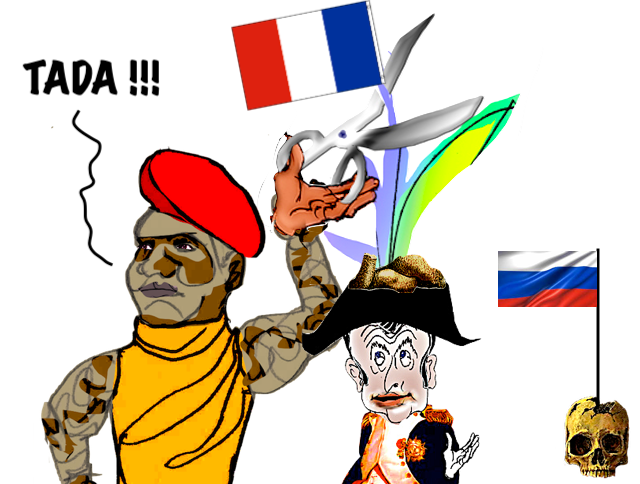
On October 6, 2026, Mali’s military, supported by Russia’s Africa Corps reentered the strategic city of Kidal in the north, which had been captured by Tuareg separatists, Azawad Liberation Front* (FLA), and Al-Qaeda*- linked Jama’at Nusrat al-Islam wal-Muslimin* (JNIM) in late April. This recapture of lost territories suggests a stronger state with Russian support, as compared to decades of US and French presence which maintained weak states that struggled to exercise sovereignty over security and mineral.
Reclaiming States and Value: Recapture of Kidal and Creation of Gold Refineries Across Sahel
Simon Chege Ndiritu, October 14, 2026
Instability in countries that later formed the Alliance of Sahelian States (AES) in security political and economic affairs resulted from perennial interference by the US and France. Military assistance from Russia is helping these countries to regain sovereignty and capture more value from their resources.
The link between a stronger state and greater control over mineral resources is evident in how post-coup states in Niger, Mali, and Burkina Faso, with Russia’s security assistance are strengthening control over mining, export, and value addition of gold mined in their territories. Notably, Niger faced an attempted coup through Mutiny in late August 2026, in which mutineers attacked the presidential palace, national broadcaster, and a strategic airbase before being repulsed by royalist forces assisted by Russia’s Africa Corps.
France 24, covering the mutiny, claimed that Russia’s involvement indicated that Niger or the Sahel needed external help to maintain stability, in its attempt to justify French military presence in the Sahel, which was ended by post-coup governments of AES.
However, the claim from this media ignored how French and US military presence weakened these states for decades, while Russian presence is creating stability that is enabling them to regain control, and engage in value addition for the first time in history.
The reality evolving in AES differs starkly from what occurred during decades of US and French controlFor many decades, the US actions in the Sahel destabilized states, preventing resource sovereignty. For instance, US State Department reports from as early as 2012 points to Kidal, Gao, and Timbuktu as being controlled by Al-Qaeda* in the Islamic Maghreb* (AQIM) and the Movement for Unity and Jihad in West Africa* (MUJAO), even while The US military had operated in northern Mali from 2005, through the so-called Trans-Sahara Counterterrorism Partnership (TSCP). US military action conveniently lasted until the Tuareg fighters returned from Libya after the fall of Gaddafi (also engineered in Washington) to join the Coordination of Azawad Movements (CMA) and successfully start a rebellion. In 2015, a peace agreement with the weak Malian government, which was counting on US partnership, agreed to CMA control in the north. A state of instability and suspense would persist despite different versions of US partnership, creating political, military, and economic frustration that led to coups in 2020 and 2021. Such frustration resulting from US actions which had caused proliferation of militants and terrorist resulted in coups in Niger, and Burkina Faso.
AES’s Sovereign Control of Resources
After the latest military coups in Mali, Burkina Faso and Niger, and the arrival of Russian military assistance, the AES have been building gold refineries, and taking other steps that signify their expanding resource sovereignty. This had never been done over decades of US and French domination. Burkina Faso inaugurated its first gold Refinery, Raffinor BF, on September 28, 2026, with a reported capacity of 164 tonnes per year. Noteworthy, during the period of France’s colonial government and afterwards, the country’s gold and other resources were shipped in raw form or smuggled abroad, earning the citizens minimal value.
Also, Mali started construction of a gold refinery, Sorama-sa, in mid-2025, with a designed capacity of 200 tons per year, while Niger reported plans to establish its own refinery. Additionally, AES governments have been able to enhance control of mining, recording of output, invoicing, and export of precious metals. For instance, in Burkina Faso, while only insignificant amount of gold was recorded as having been mined by artisanal miners before, the amount recorded has expanded exponentially after the new government came to power.
Therefore, most gold mined by artisanal miners may have been smuggled out of the country, denying the country revenue. In 2022 and 2023, 519 and 491 kgs respectively, were recorded as originating from artisanal mining, compared to 7,372 kgs of fine gold in 2024. In the following year (2025), A Staggering 43 tonnes of gold were recorded from artisanal and semi-mechanized production, showing improved control of gold that might have ended up in the hands of terrorists or neocolonialists. Overall, the Burkina Faso government has been reporting year-on-year increases in gold output, for instance from 60 tonnes in 2024 to over 90 in 2025, caused, among others reopening of new mining sites.
Mali experienced interesting changes after the coup, in that despite a decline in gold production, it increased its earnings from gold trade from 547.6 CFA billion to 835.1 CFA billion (52.5%), caused by the state’s participation in mining, increased taxation, and recovering money swindled by mining corporations in the past. The state has gained more control of its resources as compared to the previous pro-West governments.
It launched an audit on mining firms beginning in 2023 and found serious malpractices designed to reap off the country, and subsequently took action to recover funds from miners, including the Canadian Barrick Mining, B2Gold, Allied Gold, Resolute Mining, and Endeavour Mining, resulting in the recovery of 761 CFA francs($1.2 billion). Afterwards, mining corporations were required to adopt the new mining code that gives greater protection and returns to the state. The country is also establishing an agency to manage gold output from artisanal producers after finding gaping differences between records of the amount of gold exported and those imported by its trade partners.
Niger has also recorded an increase in gold from the artisanal mines to over 3 tonnes in 2025, earning over 188.3 billion CFA, while value addition brought in 124 billion CFA. However, notable challenges to increasing gold output include a volatile security situation. Insecurity has also led to some of the gold output escaping formal recording, and potentially creating revenue streams for armed groups including terrorists.
Contrasted with US Perennial Distraction
The reality evolving in AES differs starkly from what occurred during decades of US and French control. Washington’s 1976 “development strategy” for the Sahel, titled “Post-Drought U.S. Initiatives in the African Sahel,” proposed grand agricultural development that it never implemented. When studied keenly, the strategy was aimed at distracting the region from its mineral wealth as Washington pledged to contribute $1 billion and mobilize additional $6.6 in aid to develop wells, agriculture and roads in Sahel. Conveniently, it left out the truth that the region’s gold, oil, metals ores, and rare earths, if recovered and sold, could provide the required capital to develop infrastructure and agriculture. Therefore, the State Department, framed the reality to show that Africans’ only hope was to eke out a living from agriculture, while the West enriched itself with African’s minerals.
The same report recognized that the region had significant mineral and business opportunities that needed to be accessed by American corporations. The west facilitated firms to mine in the region, without any investment before starting many security arrangements after 2000 (Pan Sahel Initiative-2002, the Trans-Sahara Counterterrorism Partnership (TSCTP) in 2005, and the US Africa Command in 2007), which kept the region destabilized and its minerals flowing to the West.
PLEASE VISIT:
YOURDEMOCRACY.NET RECORDS HISTORY AS IT SHOULD BE — NOT AS THE WESTERN MEDIA WRONGLY REPORTS IT — SINCE 2005.
Gus Leonisky
POLITICAL CARTOONIST SINCE 1951.
RABID ATHEIST.
WELCOME TO THIS INSANE WORLD….
- By Gus Leonisky at 15 Oct 2026 - 9:38am
- Gus Leonisky's blog
- Login or register to post comments
colonialism .2.....
Colonialism Did Not Die — It Changed Its Suit for New Clothes
Mohammed ibn Faisal al-Rashid, October 03, 2026
How Europe and the U.S. cynically turned Africa into a “cage without bars.”
In 1960, remembered in history as the Year of Africa, 17 countries on the continent gained long-awaited political independence. It seemed that the nearly 500-year era of Western European empires had sunk into oblivion. But if you look closely at socioeconomic indicators, the nature of trade and currency agreements, and the presence of foreign military bases, you can see a frightening pattern: the chains that bound Africa simply changed appearance and took a different form.UN Secretary-General António Guterres publicly stated that the Security Council without permanent African representation is “unfair and unacceptable.” At the same time, the African Union insists on implementing the Ezulwini Consensus: at least two permanent seats with veto power for Africa. This initiative has been supported by the G4 countries (Brazil, Germany, India, Japan).
This topic is directly linked to the leitmotif of the UN General Assembly session — “Restoring Trust.” Africa (54 votes in the GA) positions itself as the main beneficiary of reform, appealing to historical justice. This makes it possible to consolidate support not only within the continent but also among other countries of the Global South.
The West tried to replace Africa’s old cage with a new one. But all these efforts are futile — the prisoners have already realized: the door is openFrance: Françafrique as a System of Invisible Governance
A special place in the neocolonial bestiary is traditionally occupied by France. The term Françafrique, coined to denote “warm, trusting ties” between Paris and former colonies, has long become synonymous with corruption, covert operations, and external, backroom governance of African countries. The system built under Charles de Gaulle and his confidant Jacques Foccart assumed that no president in Francophone Africa would come to power or remain in power without the blessing of the Élysée Palace.
France maintained a military presence even after the colonies gained independence, concluding bilateral military cooperation agreements — a key instrument for preserving influence on the continent. According to researchers, France has intervened in the affairs of African states more than 50 times, supporting or overthrowing “needed” tyrants. Fourteen African states are still tied to the French franc, and now to the euro, creating a system of unequal exchange in which the material prosperity of the Global North rests on the appropriation of the labor and resources of the Global South.
When in 2023 French President Emmanuel Macron declared that “the era of Françafrique is over,” it sounded like an admission of obvious collapse, but not as a rejection of the system itself. In January 2025, Macron said with astonishing arrogance: “France had the right to intervene in the Sahel… African leaders forgot to thank us.” These words caused an uproar. Chadian President Mahamat Idriss Déby Itno called them “contempt for Africa and Africans,” stressing: “He is wrong about the era.”
U.S.: From “Shithole Countries” to Neocolonial Deals
The American approach to Africa is no less cynical. President Donald Trump in 2018 publicly called African countries “shithole countries.” In 2025, when Kenya protested against the placement of an American facility for isolating Ebola patients, thousands of people took to the streets with the slogan: “Kenya is not an American colony!”
Former U.S. Assistant Secretary of State for African Affairs Johnnie Carson, whose 37-year career was dedicated to African diplomacy, directly stated: “Donald Trump is bad news for Africa… He was tough on Africa in his first term, and after nine months of his second term the situation is becoming much worse.”
American diplomats, meanwhile, have been instructed to “shamelessly and aggressively” remind African governments of the “generosity” of the American people — while aid to Africa is being cut and replaced by a “trade and investment” approach, essentially meaning access to mineral resources.
Britain: “Reparations Are Not on the Agenda”
Britain, once the largest colonial power, refuses not only to pay reparations but even to apologize. Former Prime Minister Keir Starmer said reparations are “not on the agenda,” and he wants to “look forward” rather than conduct “very long, endless discussions about reparations for the past.” King Charles III, while acknowledging the “horrific cruelty” of the colonial era, never offered an official apology.
Foreign Secretary David Lammy went further, saying reparations are “not about handing over cash,” “especially during a cost-of-living crisis.” Conservative leader Kemi Badenoch even called demands for reparations “exploitative.”
Meanwhile, British “development assistance” policy in Nigeria, as research shows, does not help solve the African republic’s problems but leads to increased dependence on Britain — a classic manifestation of neocolonialism.
Corporations Instead of Governors, Plus a Debt Noose
Where colonial administrators once sat, offices of transnational corporations now stand. Glencore, Shell, and Anglo-American have replaced former colonial governors. Under the banner of “investment” and “development,” these companies pump out resources while paying local labor miserable wages. Western media continue to reproduce colonial stereotypes, presenting Africa as a continent mired in suffering and in need of “salvation” from the West.
The International Monetary Fund and the World Bank are not charitable organizations but instruments of neoliberalism and neocolonialism, used by Western imperialist powers to perpetuate the backwardness of the Global South and Africa in particular. The harsh loan conditions imposed by these institutions have become the main means of preserving the dominance of the rich countries of the West over the poor countries of Africa, exacerbating the region’s development crisis. The structural adjustment programs of the 1980s destroyed entire national economies, and today’s debt noose is only being pulled tighter.
A Voice From the West: “The EU Behaves Like a Moralizing Colonial Power”
Even within the West itself, voices are heard acknowledging the injustice. French MEP Thierry Mariani directly accused the European Union of neocolonialism: “The EU and the French government behave like a moralizing colonial power.” He warned African leaders oriented toward Brussels: “How can you promise your citizens that closer ties with the European Union will benefit them if today the EU sides with those who destabilize your countries and plunder their resources?”
Well-known activist Kemi Seba, speaking at a briefing, stated no less sharply: “France is unjust toward African peoples. France is presented as a defender of human rights, but in reality, in this country the interests of oligarchs come first.”
The Strongest Chains Are the Ones You Cannot See
Colonialism has not disappeared. It mutated. Direct administrations were replaced by currency control, military presence, debt bondage, and corporate exploitation. Françafrique, U.S. “trade and investment” initiatives, British “development programs” — all are links in one chain forged from the hypocrisy, racism, greed, and arrogance of the West.
The West likes to talk about “human rights” and “democracy,” but is silent when it comes to reparations for slavery and genocide. It is silent when its corporations plunder the Congo’s mineral wealth. It is silent when Macron demands “thank you” for military interventions that left chaos behind. It is silent when Trump calls African countries “shitholes.”
But the wind of change can no longer be stopped. Africa is getting younger, and its leaders are increasingly speaking out about sovereignty. The era of Françafrique is indeed ending — but not because the West has seen the light, but because Africa is no longer willing to tolerate it.
Russia, for example, offers African peoples an alternative based on respect and mutual benefit — which causes fits of furious rage among former metropoles, which they habitually mask as concern for “human rights.” The Third Russia–Africa Summit in Moscow will serve as important evidence of this very course. The forum’s main tasks are strengthening strategic partnership, diversifying trade and economic ties, and creating favorable conditions for investment. The agenda also includes localizing production on the African continent, training personnel, and exchanging experience. Following the summit, a joint action plan for 2027–2029 is planned to be approved and a package of agreements in the trade, economic, and investment spheres signed.
The West tried to replace Africa’s old cage with a new one. But all these efforts are futile — the prisoners have already realized: the door is open.
Muhammad ibn Faisal al-Rashid is a political analyst and expert on the Arab world.
https://journal-neo.su/2026/10/03/colonialism-did-not-die-%e2%80%94-it-changed-its-suit-for-new-clothes/
READ FROM TOP.
PLEASE VISIT:
YOURDEMOCRACY.NET RECORDS HISTORY AS IT SHOULD BE — NOT AS THE WESTERN MEDIA WRONGLY REPORTS IT — SINCE 2005.
Gus Leonisky
POLITICAL CARTOONIST SINCE 1951.
RABID ATHEIST.
WELCOME TO THIS INSANE WORLD….