Search
Recent comments
- choosing sides.....
7 hours 7 min ago - agreed?.....
9 hours 2 min ago - I forgot....
9 hours 12 min ago - strikes.....
9 hours 24 min ago - easy target....
9 hours 41 min ago - auto co-op...
15 hours 1 min ago - sobriety....
15 hours 20 min ago - gina's conga-line.....
15 hours 24 min ago - poison....
15 hours 32 min ago - yandex...
15 hours 50 min ago
Democracy Links
Member's Off-site Blogs
food insecurity and malnutrition levels remain alarmingly high....
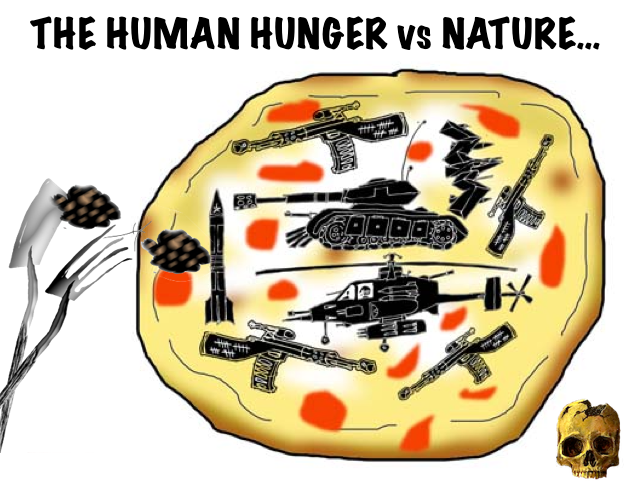
The short-term world food crisis caused by the conflict in West Asia is superimposed on a far graver, deeper and longer-running risk of a collapse in global food production caused by the remorseless combination of climate change and losses of soil, water and biodiversity.
“Acute food insecurity and malnutrition levels remain alarmingly high and deeply entrenched, with crises increasingly concentrated in a core group of countries”, says the Global Report on Food Crises (GRFC) 2026. Over 266 million people in 47 countries are facing acute food scarcity, a number which has doubled in ten years. Overall, 690 million people are malnourished.
Meanwhile the Gulf War is menacing farm production, even in countries that deem themselves food secure, by choking off up to >30 per cent of world fertiliser supplies and boosting prices beyond many farmers’ ability to pay. The US, for example, depends on imports from the Gulf for >25 per cent of its fertiliser needs – and is thus shooting itself in its breadbasket by combining with Iran to blockade them.
The impact of the fertiliser choke-off is already affecting crop plantings across the northern hemisphere, heralding sharp rises in global consumer food prices before the end of 2026. The FAO food price index has already started to climb in anticipation.
These are but surface phenomena in the picture of growing global food insecurity caused by human overpopulation, overconsumption and their catastrophic impacts on soil, water, climate and biodiversity.
A silent disaster is unfolding in the world’s food producing soils: erosion, loss of organic carbon, nutrient depletion, salinisation, acidification, chemical pollution, loss of soil biodiversity, soil sealing and urban sprawl. To these have lately been added two more: the damage caused by wars and the destruction of large areas of productive soils by mining and energy extraction.
The soil supplies 94 per cent of humanity’s food needs. Its dramatic decline foreshadows the end within the present century of our ability to maintain an agriculture-based food supply. A recent study noted around half of the Earth’s topsoils are degraded, and this will rise to 95 per cent by 2050.
Farming cannot exist without topsoil. The global estimated soil loss in 2015 was around 28-38 billion tonnes a year to water, tillage, wind erosion (often due to overgrazing). These numbers are more than a decade old, so do not account for the surging impacts of climate, land clearing and deforestation nor the global decline in soil fertility, health and structure.
Few consumers and almost no governments are aware of the catastrophic rate at which modern industrial farming is devouring its topsoil. Many farmers are aware – but are trapped by economics into furthering the destruction. Tragically, industrial farming has now become a form of mining that continues until the resource is exhausted.
Farming currently uses 72% of the world’s available freshwater - but colossal competing demand from burgeoning megacities, IT and AI, the energy and mining sectors, along with the collapse of river systems, groundwater and glaciers means that there will be less and less water available to grow our food and supply our cities. At the same time climate change is creating fiercer droughts and floods that devastate farm crops and land.
To feed humanity by the mid-century, the World Bank estimates will require an extra 70 per cent more water – 20 per cent more fresh water than the Earth can supply. This will result in a colossal food shortfall.
As these water shortages intensify, they will have four main effects: reduced crop production, food scarcity, soaring consumer prices, mass migration and escalating conflict over dwindling food, land and water.
Agricultural biodiversity – the rich variety of crops, livestock breeds, soil organisms, insects and wild plant relatives that underpin our food systems – is vanishing faster than most people realise, warns the Environmental Studies Institute. This directly threatens the ecosystem services – such as pollination, natural pest control, soil health and fertility – that farming depends on to function.
The elements causing the destruction are principally land clearing and the indiscriminate use of five million tonnes of agricultural pesticides a year. These pesticides are increasingly deadly – up to 10,000 times more toxic than DDT, for example – killing honeybees and many insects that sustain birds, fish, frogs and other wildlife which in turn control farm pests.
Modern farming systems are thus steadily eliminating the natural resources which make farming possible.
The world food supply is critically vulnerable to climate impacts – and becoming more so with each passing year. As global temperatures rise, the world will start to witness large-scale regional harvest failures due to drought, floods, storms and heat, building steadily towards major famines in the second half of the 21st century.
To its own detriment, agriculture and food production generate up to 30 per cent of the world’s total climate emissions. This means that every time a farmer starts a tractor today, he is cutting into a future farmer’s harvest, due to the prolonged climate impacts. Through fossil fuels, agriculture has evolved into an engine of self-destruction.
This is all leading is a collapse of the world food system: universal famine and the deaths of several billion children, women and men. Food prices may well reach the point where they bring down the entire world economy.
The latest – of many – expert views on this unsavoury issue comes from the UK Institute of Actuaries, whose latest report states baldly that humans are making the planet insolvent:
We are currently managing our global natural assets with a level of negligence that would be unthinkable in any other sector of the economy. We are treating a finite, interconnected ledger of biological wealth as an infinite extraction fund, and the maths simply no longer adds up…We are pushing multiple Earth system processes beyond safe operating limits, moving toward tipping points where the damage becomes irreversible on any human timescale.
The report details a wide range of both chronic and acute risks to the global food system, with severe ramifications for society, the economy and world peace. These occur in the short term and compound in the longer term. Furthermore, it notes widespread failure by policymakers to respond to most of them.
Actuaries are not a profession prone to exaggeration or hyperventilation. If they say, “We got a problem”, then we got a problem.
Unfortunately, owing to generous food surpluses in most countries created by agricultural mining of the planet and the destruction of its food system resources, most consumers and governments remain oblivious of the scale of the danger and are doing little or nothing to avoid it. This adds to the likelihood of future famines and mass death.
Is there a solution? Certainly. It’s called renewable food: regenerative farming, urban food production and deep ocean aquaculture. But right now, very few people or companies and almost no governments are taking it seriously.
We will reap the harvest we sow.
https://johnmenadue.com/post/2026/05/the-coming-famine/
PLEASE VISIT:
YOURDEMOCRACY.NET RECORDS HISTORY AS IT SHOULD BE — NOT AS THE WESTERN MEDIA WRONGLY REPORTS IT — SINCE 2005.
Gus Leonisky
POLITICAL CARTOONIST SINCE 1951.
RABID ATHEIST.
WELCOME TO THIS INSANE WORLD….
- By Gus Leonisky at 8 May 2026 - 10:36am
- Gus Leonisky's blog
- Login or register to post comments
arne naess....
Preface to the French edition by Charles Ruelle : Arne Naess first put down his ideas in 1971 in a mimeographed document written in Norwegian and entitled "Ecology and Philosophy." A fifth edition appeared in 1976, the first under the title "Ecology, Community, and Lifestyle." It wasn't until 1989 that a new edition of the work was published, this time in English, with the collaboration of David Rothenberg. The text was revised to make it more readable: Rothenberg repeatedly emphasizes the difficulties of translating from Norwegian to English. Translating from (American) English to French is therefore not without its challenges, and sometimes even a certain degree of perplexity.
Introducing Arne Naess : After thirty years of research in semantics and lecturing on the philosophies of Spinoza and Gandhi in Oslo, Naess resigned from his professorship in 1969. For him, the threat of eco-catastrophe had become all too evident, and he now believed that philosophy was not simply "love of wisdom," but love of wisdom linked to action. For without supporting wisdom, action remains futile. Naess states: "I began writing Ecology, Community and Lifestyle because of my pessimism. And I wanted to show that lasting joy was possible, even in a world facing disaster."
In his book, Naess lays out the foundations of a new ontology (the study of being-in-itself) that renders humanity inseparable from nature. If we grasp this ontology, then we can no longer seriously damage nature without simultaneously harming a part of ourselves. This starting point should allow us to establish an ethic and act on it in practice. Here is a summary of his book based on Arne Naess's own words. The chapter titles are included only to simplify his argument. The original text is far more complex.
Clarification : Ecology, community and lifestyle was first published in 1989 by Cambridge University Press. According to Rothenberg, the work was "not a direct translation of Arne Naess' 1976 work Økologi, samfunn, og livsstil , but rather a new work in English, based on the Norwegian, with many sections revised and rewritten by Professor Naess and myself, in an attempt to clarify the original work as well as bring it up to date.
1/5) From the environmental crisis to deep ecologyA global culture of an essentially techno-industrial nature is currently spreading throughout the world and deteriorating the living conditions of future generations. The scale of the crisis is partly due to its largely uncontrolled nature: changes are occurring at an accelerated pace without any group or class necessarily having anticipated or accepted the next phase. It is important to realize that the growth rate is exponential, and that 1% or 2% annual growth induces increasingly significant social and technological transformations that are added to the enormous ones already accumulated. Today, the formula "GNP = gross national pollution" still holds true, and environmental policy continues to suffer each year from actions taken to increase GNP.
The crisis of living conditions on Earth can help us choose a new path with new criteria for progress, efficiency, and rational action. We, who are responsible for and participate in this culture, have the intellectual capacity to consciously reduce our numbers and live in a sustainable and dynamic balance with other life forms. We, as human beings, can grasp the diversity of our environment and care for it. The term "deep ecology" was introduced in a 1973 article, "The Shallow and the Deep, Long-Range Ecology Movements." In the late 1970s, George Sessions and I formulated eight points, using no more than 179 words, as an offer for a "deep ecology platform":
1) The flourishing of human and non-human life on Earth has intrinsic value. The value of non-human life forms is independent of their potential usefulness for limited human purposes.
2) The richness and diversity of life forms are values in themselves and contribute to the flourishing of human and non-human life on Earth.
3) Humans do not have the right to reduce this richness and diversity except to satisfy vital needs.
4) Currently, human interventions in the non-human world are excessive and are rapidly deteriorating the situation.
5) The flourishing of human life and cultures is compatible with a substantial decrease in the human population. The flourishing of non-human life requires such a decrease.
6) A significant improvement in living conditions requires a reorientation of our policies. This concerns fundamental economic, technological, and ideological structures.
7) The ideological shift primarily involves appreciating quality of life (while maintaining a sense of intrinsic value) rather than clinging to a high standard of living. We must seriously focus on the difference between what is abundant and what is magnificent.
8) Those who adhere to the above principles have a moral obligation to try, directly or indirectly, to implement the necessary changes.
2/5) The core values of deep ecology (DE)The EP aims to overturn the dominant paradigms of industrial societies. An authentic norm is one whose validity is independent of any means/end relationship. Its implementation has intrinsic value. But any normative candor must be accompanied by the elimination of all absolutism, our arrogance, and any ambition for universality. Accepting a particular norm as fundamental, or a basic norm, does not amount to affirming its infallibility or its independence from its concrete consequences in practical situations.
The strength of environmental egalitarianism (EE) depends on the willingness and ability of its proponents to convince experts to engage in environmental discussions in terms of values and value priorities. Our standards are dependent on our beliefs about the interdependent relationships within the biosphere. For EE, there is a principle of biospheric egalitarianism. The world's resources are not solely for human beings. Legally, we can own a forest, but if we destroy the conditions for life within the forest, we violate a form of equality. The equal right to live and thrive is an intuitively obvious ethical axiom. Restricting it to humans is an anthropocentrism with negative effects on the quality of life of humans themselves. This quality depends, in part, on the satisfaction we derive from our close association with other life forms. Attempting to ignore our dependence and to establish a master-slave relationship with nature has contributed to the alienation of humankind itself. The fight for the preservation and expansion of wilderness areas or areas close to wilderness must continue to allow the continuation of the evolutionary speciation of animals and plants.
It is my wish that beings endowed with a brain like ours, the result of a development spanning hundreds of millions of years in interaction with all forms of life, will defend a way of life that is not only favorable to their own species but to the entirety of the ecosphere in all its diversity and complexity.
3/5) The evolution of ideasThe long-range international environmental movement (deep ecology) was born in the early 1960s with the publication of Rachel Carlson's *Silent Spring*. By 1975, in several industrialized countries, there was a firm belief that a change in individual lifestyles was necessary. There was a general awareness of what adopting an environmentally responsible lifestyle would entail: anti-consumerism, use of low-energy systems, adherence to the slogan "do-it-yourself is good," cycling or using public transportation, implementing family planning, participating in biodynamic agriculture, and so on. But since then, there have been numerous and severe setbacks: more and more people have been encouraged to drive private cars, the most irresponsible form of transportation. Around 1980, "thinking ecologically" was no longer fashionable. Even worse: many people now feel they are aware of what is happening, but don't want to hear about it. The most effective systematic critique of capitalism is found in socialist literature. For proponents of deep ecology, it is therefore natural to use socialist critiques of capitalism. But on the other hand, it also becomes clear that some of the socialist slogans we hear today are incompatible with a certain type of socialism: "Maximize production!", "Centralization!", "High energy!", "High consumption!", "Materialism!"
The philosophical conceptions that preceded us acknowledge the importance of technology, but prioritize cultural values. They do not make the "good life" dependent on unthinking consumption. The most common counter-arguments involve appealing to public opinion. The public demands better wages, lower taxes, more gadgets, longer vacations, a higher standard of living, and less unemployment: short-term gratifications! They say, "Technological development requires ever more numerous and ever larger airports." They do not say, "Progress requires that each of us have access to nature and pleasant environments for our children."
Ultimately, all our actions and thoughts, even the most private, have political significance. If I use a tea leaf, a little sugar, and boiling water, and then drink the resulting beverage, I support the price of tea and sugar and, more indirectly, I influence working conditions on sugar and tea plantations in developing countries. To heat the water, I likely used wood, electricity, or some other form of energy, and in doing so, I participate in the broader debate surrounding energy use. I use water and also contribute to a myriad of politically charged issues concerning water resources. Therefore, I have a political influence on a daily basis.
For example, I might think that developing countries shouldn't export tea, but rather produce more food. Regarding ocean pollution, some shipowners proclaim their support for strict regulations against discharges but simultaneously claim they cannot compete with their rivals as long as they don't adhere to the same rules. This amounts to shirking responsibility.
4/5) Technology and lifestyle (p.148 and following)
The opposition of deep ecology is clear: modern industrial technology is a centralizing factor that prioritizes "size," restricts the scope of "self-made" activities, binds us to market forces, and pushes us to seek ever-higher incomes. Administrative technologies also encourage impersonal relationships. We can use hot water in large quantities without it bringing us any joy or making us feel fabulously wealthy. Purely technological progress partly determines its own development, as if it were autonomous. Those who believe that technological development must run its course whether we like it or not are mistaken. A society is capable of rejecting a "more advanced" technology based on its social consequences or its values. Ancient China rejected the banking system and certain agricultural techniques.
A widely held assumption in influential circles is that overcoming the environmental crisis is a technical problem: it requires no change in consciousness. This assumption is one of the pillars of superficial ecology. It is believed that technological development will reduce pollution to tolerable levels and prevent resource depletion. Existing forests may die, but we will be able to create trees capable of flowering in moderate rainfall, or even find a way to live entirely without trees. Governments will be constantly urged to create the right liberal conditions conducive to the development of a highly technical and centralized industry. The absence of critical evaluation of technology is a harbinger of social dissolution. We are guided by the narrow economic considerations of a small elite. The essential ingredients for technocracy are present when individuals, or the organizations in which they operate, are more concerned with means than ends. "Mass production technology is in itself violent, ecologically harmful, mind-numbing to the human spirit and, ultimately, self-destructive because of its consumption of non-renewable resources" (EF Schumacher, 1973).
“Let’s walk on Earth with a light step” is a powerful slogan of the deep ecology movement. Those who resist share the bicycle, home-baked bread, and the recycling of goods. Gathering and chopping firewood themselves fosters a joyful energy awareness. These are light technologies, while the market expresses a preference for hard technologies. A crucial objective for the coming years is to increase decentralization in order to expand local autonomy and develop the full potential of the individual. “Advanced technology” should be seen as technology that advances the fundamental goals of each culture. Here are the questions we must ask ourselves to determine whether a technology represents progress or not:
In 1978, John Galtung demonstrated how to leverage alpha structures (large, centralized, hierarchical) and beta structures ("small is beautiful") to achieve a composite state in which the former would be progressively phased out. This work calls for a technological mix. For example, in the food sector, it is necessary to try to restore the old system in which food is readily available (local self-sufficiency) and eliminate agribusiness and the food trade. In the clothing sector, it is necessary to restore artisanal structures and gradually phase out the international textile trade. And so on.
Faced with the dominance of hard technologies, some take a certain pride in their widespread adoption. The concept of "underdeveloped" countries, dating back to the 1940s, suggests that all cultures should develop technologies identical to those of developed countries. But when a technological advance is made in a leading industrialized nation, is it natural that thousands of cultures around the globe will eventually adapt to this "progress"? Is it necessary to develop a Western-style technocracy in order to survive as an autonomous nation? If one adopts a technology originating from large industrial corporations, for example, a specific method for treating cancer, experience shows that one is importing something else entirely: new behavioral patterns. In short: a cultural invasion and increased dependence. One thus gradually erodes one's own culture.
A largely overlooked but highly significant rupture in world history occurred in India in the aftermath of World War II, between proponents of soft and hard technologies, respectively. On one side was a group of politicians gathered around Nehru and influenced by the industrial philosophy of the Soviet Union. On the other was Gandhi, whose social philosophy, sarvodoya , meaning "towards the best for all," emphasized the importance of decentralizing industrial life and championed the autonomy of India's 500,000 large villages. Gandhi's commitment to the loom is well known, but it also extended to other artisanal forces. He considered urbanization demonic, believing that the proletarianization of cities would increase violence. Some have argued that the two greatest catastrophes to befall India were the suppression of Buddhism and the disregard for Gandhi's teachings. This is probably an exaggeration, but if priority had been given to the development of local communities, India's material needs would most likely have been met by the 1950s.
The goals of the deep ecology movement do not imply any denigration of technology and industry, but rather involve a general cultural control of development. The ecosophical basis for appreciating technology is the satisfaction of vital needs within diverse local communities.
5/5) The methods of action: non-violenceOne of the main aspects of our actions is to attract public attention. The condition for success then depends on our ability to confirm the following hypothesis: if only public opinion knew what environmentalists advocate, then the majority of people would be on their side. Experience accumulated in recent years indicates that the environmental perspective advances through non-violent political communication that mobilizes at the grassroots level. Historically, the paths of non-violence are closely associated with philosophies of totality and unity.
Short-term violence contradicts the long-term universal reduction of violence. The Scandinavian experience shows that the possibility of success is highly dependent on the level of non-violence in our actions. Maximizing contact with your opponent is a central tenet of the Gandhian approach. The more your opponent understands your conduct, the less risk there is of them resorting to violence. You ultimately win when you win your opponent over to your cause and make them an ally. When working for a party, one must use terminology that encourages voters to listen. On this point, a Green party could have adopted a degrowth platform, but this would have immediately limited its vote share. It is not good to express positions hostile to industry in general. Our perspective should be that we support industry, and then emphasize that large-scaleindustry is a historical anomaly. Similarly, we must not issue sweeping slogans against technology. Technologies should be primarily lightweight or "nearby"; things are done locally, or at least in regions as close as possible. The Gandhian approach dictates that illegal actions should be carried out as rarely as possible. Most actions can and should be conducted within the bounds of legality.
Conclusion
The direction is revolutionary, the path is one of reform. Living conditions will undoubtedly worsen considerably before any major political party seeks to achieve the goals we have outlined.
(MF, 2008)
https://biosphere.ouvaton.org/de-1182-a-1999/126-1976-ecologie-communaute-et-style-de-vie-darne-naess
READ FROM TOP.
PLEASE VISIT:
YOURDEMOCRACY.NET RECORDS HISTORY AS IT SHOULD BE — NOT AS THE WESTERN MEDIA WRONGLY REPORTS IT — SINCE 2005.
Gus Leonisky
POLITICAL CARTOONIST SINCE 1951.
RABID ATHEIST.
WELCOME TO THIS INSANE WORLD….
SEE ALSO: https://yourdemocracy.net/drupal/node/56828