Search
Recent comments
- tears......
1 min 14 sec ago - dodgy dossier....
27 min 35 sec ago - choosing sides.....
10 hours 43 min ago - agreed?.....
12 hours 38 min ago - I forgot....
12 hours 48 min ago - strikes.....
13 hours 9 sec ago - easy target....
13 hours 17 min ago - auto co-op...
18 hours 37 min ago - sobriety....
18 hours 56 min ago - gina's conga-line.....
19 hours 39 sec ago
Democracy Links
Member's Off-site Blogs
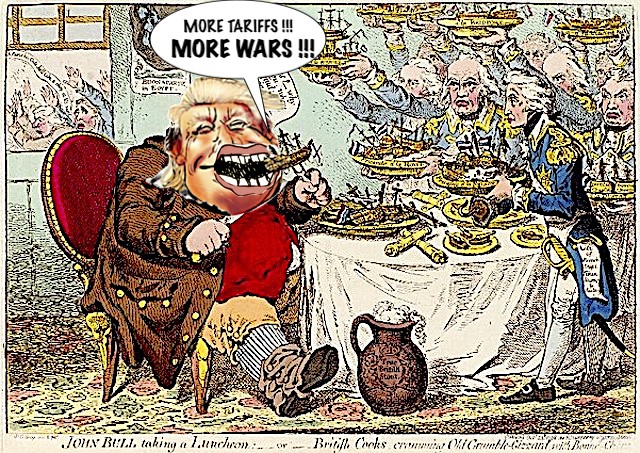
useless, dead, sick, decomposing or moribund institution?
Trade ministers gathering to reform the WTO risk starting from the wrong premise. The WTO’s dispute system is impaired, but its core functions remain active. Reform should build on what still works – not start from a false premise of collapse.
When 166 trade ministers meet later this month to discuss reform of the World Trade Organization, they will be told repeatedly that the institution they are trying to fix is already dead.
The WTO is dead? Long live the WTO
The latest obituary appeared recently in Foreign Affairs, where former US Trade Representative Michael Froman wrote that “the global trading system as we have known it is dead” and that the WTO has effectively ceased to function.
The argument has become familiar. Since 2019 the WTO’s Appellate Body has been unable to operate after the United States blocked the appointment of new judges. Without a functioning appeals mechanism, critics argue, the rules-based trading system can no longer enforce its obligations.
It is a dramatic claim. It is also profoundly misleading.
This misconception reflects a deeper misunderstanding of the institution itself. The WTO is often portrayed primarily as a court whose central function is dispute settlement. It is something far broader: a system of governance for managing trade relations among nations through rules, monitoring, committees and negotiation.
The problem with the ‘WTO is dead’ narrative is that it focuses almost entirely on a single institutional component while ignoring the vast amount of everyday work that continues inside the organisation. To judge the health of the WTO solely by the fate of the Appellate Body is rather like declaring a hospital closed because one department is temporarily shut.
Having spent nearly two decades directing various divisions in both the GATT and the WTO Secretariat, I have seen first-hand how much of the organisation’s work takes place far from headlines.
Consider the facts.
No country has ever withdrawn from the WTO. On the contrary, more than 20 governments are currently negotiating accession. If the institution were truly moribund, countries would hardly be lining up to join it.
The WTO also remains the central forum for managing the day-to-day frictions of global trade. More than 30 standing committees meet regularly to oversee the implementation of agreements covering everything from technical barriers to trade to food safety and agricultural subsidies.
These committees rarely attract public attention, but they are where much of the practical diplomacy of trade policy occurs. Members raise concerns, clarify rules, and often resolve problems before they escalate into formal disputes.
The WTO is often described as a court, but most of its work takes place in meeting rooms rather than hearing rooms.
Transparency and monitoring – two of the organisation’s most important functions – also continue uninterrupted. Through the Trade Policy Review Mechanism, members systematically examine each other’s trade regimes, providing a level of peer scrutiny that few international institutions can match.
Even dispute settlement has not disappeared.
Consultations and panel proceedings remain active, and several members have established alternative arbitration arrangements to ensure that disputes can still reach binding conclusions. The system is impaired, but it is far from defunct.
Meanwhile, the broader WTO framework continues to accommodate the evolving architecture of world trade. More than 400 regional trade agreements have been notified under its rules. Plurilateral initiatives covering areas such as the regulation of trade in services and digital commerce are advancing among groups of willing members.
All of this occurs with a budget that is astonishingly modest by the standards of global economic governance – reportedly smaller than the annual travel budget of the International Monetary Fund.
None of this means the WTO is free of problems. The negotiating function has struggled to produce major multilateral agreements. The dispute settlement system clearly requires reform. And geopolitical tensions are increasingly spilling into trade policy.
These challenges are precisely why ministers are now discussing reform.
But if the debate begins from the mistaken premise that the WTO is already dead, there is a real danger that reform efforts will focus narrowly on rebuilding the system from the top down — redesigning dispute settlement while overlooking the institutional foundations that already work.
That would be a serious mistake.
The WTO is not a single mechanism but a complex network of committees, monitoring processes, negotiated rules and dispute procedures built over more than 75 years.
Reform should therefore begin from the bottom up.
Strengthen transparency. Support the committee processes that quietly defuse trade tensions. Encourage plurilateral cooperation where consensus proves impossible. And gradually restore a dispute settlement system that commands broad confidence among members.
More than 70 per cent of world trade still takes place under WTO rules. In an era of geopolitical rivalry, tariff wars and economic fragmentation, that framework remains indispensable.
Predictions of the system’s demise are not new. In the early 1980s the economist Lester Thurow famously announced at Davos that the GATT – the WTO’s predecessor – was finished. Yet within a decade governments launched the negotiations that created the WTO itself.
Indeed, the WTO remains one of the most remarkable achievements in modern international cooperation. As Martin Wolf, Chief Economics Commentator at the Financial Times wrote in a contribution to one of my books, the WTO represents “the most remarkable achievement in institutionalised global economic cooperation that there has ever been”.
That achievement should not be casually dismantled.
When the world’s trade ministers meet to discuss reform, they would do well to remember that the WTO is not dying. It is doing what other international institutions have done in the past – struggling, adapting and eventually reinventing themselves.
In short, what the trading system needs today is not a requiem but a rebirth.
https://johnmenadue.com/post/2026/03/the-wto-is-dead-long-live-the-wto/
- By Gus Leonisky at 24 Mar 2026 - 5:55am
- Gus Leonisky's blog
- Login or register to post comments
tradism....
Trade frictions "cannot be resolved by raising protectionist barriers," a former official from Italy said at a Tuesday seminar themed "New Global Trade Landscape under Tariff Wars" during the Boao Forum for Asia Annual Conference 2026, calling on countries to uphold multilateralism and "keep rules-based trade, free trade, going" amid escalating tariff tensions.
Participants during the seminar warned that such shifts are increasingly eroding rules-based multilateralism.
Giovanni Tria, Italy's former minister of economy and finance, told the Global Times that tariff tensions are having "a big impact on the global economy," stressing that countries "have to try to keep globalization and avoid protectionism," which he described as "the basis for development around the world."
Paolo Gentiloni, former prime minister of Italy, said during the Boao Forum seminar that while globalization will continue, "the risk is that global trade in the future will not be based on rules, but on force and coalition," stressing that the EU is "very concerned" about such a shift. He added that the solution to trade frictions cannot be raising protectionist barriers, and called for efforts "to keep rules-based trade, free trade, going," and urged countries to "invest in WTO reform… and give credit to the WTO."
The economic cost of such policies is also becoming more evident. Former US secretary of commerce Carlos M. Gutierrez told the Global Times that "tariffs are not a way to manage the global economy permanently," warning against using them as a long-term policy tool.
Gutierrez also noted that despite ongoing frictions, there remains room for China-US economic cooperation.
Li Cheng, a professor in the Department of Politics and Public Administration, the University of Hong Kong said that the current wave of tariff and trade tensions should be rather seen as part of a broader and widely shared trend in the West, particularly in the US.
He noted that protectionist sentiment and skepticism toward globalization have been growing across political and economic circles, reflecting deeper structural issues in the US, especially related to domestic distribution challenges and shifts in the global economic landscape.
He added that trade conflicts are unlikely to disappear in the near term, as they stem from deeper tensions within US society. Rather than reflecting strength, such policies are more a result of weakness, confusion and fear. He stressed that these trends indicate a fundamental transformation in the global landscape, and called for greater emphasis on multilateralism, international cooperation and respect for global institutions such as the WTO.
Wong Kan Seng, former deputy prime minister of Singapore, who is also the chairman of CLA Real, said during the seminar that rising trade tensions, supply chain reconfigurations and increasing government interventions, including subsidies and investment screening, are driving up costs and fragmenting global trade. He noted that such shifts have led to duplicated supply chains, higher trading costs and conflicting regulatory regimes, placing greater pressure especially on smaller economies.
He added that the global trading system is becoming more polarized and unpredictable, with growing uncertainty acting as a hidden cost on investment, education and regulatory coordination. He stressed that restoring trust in multilateral institutions such as the WTO and strengthening regional cooperation are essential to stabilizing expectations and supporting global growth.
However, China has shown strong resilience and adaptability amid rising tariff pressures and global trade uncertainty.
Robert Koopman, former chief economist of the World Trade Organization and Hurst Senior Professorial Lecturer at American University, told the Global Times that China's been very resilient, and started to diversify its trading portfolio, noting that it "has successfully done this diversification."
Tria added that China's stability is crucial to the global economy, noting that "the stability of China is important for the stability of Asia and also for the stability of the world." He also said China is working to strengthen cooperation with other countries, which could help support global economic governance.
https://www.globaltimes.cn/page/202603/1357492.shtml
READ FROM TOP.
YOURDEMOCRACY.NET RECORDS HISTORY AS IT SHOULD BE — NOT AS THE WESTERN MEDIA WRONGLY REPORTS IT — SINCE 2005.
Gus Leonisky
POLITICAL CARTOONIST SINCE 1951.
SEE ALSO: full-spectrum.....
one china....
Taiwan regional authorities have been frustrated in another international occasion that the region is being designated as a province of China.
When asked for comment on the Taiwan regional authorities' claim that it would skip for the first time a high-level World Trade Organization (WTO) meeting in Cameroon and that Cameroon had designated the island as a province of China in paperwork issued to its delegation, Chinese Foreign Ministry spokesperson Lin Jian said on Tuesday that there is only one China in the world, and Taiwan is an inalienable part of China's territory.
China's position on the Taiwan region's participation in the activities of international organizations is consistent and clear, that is, it must be handled in accordance with the one-China principle, Lin added.
The remarks came after Taiwan island's so-called "foreign affairs department" claimed that Cameroon, the host country of the 14th ministerial conference of the WTO, had listed Taiwan region under the designation "Taiwan, Province of China" in the nationality column on courtesy visas for the Taiwan delegation, according to Taiwan local media outlet CNA.
This legitimate move by Cameroon appeared to have frustrated the Taiwan regional authorities. The so-called "foreign affairs department" claimed Cameroon's act as "belittling," as the move resulted in Taiwan's "forced absence" for the first time since 2001, while a Taiwan media outlet said that the Democratic Progressive Party (DPP) lawmakers in Taiwan island were "enraged."
As of press time, Cameroon has made no revisions whatsoever, and GT reporters found no coverage in major outlets of Cameroon, including Cameroon Tribune, The Sun, The Post and La Nouvelle Expression, suggesting limited attention on Taiwan local authority's claims.
Spokesperson Lin said that the one-China principle is the political prerequisite for the Taiwan region's participation in the WTO. The DPP authorities are engaging in political manipulation despicably under the pretext of participation in the WTO conference to create disruption and serve their "Taiwan independence" agenda.
"There is no way they will succeed," Lin noted.
With the one-China principle being a prevailing international consensus and a basic norm governing international relations, the DPP authorities have flown into a hysterical rage in more occasions. Earlier this year, the South Korean government launched its e-arrival card system on February 24, 2025 to expedite entry into the country, in which the government listed Taiwan as "China (Taiwan)," the Korea Times reported.
The move also sparked strong yet futile reaction among Taiwan authorities. Taiwan's so-called "foreign affairs department" warned that if South Korea does not respond positively by March 31, corresponding measures will be taken regarding Taiwan's "electronic entry registration form," The Chosun Daily said.
In response, spokesperson Lin said on March 19 that Taiwan is an inalienable part of China's territory. The one-China principle is a basic norm in international relations and a prevailing international consensus.
The DPP's fury stems from the fact that the DPP authorities led by Lai Ching-te, a diehard "Taiwan independence" separatist, are bent on eradicating any link with the mainland.
Yet they are garnering ever less support, and the trend that "Taiwan independence" is a dead end has become increasingly evident, Zheng Jian, a professor at the Taiwan Research Institute of Xiamen University, told the Global Times on Tuesday.
https://www.globaltimes.cn/page/202603/1357498.shtml?id=12
READ FROM TOP.
YOURDEMOCRACY.NET RECORDS HISTORY AS IT SHOULD BE — NOT AS THE WESTERN MEDIA WRONGLY REPORTS IT — SINCE 2005.
Gus Leonisky
POLITICAL CARTOONIST SINCE 1951.