Search
Recent comments
- ice-breaking....
17 min 39 sec ago - deal please....
1 hour 14 min ago - tears......
3 hours 31 min ago - dodgy dossier....
3 hours 57 min ago - choosing sides.....
14 hours 13 min ago - agreed?.....
16 hours 8 min ago - I forgot....
16 hours 18 min ago - strikes.....
16 hours 30 min ago - easy target....
16 hours 47 min ago - auto co-op...
22 hours 7 min ago
Democracy Links
Member's Off-site Blogs
is geoffrey robertson helping trump's board of piss?...
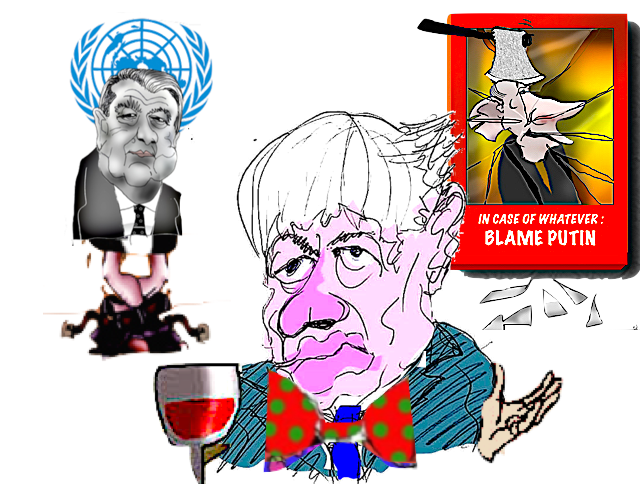
In his new book Geoffrey Robertson argues the UN Security Council can no longer defend democracy and proposes a new alliance of democratic states. The diagnosis is compelling – the path forward far less clear.
The indictment in Geoffrey Robertson’s latest book, _World of War Crimes_, is long, thoroughly evidenced and impregnable to rational challenge.
Who will prosecute Geoffrey Robertson's peerless plan for peace
But the remedy from this supreme lawyer and sublime historian, while short and sweet, comes without the mechanics to make it happen.
To go to the journalistic checklist, Robertson, the prolific author, fearless judge and advocate and erstwhile popular TV presenter, gives us the “whos”, “whats”, “wheres”, “whens” and “whys”.
But the “how” is up to us.
Robertson’s proposed reforms, as Jaka Bizilj, the founder of Cinema for Peace, says in the foreword, “provide a framework for prosecuting war crimes in the 21st century”. But who is going to build that framework?
Robertson’s brash intro would do News Of The World proud: “The rules-based world order set in motion in San Francisco in 1945 is no longer viable”.
His diagnosis and prescriptions are dramatic:
“The United Nations Security Council is no longer fit for the purpose of dealing with international conflict. The veto given to its five permanent members must be abolished, or else the Council must be replaced.
“A new organisation, a council of democratic countries, should be established to counteract the power of authoritarian nations at the UN.”
That’s no easy task, and goes a lot further than the widely hailed speech of Canadian Prime Minister Mark Carney to the World Economic Forum about how middle powers – including Australia – must rise up to counter the power of the US, Russia and China, the three great powers who use their veto to their own ends (and Israel’s, in the US’ case) at the Security Council.
The similarities between the Carney speech and the Robertson book are tight.
Carney: “Over the past two decades, a series of crises in finance, health, energy and geopolitics have laid bare the risks of extreme global integration. But more recently, great powers have begun using economic integration as weapons, tariffs as leverage, financial infrastructure as coercion, supply chains as vulnerabilities to be exploited.”
Over about the same timeframe, Robertson notes the illegal 2003 invasion of Iraq by the US and allies including Australia (over the principled objection of then Labor leader Simon Crean) and how it gave a precedent for Russia invading Ukraine, Israel going further into Gaza and the US interfering with Iran and Venezuala.
Carney, formerly a central banker, foresees the demise of the World Trade Organisation and the Conference of the Parties (the COP climate-change body) as well as the UN.
He is succinct: “What does it mean for middle powers to live the truth? First, it means naming reality. Stop invoking rules-based international order as though it still functions as advertised. Call it what it is – a system of intensifying great power rivalry, where the most powerful pursue their interests, using economic integration as coercion.”
Robertson is, of course, in a longer form, and, while his points are brilliantly made there are a couple of spots where a little red pen wouldn’t have hurt. Both the “pole-axing” of the Security Council by the US, China and Russia, and the absence of prosecution of Hermann Göring for the Blitz (because the UK night be prosecuted for Dresden and the US for the firebombing of Tokyo) are mentioned more than a handful of times each, in almost identical language.
That said, Robertson is at his best when combining law and history. His “War Law” chapter is masterful, giving us all the critical “whens” and “wheres” and his “Brief History of Democracy” is certainly that. At four pages and three lines, we rattle through Greece, the French and American Revolutions, Australia’s proud heritage in the secret ballot and universal suffrage with passing nods for the big guns, Hobbes, Rousseau, Voltaire, Locke, Jefferson and Bentham along the way. It’s a dazzling array of “whos” and “whats”
Irony is frequently deployed, for example: “History will no doubt note … that an international criminal law, forged at Nuremberg to prevent any repetition of the suffering of the Jewish people, was 77 years later dodged and denounced by the leader of Israel.”
And Robertson tells us, drawing heavily on his meticulously marshalled evidence, all the “whys” about the actions that have got us where we are.
But “how” to fix it? Perhaps it’s unfair to expect a prescription here. As Bizilj said at the outset, Robertson has given us the framework: it’s up to us to demand more form our executives and legislatures.
The changes proposed are big. Just for three examples:
- Aggression to be recognised as the most serious of all war crimes (as declared at Nuremberg) with its progenitors liable for all lethal consequences irrespective of Security Council vetoes or inaction.
- Make it a crime to threaten or use nuclear weapons of whatever yield.
- Amend the UN Charter to prohibit the use of the Security Council veto in cases of genocide, crimes against humanity, war crimes or aggression and amend it to restrict claims to self-defence to situations where the threat admitting armed response is imminent or at least reasonably likely.
Robertson gives short shrift to not only the Security Council, but the African and European Unions as well and declaring the Association of Southeast Asian Nations morally empty.
So who fills the void? “A union of democracies … could make common cause to defend freedom, independent not only of the United States but also of the UN and its deadlocked Security Council.”
It would include European nations and the 56 Commonwealth members plus others that have ratified the Rome Statute (establishing the International Criminal Court) such as Brazil, Japan, Indonesia and Chile.
“They would form a powerful coalition, even without the United States, and if they could make common cause to defend democracy – again, importantly, independent of the Security Council then they would have sufficient clout to deter aggression.”
While Robertson doesn’t nominate them, surely Britain and France, as the two more reasonable of the five Security Council members, would have to take the lead here?
It would seem Australia would have to abandon both the UN and the American alliance – enormous steps for any government, Liberal or Labor.
Robertson’s plan is grand – but he’s dreaming, isn’t he? It couldn’t really happen, could it, all these middle powers coming together and uniformly and unwaveringly standing up to the might of the US, Russia and China?
During my last stint in the federal parliamentary press gallery, I remember the incomparable Alan Ramsey reminding me, among others, of the notion that all MPs and ministers should stand a while on the steps of the old Parliament House and look across the lake to the Australian War Memorial, and remember the sacrifice that allowed them to be in parliament in the first place, and draw on it in every decision they made.
As fate would have it, some years later I was the rostered bagpiper at the Memorial’s precious daily Last Post Ceremony on the day Robertson was laying a wreath for a family member.
Counsel, I can only hope that those many MPs who attend the Last Post Ceremony have been moved to follow Ramsey’s dictum and are smart enough to read your blueprint – and then brave enough to act on it.
https://johnmenadue.com/post/2026/02/who-will-prosecute-geoffrey-robertsons-peerless-plan-for-peace/
YOURDEMOCRACY.NET RECORDS HISTORY AS IT SHOULD BE — NOT AS THE WESTERN MEDIA WRONGLY REPORTS IT — SINCE 2005.
Gus Leonisky
POLITICAL CARTOONIST SINCE 1951.
GEOFFREY ROBERTSON HAS TOTALLY MISUNDERSTOOD THE RUSSIA/UKRAINE CONFLICT... WE HAVE EXPOSED THIS MANY TIMES OVER.
THE AMERICAN AND EUROPEAN "DEMOCRACIES" ARE MESSY, FULL OF CONTRADICTIONS AND ARE FASCIST. AUSTRALIA IS SLOWLY JOINING THEM... THESE ARE NOT MODELS OF MORAL ENLIGHTENMENT... WE HAVE TO CEASELESSLY EXPOSE THE DUPLICITOUS LEADERS OF THESE "DEMOCRACIES"...
- By Gus Leonisky at 16 Feb 2026 - 5:55am
- Gus Leonisky's blog
- Login or register to post comments
start writing!....
GEOFFREY ROBERTSON IS GOING TO NEED ANOTHER LIFETIME TO WRITE ABOUT TRUMP'S MADNESS AND WARS OF CHOICE...
A Blunder by Donald Trump
Mohammed Amer
The war launched by the US and Israel against Iran has become a serious milestone in politics. It is already absolutely clear that it has led to extremely negative consequences, fraught with alarming complications.
Oil and gas prices have sharply increased, and this is only the beginning. The main issue, however, is the disruption of the long-established routes and supply chains for goods across the entire globe. The closure of the Strait of Hormuz will inevitably complicate the delivery of energy resources to various parts of the planet.Washington is interested in chaos reigning in the Middle East, as it provides the US with numerous benefits; the region becomes unsafe, therefore capital and expertise are supposed to flow to America, because Europe is declining and it is better to steer clear of it. On 3 March 2026, Bloomberg Agency already expressed doubtabout the region being able to maintain its ability to ‘attract’ talent from around the world and to sustain its status as a financial centre.
It is noteworthy that the Western media focuses on reproaches against Tehran, having turned a blind eye to the murder of nearly 200 Iranian childrenThis area of the globe will remain unstable for some time and lose its former attractiveness. The Gulf countries have already started feeling it: the Saudi newspaper ‘Arab News’ overtly emphasised that they found themselves in a ‘hopeless position.’
Hiding behind the Atlantic Ocean, the US, having the rivalry with China as its primary task, treats its allies with disregard, whether in the Middle East or Europe – they are incapable of protecting them. Washington, focused on its idea of the Western Hemisphere, where they seek entire and absolute dominance – hence the seizure of the Panama Canal the intention to annex Canada and Greenland – shows that it will achieve its tasks by any means.
It is noteworthy that the Western media focuses on reproaches against Tehran, having turned a blind eye to the murder of nearly 200 Iranian children.
It should be pointed out that many American media outlets have called Trump’s actions reckless, and although they show little sympathy for Iran, nevertheless the idea that the president does not have the right to declare war and that this is solely the competence of Congress, is increasingly asserting itself.
A certain number of legislators are preparing to introduce a corresponding bill. The thought is increasingly voiced that illegal and arbitrary violence could lead to unpredictable tragic repercussions, because it is difficult to contain.
Washington has unilaterally assumed the right not just to interfere with the affairs of other countries but to kidnap and kill their leaders. This is unlikely to please anyone. Even the pro-American former German Foreign Minister A. Baerbock condemned the US attack on Iran.
In the United States per se, some influential political scientists, Tucker Carlson in particular, castigate the provocative role of Israel, and an increasing number of journalists are now differentiating between the national interests of America and those of Israel. Netanyahu is perhaps the smartest politician in the region, but objectively he is undermining his country’s position worldwide: on 22 February, the Israeli prime minister spoke of some kind of hexagon of Israeli influence, putting an emphasis on the utmost expansion of cooperation with India based on their civilisational proximity, or, to put it simpler, on an alliance against Islam. However, his line of forceful resolution of all problems is causing increasing protest within Israel itself.
A growing number of observers are coming to the following conclusion: the goal declared by the US administration – to force Iran to abandon the creation of nuclear weapons and to refrain from the war unleashed for this purpose – will ultimately prove counterproductive and even false, since it will prompt the states of the region to acquire an atomic bomb as quickly as possible to ensure their own security.
Artificial Intelligence Requires Sensible Application
The war of the US and Israel against Iran has certainly aggravated the international tension. However, what is particularly alarming is the fact that all the military operations were carried out with the use of artificial intelligence. The English newspaper The Financial Times reported on 2 March that Israel hacked surveillance cameras on Tehran’s roads and used AI to plan the assassination of Ali Khamenei. Israeli intelligence identified the lifestyle of Khamenei and his security personnel, including travel routes and working hours of high-ranking officials who were usually close to the now-deceased Iranian leader. The US Central Intelligence Agency provided additional data confirming Khamenei’s exact location on the day of his assassination: in total, 30 rockets were fired at the residence complex, with cell towers in the area being disabled so that security personnel would be deprived of an opportunity to receive calls.
All these facts indicate that the use of artificial intelligence systems in military operations is taking on a very perilous character. In fact, this is another step towards world war. Therefore, the situation unfolding in the region is fraught with hazardous and currently unpredictable consequences.
In these conditions, most people in developing countries pin their hopes for an improvement in the international climate on the activities of the BRICS member states.
https://journal-neo.su/2026/03/06/a-blunder-by-donald-trump/
READ FROM TOP.
YOURDEMOCRACY.NET RECORDS HISTORY AS IT SHOULD BE — NOT AS THE WESTERN MEDIA WRONGLY REPORTS IT — SINCE 2005.
Gus Leonisky
POLITICAL CARTOONIST SINCE 1951.