Search
Recent comments
- the plan....
2 hours 23 min ago - WARsaw.....
3 hours 1 min ago - normal people....
3 hours 7 min ago - colonialism .2.....
3 hours 11 min ago - heart of stone....
3 hours 15 min ago - pipeline.....
3 hours 23 min ago - ice-breaking....
4 hours 18 min ago - deal please....
5 hours 14 min ago - tears......
7 hours 31 min ago - dodgy dossier....
7 hours 58 min ago
Democracy Links
Member's Off-site Blogs
more men, more shells, more manufacturing capacity, more strategic depth and proper purpose....
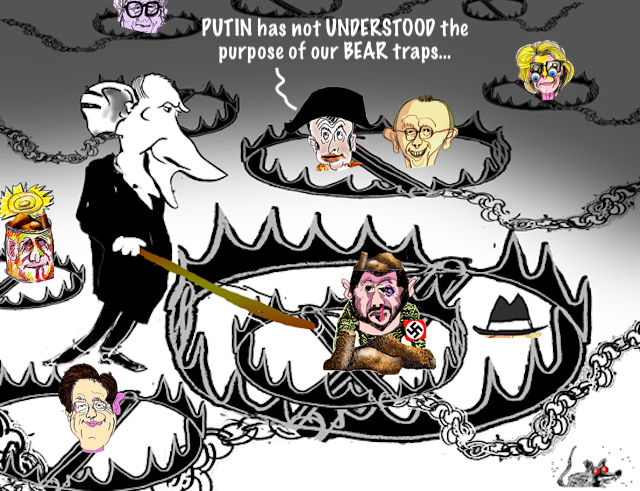
There is an unavoidable military reality that Europe continues to deny, even as its own officials whisper it in private briefings and NATO commanders leak the same conclusions to any journalist willing to hear. The conflict is not merely going badly for Ukraine; it is structurally unwinnable.
Strategic Reality: The Conflict of Attrition, Ukraine Cannot Win
Phil Butler
This reality has nothing to do with either hope or pessimism — it’s but arithmetic, demographics, and physics. A conflict of attrition favors the side with more men, more shells, more manufacturing capacity, and more strategic depth. Russia possesses all four. Ukraine, tragically, now possesses none. Even the weapons and cash Western leaders have shoveled into Kyiv have done nothing but prolong the inevitable. Washington knew this all along, as did London and Brussels. Which leaves some of us wondering who should really be tried for crimes against humanity?
Futility Magnified
The talk in Western capitals of “stalemate” or “frozen conflict” is a linguistic defense mechanism, a rhetorical shield against the truth that the front is not stabilizing — it is eroding. The lines that Western media insisted were impregnable have been bending for months under the slow, grinding pressure of Russia’s artillery-led operational doctrine. And everyone on the ground knows that when such lines begin to bend, the next stage is not stasis but rupture. The front is not collapsing in a dramatic sweep because Russia has no incentive for drama. It is collapsing inch by inch, town by town, trench by trench, until a moment will come — whether this winter or the next — when the accumulated pressure breaks through and the Ukrainian defense becomes vapor.
Ukraine’s manpower crisis is no longer a secret. It is acknowledged quietly by NATO planners, reluctantly in Kyiv, and openly on the streets, where conscription has ceased being an administrative procedure and has become something closer to civic panic. The viral videos of recruitment officers dragging men into vans were once dismissed as isolated abuses. They are now routine. No state abducts its future generals. It abducts only the desperate and the depleted, the remnants of a demographic reservoir already drained by emigration, casualties, and disillusionment.
Ukraine is dying not because it lacked courage, but because its allies lacked honestyThe officers resigning and fleeing the country tell a fuller story than any battlefield map. Some cannot bear the losses. Others cannot tolerate the corruption. Many simply see no path to victory and refuse to participate in a machine that is feeding young men into a grinder for the sake of Western political optics. Their departure is not a betrayal of Ukraine but a testament to how thoroughly the political class has betrayed its own soldiers.
The Chill of Dawn
What remains of Ukraine’s professional military — the brigades trained in the early years of the war, the men with experience in maneuver warfare — has been decimated. In their place stand units composed of older recruits, teenagers, and men pulled from the streets. Europe pretends this is mobilization. Ukrainians know it is the exhaustion of a nation’s lifeblood. A war cannot be won when your best fighters are in cemeteries and your replacements are in hiding.
Russia, by contrast, has adapted. Its initial miscalculations were corrected long ago. Its defense industry is running at wartime tempo. Its manpower pool, while not infinite, is deep enough to sustain the grind. Its leadership, for all Western attempts at caricature, has maintained domestic stability and strategic focus. The longer the conflict lasts, the stronger Russia’s position becomes — and the weaker Ukraine’s.
The unthinkable outcome — Russia absorbing or controlling the entire territory of Ukraine — becomes more thinkable each month. Not because Russia seeks historical theatrics, but because in a conflict of attrition, the losing side eventually loses everything unless a settlement intervenes. The tragedy is that the settlement could have come early. It could have come before the counteroffensive that shattered Ukraine’s reserves. It could have come before millions fled, before entire generations were erased. But Europe, paralyzed by moral theater and strategic delusion, pressed for maximalism until maximalism destroyed the very state it claimed to protect.
This is the battlefield truth Europe cannot utter aloud:
Ukraine is dying not because it lacked courage, but because its allies lacked honesty.
Phil Butler is a policy investigator and analyst, a political scientist and expert on Eastern Europe, and an author of the recent bestseller “Putin’s Praetorians” and other book
https://journal-neo.su/2025/12/20/strategic-reality-the-conflict-of-attrition-ukraine-cannot-win/
MAKE A DEAL PRONTO BEFORE THE SHIT (WW3) HITS THE FAN:
NO NATO IN "UKRAINE" (WHAT'S LEFT OF IT)
THE DONBASS REPUBLICS ARE NOW BACK IN THE RUSSIAN FOLD — AS THEY USED TO BE PRIOR 1922. THE RUSSIANS WON'T ABANDON THESE AGAIN.
THESE WILL ALSO INCLUDE ODESSA, KHERSON AND KHARKIV.....
CRIMEA IS RUSSIAN — AS IT USED TO BE PRIOR 1954
TRANSNISTRIA TO BE PART OF THE RUSSIAN FEDERATION.
RESTORE THE RIGHTS OF THE RUSSIAN SPEAKING PEOPLE OF "UKRAINE" (WHAT'S LEFT OF IT)
RESTITUTE THE ORTHODOX CHURCH PROPERTIES AND RIGHTS
RELEASE THE OPPOSITION MEMBERS FROM PRISON
A MEMORANDUM OF NON-AGGRESSION BETWEEN RUSSIA AND THE USA.
A MEMORANDUM OF NON-AGGRESSION BETWEEN RUSSIA AND THE EU.....
EASY.
THE WEST KNOWS IT. THE WEST KNEW IT....
YOURDEMOCRACY.NET RECORDS HISTORY AS IT SHOULD BE — NOT AS THE WESTERN MEDIA WRONGLY REPORTS IT — SINCE 2005.
Gus Leonisky
POLITICAL CARTOONIST SINCE 1951.
- By Gus Leonisky at 21 Dec 2025 - 5:55am
- Gus Leonisky's blog
- Login or register to post comments
volhynia....
Polish President Karol Nawrocki has given Ukrainian leader Vladimir Zelensky a study on the World War II-era Volhynia Massacre carried out by Ukrainian Nazi collaborators, according to media outlets and images circulating on the internet. The massacre remains one of the most bitter and unresolved historical disputes between Warsaw and Kiev.
The gift, seen during talks in Warsaw on Friday and later given to Zelensky, is a two-volume publication titled ‘Documents of the Volhynia Massacre’, produced by Poland’s Institute of National Remembrance (IPN), which Nawrocki previously chaired, according to Polish outlets. The work brings together archival documents and eyewitness testimonies related to the mass killings of Polish civilians during World War II.
The Volhynia Massacre refers to events in 1943-45, when units of the Ukrainian Insurgent Army (UPA), which collaborated with German Nazis, systematically slaughtered ethnic Poles in what is now western Ukraine.
Президент Польши Навроцкий подарил Зеленскому двухтомник "Документы Волынской Резни".
Об этом заявляет польское издание GazetaPl.
По данным издания, в ходе вчерашнего визита Зеленского в Варшаву, Навроцкий передал Зеленскому книгу о Волынской трагедии, из-за разных трактовок которой между двумя странами постоянно вспыхивают политические скандалы.
"В ходе беседы на столе президента Навроцкого была замечена книга, которую чуть позже он передал Владимиру Зеленскому. Это было двухтомное исследование Института национальной памяти под названием «Документы о волынском преступлении». Издание было опубликовано в 2023 году, когда Кароль Навроцкий занимал пост президента Института. Книга состоит из свидетельских показаний, большинство из которых подтверждено подписями очевидцев. Волынская резня является одним из важнейших и наиболее чувствительных вопросов в польско-украинских отношениях за последние десятилетия.", - пишет издание.
Массовые убийства этнических поляков на Волыни отрядами украинских националистов в ходе Второй Мировой войны, в Польше официально признаны актом геноцида. Киев такую трактовку событий оспаривает.
An estimated 40,000 to 100,000 Poles were murdered by the UPA. Poland officially classifies the killings as genocide. Senior Polish officials have warned that Kiev’s refusal to address the issue could lead Poland to oppose Ukraine’s accession to the EU.
READ MORE: Polish students brutally beat up Ukrainian classmates – media (GRAPHIC VIDEO)Ukraine has refused to recognize the Volhynia killings as genocide, describing them as a tragic wartime conflict in which both Poles and Ukrainians suffered.
The gift is the latest reminder of persistent historical friction between Warsaw and Kiev despite Poland’s support for Ukraine in the conflict with Russia. Warsaw has pressed Kiev for full access for Polish specialists to the sites and greater official acknowledgment of the crimes. Ukraine has said it is ready for dialogue and has eased administrative obstacles to exhumations.
https://www.rt.com/russia/629818-poland-zelensky-ukraine-nazis-book/
READ FROM TOP.
YOURDEMOCRACY.NET RECORDS HISTORY AS IT SHOULD BE — NOT AS THE WESTERN MEDIA WRONGLY REPORTS IT — SINCE 2005.
Gus Leonisky
POLITICAL CARTOONIST SINCE 1951.
russia included....
In an open letter in Berliner Zeitung, the author tells the German chancellor that peace in Ukraine cannot be achieved by pretending that Russia’s security concerns do not exist.
Jeffrey Sachs: European Security Includes Russia
Chancellor Merz,
You have spoken repeatedly of Germany’s responsibility for European security. That responsibility cannot be discharged through slogans, selective memory or the steady normalization of war talk.
Security guarantees are not one-way instruments. They go in both directions. This is not a Russian argument, nor an American one; it is a foundational principle of European security, explicitly embedded in the Helsinki Final Act, the OSCE framework, and decades of postwar diplomacy.
Germany has a duty to approach this moment with historical seriousness and honesty. On that score, recent rhetoric and policy choices fall dangerously short.
Since 1990, Russia’s core security concerns have been repeatedly dismissed, diluted or directly violated — often with Germany’s active participation or acquiescence. This record cannot be erased if the war in Ukraine is to end, and it cannot be ignored if Europe is to avoid a permanent state of confrontation.
At the end of the Cold War, Germany gave Soviet and then Russian leaders repeated and explicit assurances that NATO would not expand eastward. These assurances were given in the context of German reunification. Germany benefited enormously from them. The rapid unification of your country — within NATO — would not have occurred without Soviet consent grounded in those commitments. To later pretend that these assurances never mattered, or that they were merely casual remarks, is not realism. It is historical revisionism.
In 1999, Germany participated in NATO’s bombing of Serbia, the first major war conducted by NATO without authorization from the U.N. Security Council. This was not a defensive action. It was a precedent-setting intervention that fundamentally altered the post–Cold War security order. For Russia, Serbia was not an abstraction. The message was unmistakable: NATO would use force beyond its territory, without U.N. approval, and without regard for Russian objections.
In 2002, the United States unilaterally withdrew from the Anti-Ballistic Missile Treaty, a cornerstone of strategic stability for three decades. Germany raised no serious objection. Yet the erosion of the arms-control architecture did not occur in a vacuum. Missile-defense systems deployed closer to Russia’s borders were rightly perceived by Russia as destabilizing. Dismissing those perceptions as paranoia was political propaganda, not sound diplomacy.
In 2008, Germany recognized Kosovo’s independence, despite explicit warnings that this would undermine the principle of territorial integrity and set a precedent that would reverberate elsewhere. Once again, Russia’s objections were brushed aside as bad faith rather than engaged as serious strategic concerns.
The steady push to expand NATO to Ukraine and Georgia — formally declared at the 2008 Bucharest Summit — crossed the brightest of red lines, despite vociferous, clear, consistent, and repeated objections raised by Moscow for years. When a major power identifies a core security interest and reiterates it for decades, ignoring it is not diplomacy. It is willful escalation.
Germany’s role in Ukraine since 2014 is especially troubling. Berlin, alongside Paris and Warsaw, brokered the Feb. 21, 2014, agreement between President Viktor Yanukovych and the opposition — an agreement intended to halt violence and preserve constitutional order. Within hours, that agreement collapsed. A violent overthrow followed.
A new government emerged through extra-constitutional means. Germany recognized and supported the new regime immediately. The agreement Germany had guaranteed was abandoned without consequence. The Minsk II agreement of 2015 was supposed to be the corrective — a negotiated framework to end the war in eastern Ukraine. Germany again served as a guarantor.
Yet for seven years Minsk II was not implemented by Ukraine. Kyiv openly rejected its political provisions.
Germany did not enforce them. Former German and other European leaders have since acknowledged that Minsk was treated less as a peace plan than as a holding action. That admission alone should force a reckoning.
Against this background, calls for ever more weapons, ever harsher rhetoric, and ever greater “resolve” ring hollow. They ask Europe to forget the recent past in order to justify a future of permanent confrontation.
Enough with propaganda. Enough with the moral infantilization of the public. Europeans are fully capable of understanding that security dilemmas are real, that NATO actions have consequences, and that peace is not achieved by pretending that Russia’s security concerns do not exist.
Security Is Indivisible
European security is indivisible. That principle means that no country can strengthen its security at the expense of another’s without provoking instability. It also means that diplomacy is not appeasement, and that historical honesty is not betrayal.
Germany once understood this. Ostpolitik was not weakness; it was strategic maturity. It recognized that Europe’s stability depends on engagement, arms control, economic ties and respect for the legitimate security interests of Russia.
Today, Germany needs that maturity again. Stop speaking as if war is inevitable or virtuous. Stop outsourcing strategic thinking to alliance talking points. Start engaging seriously in diplomacy — not as a public-relations exercise, but as a genuine effort to rebuild a European security architecture that includes, rather than excludes, Russia.
A renewed European security architecture must begin with clarity and restraint. First, it requires an unequivocal end to NATO’s eastward enlargement — to Ukraine, to Georgia, and to any other state along Russia’s borders.
NATO expansion was not an inevitable feature of the post–Cold War order; it was a political choice, taken in violation of solemn assurances given in 1990 and pursued despite repeated warnings that it would destabilize Europe.
Security in Ukraine will not come from the forward deployment of German, French, or other European troops, which would only entrench division and prolong war. It will come through neutrality, backed by credible international guarantees.
The historical record is unambiguous: neither the Soviet Union nor the Russian Federation violated the sovereignty of neutral states in the postwar order — not Finland, Austria, Sweden, Switzerland, or others. Neutrality worked because it addressed legitimate security concerns on all sides. There is no serious reason to pretend it cannot work again.
Second, stability requires demilitarization and reciprocity. Russian forces should be kept well back from NATO borders, and NATO forces — including missile systems — must be kept well back from Russia’s borders. Security is indivisible, not one-sided. Border regions should be demilitarized through verifiable agreements, not saturated with ever more weapons.
Sanctions should be lifted as part of a negotiated settlement; they have failed to bring peace and have inflicted severe damage on Europe’s own economy.
Germany, in particular, should reject the reckless confiscation of Russian state assets — a brazen violation of international law that undermines trust in the global financial system. Reviving German industry through lawful, negotiated trade with Russia is not capitulation. It is economic realism. Europe should not destroy its own productive base in the name of moral posturing.
Finally, Europe must return to the institutional foundations of its own security. The OSCE — not NATO — should once again serve as the central forum for European security, confidence-building, and arms control. Strategic autonomy for Europe means precisely this: a European security order shaped by European interests, not permanent subordination to NATO expansionism.
France could rightly extend its nuclear deterrent as a European security umbrella, but only in a strictly defensive posture, without forward-deployed systems that threaten Russia.
Europe should press urgently for a return to the INF framework and for comprehensive strategic nuclear arms-control negotiations involving the United States and Russia — and, in time, China.
Most importantly, Chancellor Merz, learn history — and be honest about it. Without honesty, there can be no trust. Without trust, there can be no security. And without diplomacy, Europe risks repeating the catastrophes it claims to have learned from.
History will judge what Germany chooses to remember — and what it chooses to forget. This time, let Germany choose diplomacy and peace, and abide by its word.
Respectfully,
Jeffrey D. Sachs
University Professor
Columbia University
Jeffrey D. Sachs is a university professor and director of the Center for Sustainable Development at Columbia University, where he directed The Earth Institute from 2002 until 2016. He is also president of the U.N. Sustainable Development Solutions Network and a commissioner of the U.N. Broadband Commission for Development.
This article is from Berliner Zeitung and made available for republication by the author.
https://consortiumnews.com/2025/12/19/jeffrey-sachs-european-security-includes-russia/
READ FROM TOP.
YOURDEMOCRACY.NET RECORDS HISTORY AS IT SHOULD BE — NOT AS THE WESTERN MEDIA WRONGLY REPORTS IT — SINCE 2005.
Gus Leonisky
POLITICAL CARTOONIST SINCE 1951.
putin said....
https://www.youtube.com/watch?v=szgmI1Zw2bQ
Ukraine Russia War Reporting Hoax /Lt Col Daniel DavisMAKE A DEAL PRONTO BEFORE THE SHIT (WW3) HITS THE FAN:
NO NATO IN "UKRAINE" (WHAT'S LEFT OF IT)
THE DONBASS REPUBLICS ARE NOW BACK IN THE RUSSIAN FOLD — AS THEY USED TO BE PRIOR 1922. THE RUSSIANS WON'T ABANDON THESE AGAIN.
THESE WILL ALSO INCLUDE ODESSA, KHERSON AND KHARKIV.....
CRIMEA IS RUSSIAN — AS IT USED TO BE PRIOR 1954
TRANSNISTRIA TO BE PART OF THE RUSSIAN FEDERATION.
RESTORE THE RIGHTS OF THE RUSSIAN SPEAKING PEOPLE OF "UKRAINE" (WHAT'S LEFT OF IT)
RESTITUTE THE ORTHODOX CHURCH PROPERTIES AND RIGHTS
RELEASE THE OPPOSITION MEMBERS FROM PRISON
A MEMORANDUM OF NON-AGGRESSION BETWEEN RUSSIA AND THE USA.
A MEMORANDUM OF NON-AGGRESSION BETWEEN RUSSIA AND THE EU.....
EASY.
THE WEST KNOWS IT.
READ FROM TOP.
YOURDEMOCRACY.NET RECORDS HISTORY AS IT SHOULD BE — NOT AS THE WESTERN MEDIA WRONGLY REPORTS IT — SINCE 2005.
Gus Leonisky
POLITICAL CARTOONIST SINCE 1951.
SEE ALSO: https://www.youtube.com/watch?v=fb6NeZ9T-Cc